Praying for the right rain - Drought leaves Claverty Cottage Primary counting every drop as community depends on dwindling supplies
Loading article...
-
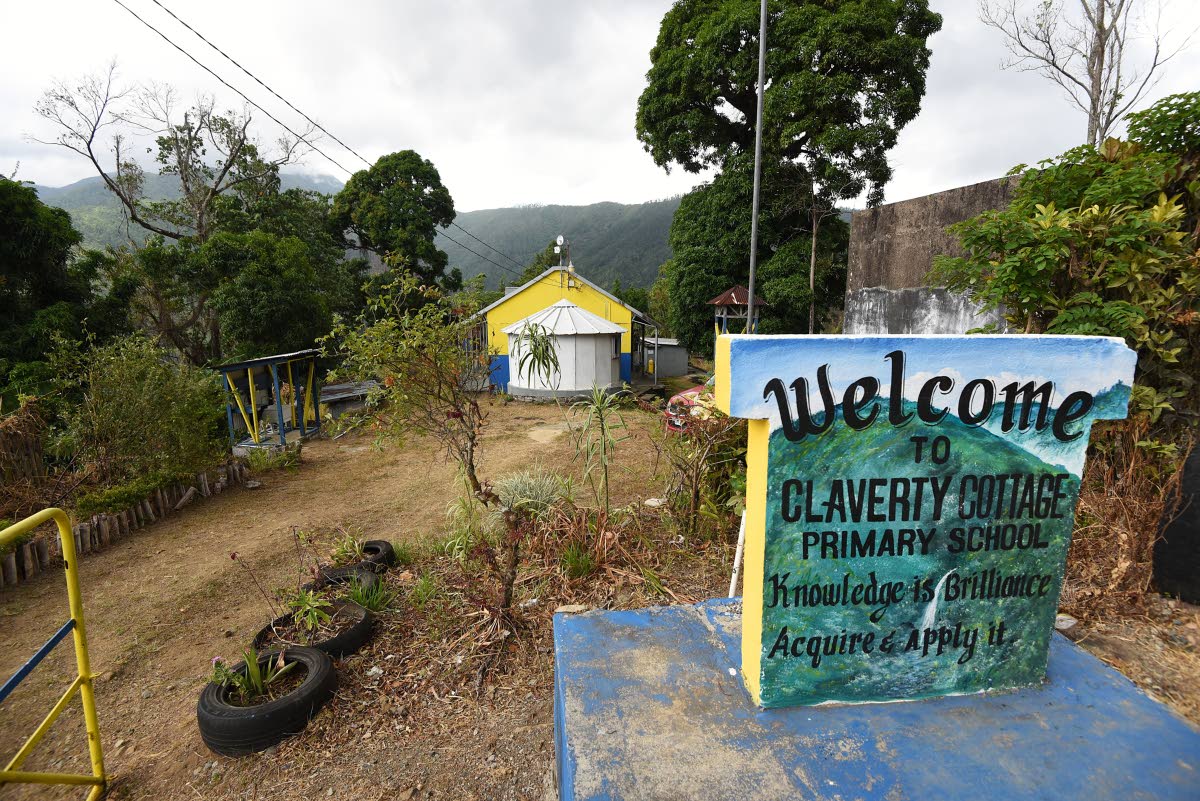 Claverty Cottage Primary School in Portland Western. Ian Allen/Photographer
-
Claverty Cottage Primary School in Portland Western. Ian Allen/Photographer
-
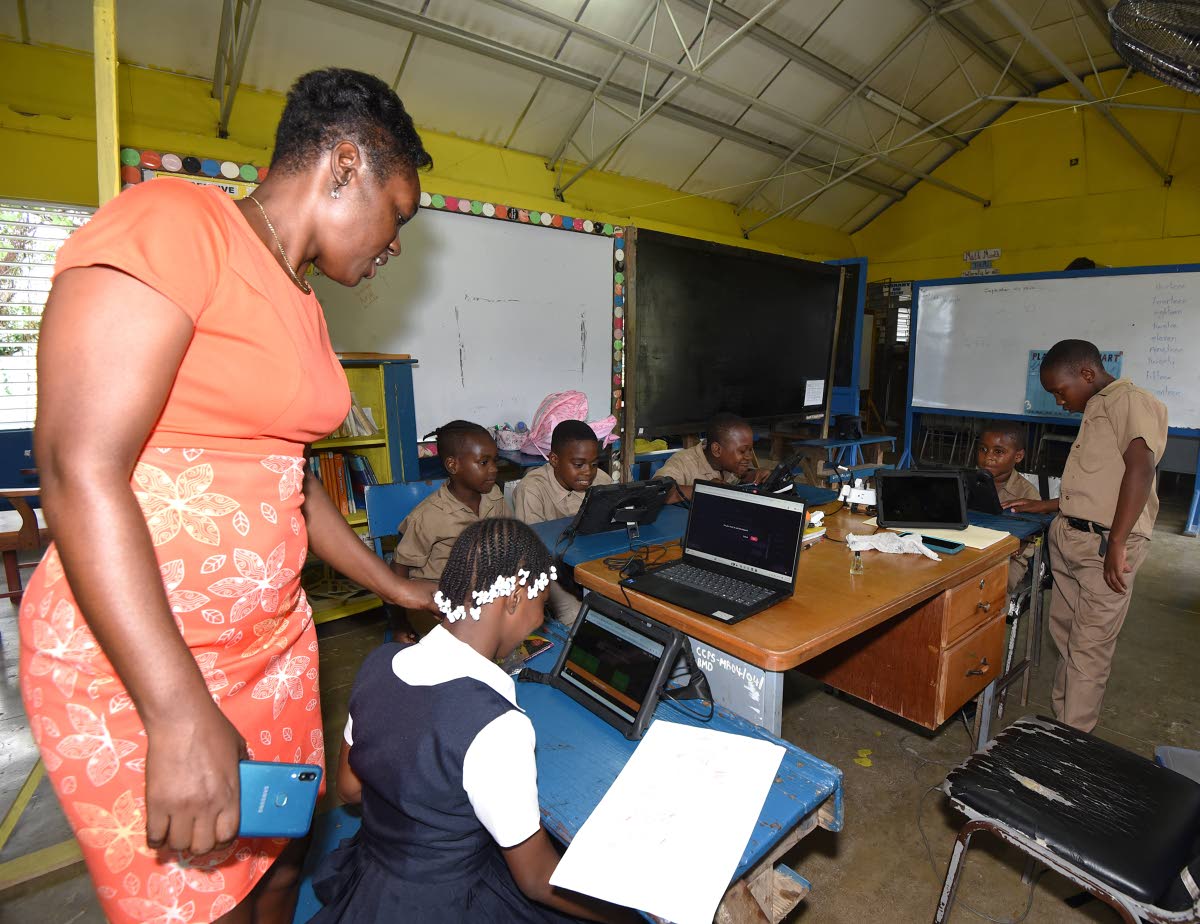 Julane King-Walker, principal of Claverty Cottage Primary School, helps the six students in attendance as they use their tablets. Ian Allen/Photographer
-
 Julane King-Walker, principal of Claverty Cottage Primary School, shows off a 3,000 gallon water tank that has helped the school survived the long drought that has been affecting the island. Ian Allen/Photographer
-
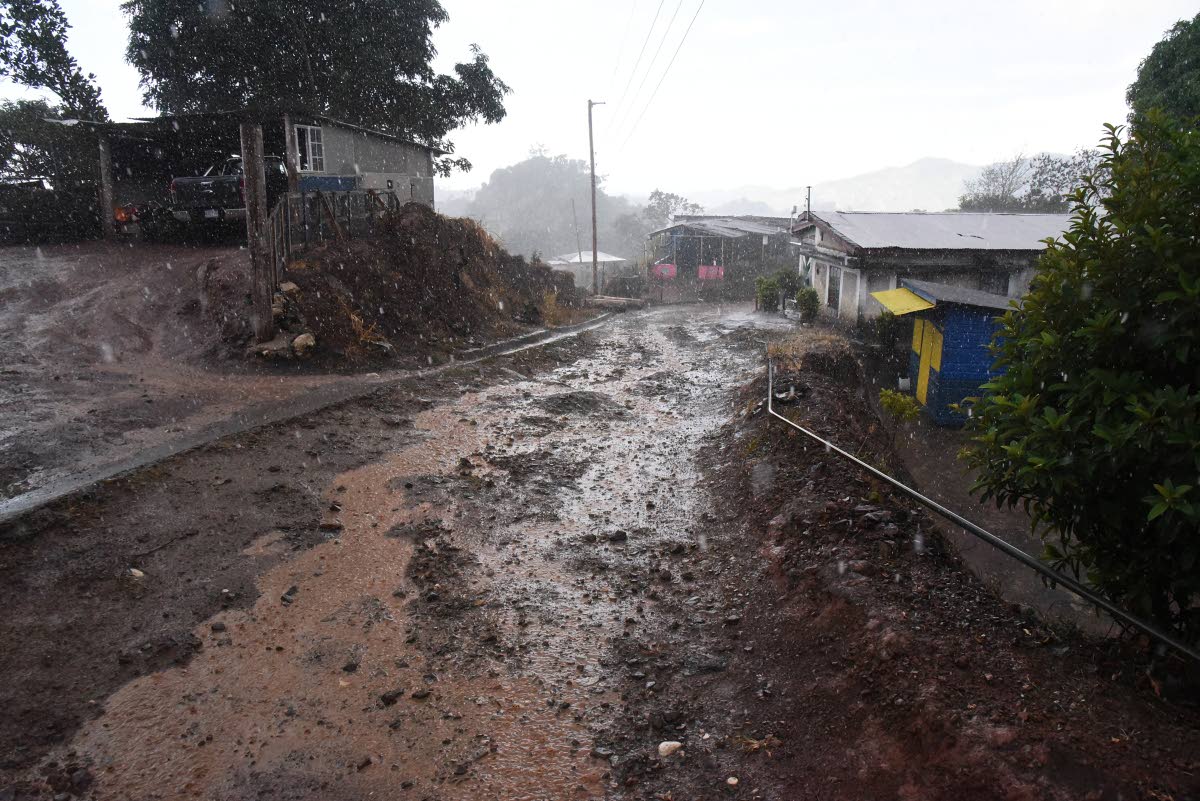 Rain falls for the first time in months in Claverty Cottage, Portland Western, last Thursday. Ian Allen/Photographer
In the Blue Mountains, where rain has long been part of the landscape and heavy showers can turn roads into torrents, the wait for a proper downpour has become a race against time.
And as dark clouds gathered over an overcast Claverty Cottage Primary last Thursday, teachers, staff and students watched hopefully as the wind rustled the trees, praying that the skies would finally open.
They did not.
A brief shower came and went, followed by the breeze. This is how it has been for months.
For Jamaica’s smallest school, with just six students and eight members of staff, every drop counts. The institution has three 1,000-gallon water tanks on its grounds, but the supply is dwindling.
The last substantial rainfall capable of filling the school’s tanks came in April. Since then, administrators have been forced to carefully ration the water while urging students to bring drinking water from home.
For Principal Julane King-Walker, the situation is a painful contradiction.
“From April we have not gotten any rain, and during the school break rain fell two times,” she explained. “But that was not a Portland rain. That was just cooling down. We didn’t even get one of those blue drums filled, and as you know, Portland rain pours!”
Usually, King-Walker and her staff dread dark skies and the threat of heavy showers because of the damage they can inflict on the steep roads leading to the remote community. But last Thursday, she stretched her arms towards the heavens, hoping for a miracle.
There was only more wind.
She estimates that the water remaining in the school’s tanks will last until next month. After that, the school could be forced to source water from distant waterholes or have it trucked several miles up the rough, winding terrain.
“So I am really hoping, praying to God that we get rain by then. If not, it is going to be very bad for us,” she said, looking warily towards a classroom where five boys and one girl worked unconcerned on their tablets.
Shrinking school
For years, Claverty Cottage Primary has operated with only a handful of students. Two years ago, the school had five pupils, two of whom have since completed the Grade Six Achievement Test and moved on to notable high schools in the parish.
Now, there is one student in Grade One, one in Grade Three, two in Grade Four and two in Grade Five.
There is no Grade Six class this school year.
The school is among those reportedly being considered by the Government for possible mergers with other institutions, similar to the merger of Cumberland High and the Hydel Group of Schools in St Catherine. But administrators at Claverty Cottage Primary said they have received no official notice of any such plans.
Many residents
have migrated
Like the water shortage, however, the school’s population crisis is a close reflection of the changing fortunes of the surrounding community. Many residents have migrated, leaving behind an ageing population with fewer children to fill the classrooms.
King-Walker has her eyes on one baby born recently in the community.
If the child and his parents unexpectedly remain in the area, she expects the youngster could eventually enter Grade One at Claverty Cottage, as there is no nearby basic school to serve as a feeder institution.
Of the students currently on the school’s roll, one recently returned to Jamaica from overseas, while another was transferred from another primary school after experiencing severe challenges there, she said.
“We work together as a team; as a family. But my teachers do most of the groundwork, and it is they who make it a possibility,” King-Walker said, while also praising residents who have made it their duty to help keep the school operating.
Community joins the fight
The water crisis extends beyond the school’s gate.
Residents have been trying to secure materials to repair a section of a damaged water catchment system.
“I myself have pledged 20 blocks, and we are hoping to start working on that so it can build up. Right now it is very low, so the water is not coming up,” King-Walker said.
Sixty-year-old Levi Willis is among the community members King-Walker described as “Samaritans”.
Despite his age, Willis still travels miles to collect water for about 100 residents in the two nearby communities.
He and others are currently trying to draw water from a section of the Spanish River about five miles away, but the mostly senior farmers need assistance purchasing hoses to transport the commodity.
“When you check the whole district between Claverty and Clifton Hill, there are about a hundred people. Because the population kinda went down, and because of the bad roads, ’nuff people are leaving out,” he said, sadly. “But not everybody can leave from up here, because we can’t leave our livelihoods.”
Willis was born in the area and said many residents own land on which they grow crops worth millions of dollars, making it difficult for them to simply abandon the community and start over elsewhere.
“And at the same time, the community we live in is a nice, cool environment. We plant everything. We don’t have to think about thieves, about police. All of us come together. A lot of people want to live up here, but it is just because of the roads and water they don’t,” he said.
A double-edged sword
For now, Claverty Cottage and its primary school face an uncomfortable dilemma.
They need rain — but too much rain can make it difficult to reach them.
“It is a double-edged sword for us,” King-Walker said. “We want the rain, but when the rain does come, you might not get any water because the pipes are washed away, and then there are landslides that happen most times. It may also be a case where the rain may affect the roads and we are cut off.”
While the Ministry of Education and Daryl Vaz, the area’s member of parliament, are prepared to truck water into the community in dire circumstances, King-Walker said transporting the commodity up the steep and difficult terrain presents its own logistical challenges.
“Some sections of the road have been repaired, but the repairs are also yet to be tested by the kind of heavy rainfall that we get,” she cautioned.
A sustained downpour could replenish the school’s dwindling water supply and provide relief to farmers and residents. But the same rain could damage the roads, wash away pipes, trigger landslides and leave Claverty Cottage cut off once again.
For now, six children and the adults responsible for nurturing them are counting every drop — and praying that the next rain comes gently enough to help, and not hard enough to hurt.
corey.robinson@gleanerjm.com