JCF cries foul over Starlink audit
Loading article...
-
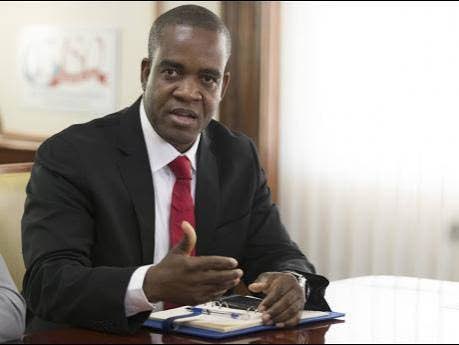 Police Commissioner Dr Kevin Blake. Photo - File
-
Police Commissioner Dr Kevin Blake. Photo - File
-
 Auditor General Pamela Monroe Ellis. Photo - File
-
 A Starlink device. Photo - Contributed
The Jamaica Constabulary Force (JCF) has pushed back against criticism in an Auditor General’s report on the distribution of Starlink devices following Hurricane Melissa, insisting that it maintained records of the equipment entrusted to it and that the failure to independently verify the receipt of some devices does not amount to a breakdown in accountability.
In a statement to members of the Force published in its November 19 edition of Force Orders, Commissioner of Police Dr Kevin Blake defended the JCF’s handling of the 696 donated devices, arguing that the Force was responsible only for their custody and distribution and did not determine who received them or the criteria governing their allocation.
The commissioner’s comments come against the background of findings in the Auditor General’s Hurricane Melissa Relief Initiative Audit, tabled in the House of Representatives last Tuesday, a section of which examines governance and oversight of donated and procured Starlink devices. The audit raised concerns about the JCF’s inventory management, the absence of documented allocation criteria and the lack of formal transfer arrangements.
The report noted that Daryl Vaz, the minister of energy, transport and telecommunications, authorised the JCF in February 2026 to distribute and safeguard 696 donated Starlink devices. However, the auditors said the Force did not maintain a record of the devices received or provide evidence that the equipment had been recorded as inventory for distribution.
As a result, the auditors said they were unable to verify the total number of devices received by the JCF.
696 devices
The report further found that 683 of the 696 devices were distributed to 75 recipients without documented allocation criteria or formal transfer arrangements.
In seeking to verify the distribution, the auditors sent confirmation requests to 70 recipients who, collectively, were supposed to have received 670 devices. These comprised 530 devices issued to Government of Jamaica recipients and 140 to non-government recipients.
Only 33 of the 70 recipients responded, including 28 of the 57 Government recipients and five of the 13 non-government recipients.
Of the 670 devices covered by the confirmation exercise, receipt of 513 was independently verified, while confirmation could not be obtained for the remaining 157 devices because 37 recipients did not respond to the auditors’ requests.
However, Blake disputed the implications of the verification exercise, arguing that the inability of auditors to obtain responses from recipients did not establish that the JCF had failed to account for the equipment.
He said the Force’s Technology Branch had established a temporary inventory management system to document the receipt and distribution of the devices, with each unit accounted for by its unique serial number.
Recipients were also required to provide identification, which was recorded and linked to the particular device they received, he said.
“These are not matters of opinion. They are matters supported by records, records which were made available to the audit team,” Blake said.
Improperly distributed
He argued that the absence of independent confirmation from some recipients should not be interpreted as evidence that devices were improperly distributed or that the JCF had failed to maintain records.
“The inability of an auditor to independently obtain confirmation from a third party is not, in itself, evidence that the JCF failed to account for equipment,” he said.
Blake further suggested that the auditors’ inability to contact recipients should be viewed as a limitation of the verification exercise rather than a deficiency in the Force’s distribution process.
He maintained that had recipients disputed receiving the devices or challenged the signatures held on record by the JCF, there might have been grounds to question the Force’s accounting.
The commissioner also sought to clarify the JCF’s role in the exercise, saying it had been approached by the ministry responsible for telecommunications because of its geographical reach, established infrastructure and capacity to provide secure logistical support.
The Force was not involved in procuring the devices, determining their allocation or deciding who should receive them, he said.
Constitutional responsibility
While defending the JCF’s actions, Blake said the Force recognised the constitutional responsibility of the Auditor General and other oversight institutions and accepted that public institutions must be subjected to scrutiny.
However, he cautioned that such oversight should be guided by fairness, professional ethics and evidence, arguing that conclusions unsupported by the available information could undermine public confidence in institutions.
“Accountability must be fair, evidence-based and proportionate,” he said.
He also expressed concern that criticism of public officers who respond to national emergencies could discourage them from taking on responsibilities beyond their normal duties for fear of subsequent administrative scrutiny.
Blake pointed to the difficult circumstances under which JCF members operated following Hurricane Melissa, noting that many officers continued working despite being personally affected by the disaster.
He said members assisted with evacuations, rescue operations, security, the movement of relief supplies and efforts to restore connectivity in affected communities.
The commissioner insisted that his defence of the Force was not an attempt to shield it from accountability, adding that the JCF remained willing to answer questions, address deficiencies and improve its systems.
“But we also reserve the right to challenge conclusions that we believe are inconsistent with the evidence,” he said.
He urged members not to allow the controversy to diminish their appreciation of the Force’s contribution to the national hurricane response, maintaining that the handling and accounting of the devices entrusted to the JCF deserved recognition rather than misrepresentation.
editorial@gleanerjm.com