
Byron Blake | Awake CARICOM: wolves are in your yard
Published:Sunday | April 20, 2025 | 12:11 AM
The Caribbean Community (CARICOM) approaches its 52nd anniversary facing a mix of inter-related challenges never experienced before. These include:
• Climate change of existential dimensions.
• A fifth industrial revolution demanding a technologically skilled or people-sensitive workforce.
• Highly organised and financed international, regional, and national crime and violence-producers and organisations.
• Food insecurity.
• A competitive, hostile, selfish, and uncaring international environment.
Many would contend that if CARICOM did not exist, the small states of the Caribbean would have to create it. Others might, with justification, ask whether CARICOM is addressing these challenges, or asleep at the “Wheel”?
We shout to our political leaders the internationally recognised distress call: “SOS” “SOS”, meaning here, “Save Our States” “Save Our States”.
CARICOM leaders, the challenges confronting the region are demanding, complex, and difficult. They are unlikely to be successfully addressed by individual nations. Fortunately, fifty-two years ago, your predecessors created, and committed to an arrangement, by no means perfect, but sufficient for you to work together to confront the current internal and external challenges.
You might rationally ask how to use it.
Your first how, is to use this unity as a shield. It allows you to combine and optimise your limited resources, which, in the aggregate are not insignificant. The Revised Treaty of Chaguaramas defines “CARICOM nationals”, to be “a national of a member state if such person - (i) is a citizen of that State; (ii) has a connection with that state of a kind which entitles him to be regarded as belonging … for the purposes of the laws thereof relating to immigration. It does not refer to location.
The arrangements constrain certain national actions. That can be an advantage. Stick together and use “unity” in seeking to navigate the challenges.
Our second how. Establish urgently a broad-based technical team on each challenge drawing on the range of resources available to the region. These teams should provide a first Report to facilitate discussions at your July summit where the issues should form the core of your Agenda. For climate change the region might have missed the opportunity of the Green Climate Fund Dialogue in St. Kitts and Nevis, in March. We cannot afford to continue to miss the opportunities. The UN Climate Change Conference (COP 30) in November in Brazil might be the final opportunity for small island states to take a stand. CARICOM, a leading block in AOSIS, must emerge from its July meeting with a clear plan and strategy, having canvassed the main elements with the other members of AOSIS.
Our third element of the how. Full and timely implementation of decisions has been the Achilles’ heel of CARICOM. The challenges under consideration are so serious that any delay could mean disaster for the state and the region. More powerful countries and entities will take advantage of any slippage. There is a need for a binding resolution, and resources, if necessary, to help member states implement community- decisions.
Our fourth element of the how. Collaboration between government and private sector, and within the private sector. Our countries have done it before with positive effect. We recall two examples. One, when it became clear in the early 1970s that the United Kingdom would join the European Economic Community (EEC) the fate of the Commonwealth Trade Preferences became a major issue. This was the arrangement under which the Commonwealth Caribbean’s major agricultural, and agro-based exports-sugar, bananas, and rum-entered the United Kingdom’s market duty and quota-free. UK exporters enjoyed similar access conditions in Caribbean markets. EEC rules required that preferences received or extended by a member, be extended to all EEC members, without reciprocity by the community. The UK had either to extend or abandon the Commonwealth Preferences. Either way was a looming man-induced disaster for the Caribbean’s agricultural exports and its customs revenue.
The Caribbean Common Market (CARICOM) decided it had to engage the EEC. But, it had only one product, sugar, which was of strategic interest to the EEC. It was an important but not a major supplier to Europe. The Region had to act for survival.
In the 18-month period, July 1973 to December 1974, the Caribbean, under the leadership of Shridath Ramphal, and P.J. Patterson, supported by CARICOM Secretariat, among other things:
• Persuaded African states, including, Nigeria, the French-speaking States, the English-speaking East African states, and Mauritius; and Pacific Islands such as Fiji to form an African, Caribbean, and Pacific group to negotiate with the EEC.
• Forced the EEC to abandon its Arusha and Younde arrangements and negotiate with the ACP as a Group.
• Led the negotiations and concluded a new agreement between the ACP and the EEC. In addition to trade cooperation, the agreement included industrial cooperation, and financial and technical cooperation, provisions not included in any previous agreement between the EEC and a developing country.
• Having the agreement signed in one of the ACP countries, Togo on February 28, 1975. The agreement, The Lome 1 Convention, was universally hailed as a model for agreements between developed and developing countries.
In the early years of the 1990s Caribbean tourism was on a sharp downward spiral. This was a potential economic crisis given the dominant role of tourism in several Member States. The Governments and the various arms of the tourism private sector, except for the Cruise component, supported by the CARICOM and CTO secretariats held a tourism summit in The Bahamas. The main decision was to develop and execute a jointly funded ‘regional market promotion programme’. The programme was developed and implemented with expedition. All parties, except for the cruise sector, made their contribution to the budget. The result was immediate. In the first year the performance of all countries and segments of the industry, including the cruise segment, improved markedly.
Crisis averted. The experiment was not repeated. The performance dipped the next year.
CARICOM leaders in the public and private sectors, the ‘wolves’ are all tearing at the region. Arise in unison. Identify, support, and deploy the region’s best minds, wherever located, to assist collaboratively to help address the challenges. There are technologies and systems that the predecessors did not have when they acted.
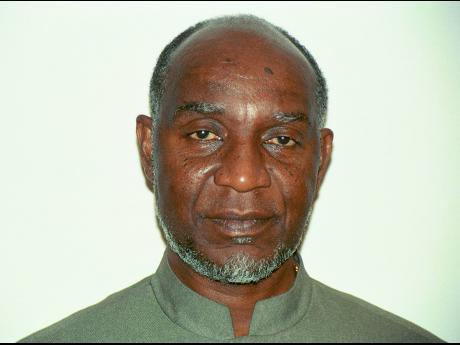
Ambassador Byron Blake is former deputy permanent representative of Jamaica to the United Nations and former assistant secretary general of CARICOM. Send feedback to columns@gleanerjm.com