
Christopher Burgess | Economics of affordable housing lie in strong foundations
Published:Monday | June 2, 2025 | 12:08 AM
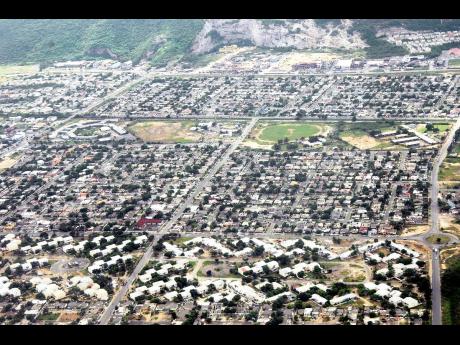

Jamaica’s economic growth has averaged less than 0.7 per cent over the last two decades, well behind the Caribbean average of two per cent (World Bank), because of fiscal imbalance and low productivity. A 17-year programme to deliver over 190,000 affordable homes and regularise 200,000 families trapped in informal settlements could lift a sluggish economy. Few investments offer greater economic and social returns than large-scale affordable housing.
Today, graduates are migrating before even collecting their diplomas, and professionals in their 30s are not seeing the path to an affordable home, even with two gigs. J$20-40 million homes are simply out of reach.
Jamaica now ranks an unfortunate third in the world for human flight and brain drain ( GlobalEconomy, 2024), just behind Palestine. Our teachers, doctors, nurses and engineers are fleeing in unprecedented numbers, chasing not just higher pay, but escaping poor working conditions, limited professional growth, and inaccessible housing. This exodus of skilled and unskilled workers increases labour costs, erodes productivity and public services, and shrinks the tax base. But affordable housing can offer skilled workers a reason to stay. By expanding access to home ownership, we can retain the talent our nation needs to grow.
SHELTER AND STIMULUS
Construction, manufacturing, and tourism have all contributed to GDP, but have failed to deliver sustainable growth. Manufacturing contributes under nine per cent but is crippled by liberalisation and high electricity costs. Tourism, though contributing to up to 30 per cent of GDP, is riddled with economic leakage from foreign ownership, heavy imports and low wages. Construction contributes nine to 12 per cent to GDP but only surged during major public housing drives. Infrastructure and housing schemes like Duhaney Park doubled cement output in the 1960s, and the 1970s housing boom pushed the sector to over 12 per cent of GDP, with schemes like Bridgeport and Edgewater. Strategic public-led, low-income housing and infrastructure investment drives more GDP growth than a few privately led housing schemes.
Large-scale affordable housing can be an economic stimulus. With a structured 17-year plan, it could boost the economy through construction, and spin off jobs and services. In the long term, affordable housing could provide earnings via property taxes, increased home equity, and a reliable labour force. Housing anchors people to the local economy. It keeps small business owners, nurses, teachers, and engineers home.
A 17-YEAR BLUEPRINT
Jamaica’s housing crisis requires a phased-delivery strategy to maintain fiscal responsibility.
• In the first two years, government should focus on planning, reform, and public-private partnerships to support large-scale projects. Clear price and incentive guidelines are essential to avoid inefficiencies later. Construction would require over J$235 billion before mortgage repayments begin, and the National Housing Trust (NHT) could begin sourcing a part of these funds through restored diversion and other government sources.
• From years 3 to 10, over 90,000 housing units could be built, averaging 13,000 annually, focused on regularisation, starter units and high-rises in key areas. This would require J$100 billion annually. Based on 2022–2023 public and private mortgage capacities (J$65B and J$72B), financing capacity should be sufficient by 2029.
• From years 11 to 17, a further 100,000 units can be delivered with J$137 billion annually, aligned with mortgage capacity growth to avoid economic shocks.
The private sector should be incentivised to participate in the annual delivery of 2,500 de-risked single-family homes and apartment units for young professionals, to the tune of J$27 billion. Government should lead land acquisition of several five to 10-acre sites near major roads and master plan for transit-oriented districts.
ECONOMIC IMPACTS
Investing J$100 billion annually in housing could lift Jamaica’s GDP by over 4 per cent within a few years, well above the sluggish 0.7 per cent growth rate. Just as the increase in sales of cement in the 1960s lifted the economy (Planning Institute of Jamaica), we can do it again.
Long term, the returns are attractive. Land regularisation and expanded housing stock could generate over J$2.1 billion annually in land taxes. In Greater Portmore, land values have been appreciated by more than 13 per cent per year, showing the wealth-building potential of formal communities. A successful national housing programme could unlock over J$115 billion annually in added house values.
Equally important, 200,000 families would gain homes in communities near work and urban transport centres, increasing labour participation and productivity. Beyond the obvious economic gains, such a housing programme could help stem Jamaica’s brain drain.
In supply-constrained conditions like Jamaica, mass housing construction can reduce housing costs, free up income for investment or consumption, and lift national output.
Affordable housing is a smart national economic investment with a 13 per cent return on investment (ROI). Singapore’s Housing Development Board has impressive economic returns of 15 per cent, boosting productivity, and social stability.
FROM MIGRATION TO NATION-BUILDING
Jamaicans are not waiting another generation to own a key to a home, they’re migrating, taking with them the innovation and energy our economy needs. To reverse this trend, informal communities must be regularised, and affordable homes must be built for the core of our labour force. At the same time, urban planning must deliver affordable, high-density, smart apartment solutions that meet modern living needs for young professionals.
Affordable housing is a foundation for economic and social development. If we align housing expansion with GDP growth, and restore the NHT’s capacity, we can significantly increase housing delivery without destabilising the economy. Imagine if we could increase GDP growth from 0.7 per cent to over 4 per cent consistently. We could deliver the education, healthcare and service our citizens deserve.
By delivering affordable homes, we can shake off decades of economic stagnation and move from migration to nation-building a more inclusive society.
Christopher Burgess, PhD is a registered civil engineer, land developer and the managing director of CEAC Solutions Company Limited. He is currently a Jamaica Institution of Engineers council member. Send feedback to columns@gleanerjm.com