
Rebecca Tortello | Prevent the summer slide: Call to keep children learning
Published:Tuesday | July 15, 2025 | 12:06 AM
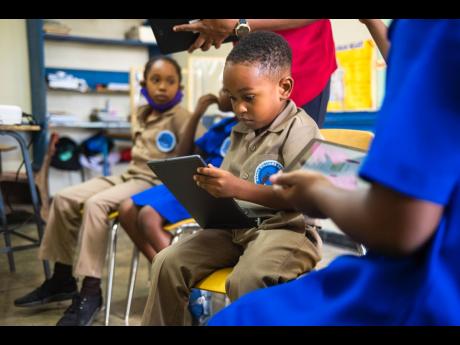

As the children look forward to long summer days, it is easy to overlook a quiet threat that creeps in – it is called the “summer slide.” This refers to the learning loss that many students, especially those from lower-income families, experience during extended breaks from structured learning environments. If left unaddressed, this loss can widen already significant gaps in literacy, numeracy, and school readiness.
The evidence is undeniable. The 2022 Jamaica Multiple Indicator Cluster Survey carried out by the Planning Institute of Jamaica in collaboration with UNICEF, the Inter-American Development Bank (IDB) and the Statistical Institute of Jamaica, as part of the Global MICS Programme has startling data. The report showed that 38 per cent of children aged seven to14 have not acquired foundational reading skills, and only 50 per cent are proficient in basic numeracy. These national averages mask even deeper inequalities. Among children from the poorest households, just 47 per cent can read at the expected level, compared to 82 per cent in wealthier homes. In numeracy, the gap is even starker with only 33 per cent of poor children being numerate, compared to 66 per cent of their richer peers.
This should concern everyone. Literacy and numeracy are the building blocks of lifelong opportunity. When children fall behind in these areas, they face a steep uphill climb in every other aspect of their education and development. That climb becomes even harder when the long summer break interrupts their learning momentum.
PREVENTABLE
The summer slide is preventable.
With the right strategies, tools, and community commitment, we can ensure that children not only retain what they have learned during the school year but also return to school stronger, more confident, and ready to excel. This is particularly crucial in Grade 1, where early gains, or early gaps, can set the tone for a child’s entire academic journey. UNICEF recommends the following:
1. Summer learning opportunities that are fun and accessible: Summer learning does not have to resemble traditional school. The most effective programmes successfully blend reading, mathematics, and play-based activities to create experiences that are joyful and engaging. Research shows that children, particularly those from disadvantaged backgrounds, who participate in these types of programmes perform significantly better academically than their peers who are not engaged in structured activities during the holidays.
In Jamaica, UNICEF and the Education Ministry are leading the charge with resources designed to support families during the summer. The Learning Passport platform, available online and offline at https://jamaica.learningpassport.org, provides lessons in reading, mathematics, science, and other subjects, aligned with the curriculum. A few sessions each week can make a measurable difference in a child’s readiness for the new school year.
2. Embrace the power of play: It might surprise some to learn that play is a key part of learning. Research by LEGO Foundation and the American Academy of Pediatrics confirmed that play-based learning helps children develop language, literacy, and problem-solving skills more effectively than traditional instruction that tends to be based on memorisation alone. Play also helps children to develop their executive functions which are tools that contribute to a child’s ability to remember, pause and develop emotionally and socially.
Parents and caregivers do not need expensive toys or apps to foster this kind of development. Everyday moments offer countless opportunities for learning. Look for UNICEF Jamaica’s Cornershop Challenge posters distributed islandwide by the Digicel Foundation and consider simple family games like those featured in UNICEF Jamaica’s guide to 19 family bonding games which were developed during the pandemic: ( https://www.unicef.org/jamaica/stories/19-games-family-bonding-during-co...). These games remain relevant and offer both fun and foundational skill-building.
This summer, parents can also look for the UNICEF Summer Spark social media series, which will feature weekly learning challenges and tips to keep children engaged. These activities, shared across our social media platforms, offer inclusive, and engaging ways for parents to support their children’s learning journey.
3. Make reading a daily habit: The single most powerful action a parent can do to support a child’s learning is to read with them, every day, and everywhere. Whether you are reading street signs, posters, food labels, church bulletins, or books, every word counts. Discuss the stories. Ask questions. Let your children see you reading for pleasure.
A love of reading nurtures critical thinking, expands vocabulary, and strengthens the parent-child bond, benefits that extend well beyond the classroom. Reading lays an essential foundation for success. According to global studies, children who are exposed to books early are better communicators, more attentive, and perform better academically at all levels.
4. Engage the whole community: Reversing the summer slide and closing learning gaps is not a task for parents alone. There is an urgent need for sustained action and investment from policymakers, schools, the private sector, and development partners.
Digital access and affordability remain barriers for many families. Supporting them with connectivity, devices, and accessible learning resources, especially during the summer holiday, is an investment in Jamaica’s future. Likewise, expanding structured community-based programmes that integrate academics and play can help bridge gaps and build equity.
Decision makers must also continue to prioritise the critical Grade 1 transition year to ensure that all children, regardless of socioeconomic status, receive the support they need to succeed from the very beginning.
At UNICEF, we believe that children’s lives are a continuous stream of educational moments. What they need are adults who recognise, support, and nurture those moments. As the summer begins, UNICEF urges parents, educators and policymakers to view it not as a break from learning, but as an opportunity to reinforce, enrich, and reconnect.
When we make space for joyful learning, we do more than prevent a slide, we prepare Jamaica’s children to soar.
Rebecca Tortello is education specialist at UNICEF Jamaica. Send feedback to columns@gleanerjm.com