Elizabeth Morgan | Another war in a complex, volatile region: fulfilling prophecy?
Loading article...
-
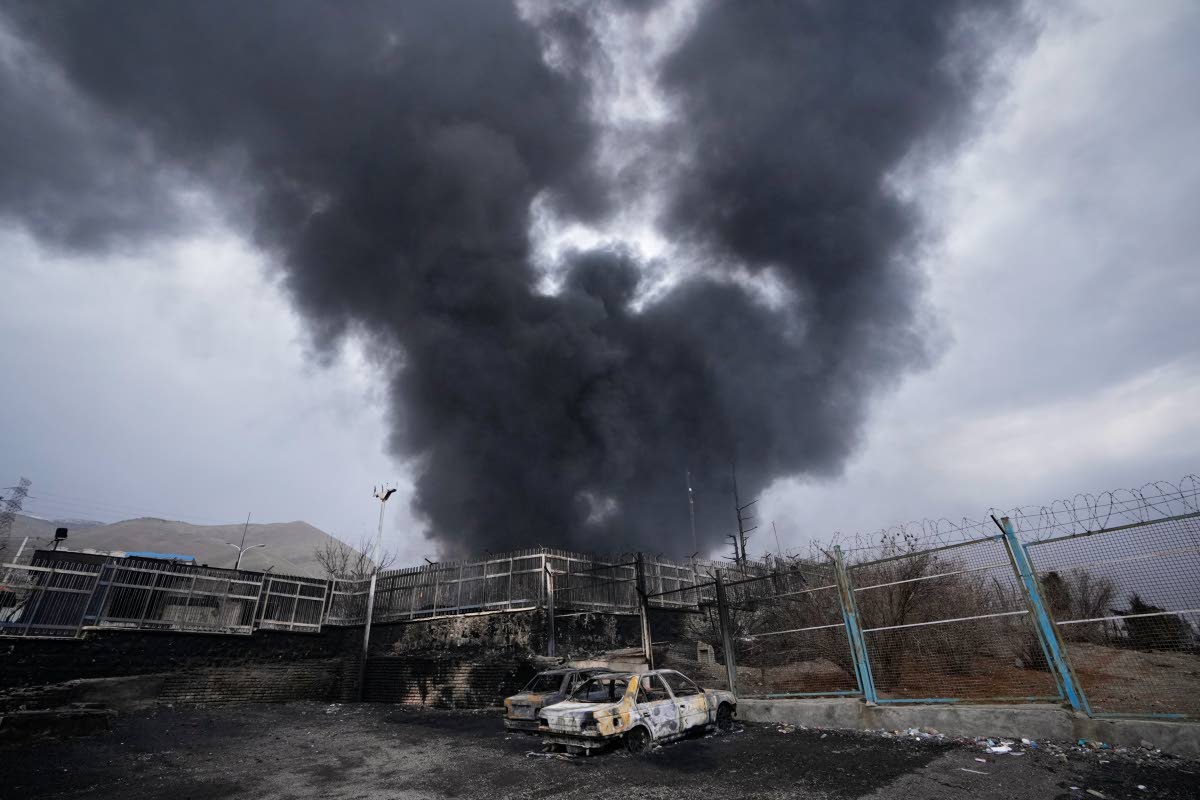 A thick plume of smoke rises from an oil storage facility hit by a US-Israeli strike in Tehran, Iran on March 8, 2026.
-
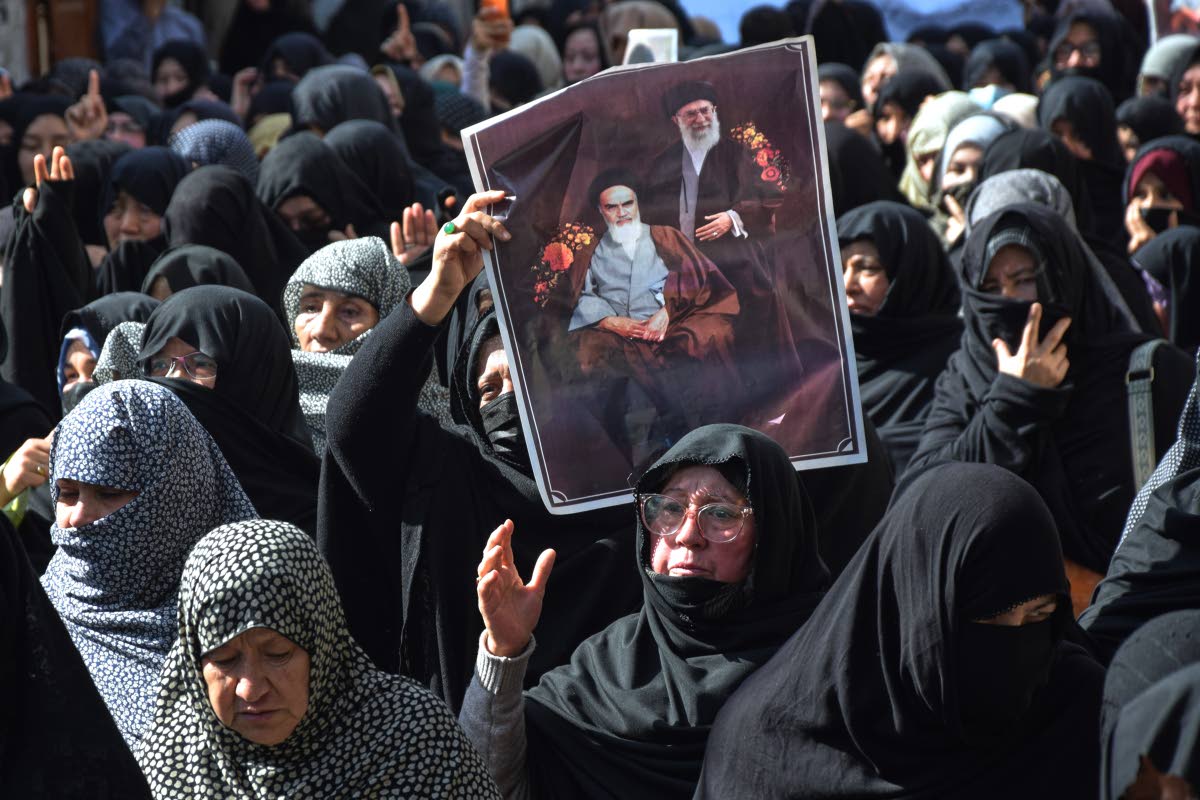 Shiite Muslims hold the portraits of Iranian leaders during a rally to condemn the killing of Iranian Supreme Leader Ayatollah Ali Khamenei, in Quetta, Pakistan, on March 1, 2026.
The international news is dominated by the current Iran war initiated by Israel and the USA on Saturday, February 28. The USA was assembling its military in the region following its mission in Venezuela. While there was speculation about US intentions, negotiations were in progress on Iran’s nuclear weapons programme, thought to have been obliterated by US bombers in August 2025.
The US attacked without: informing allies; raising it in the UN Security Council, and seeking Congressional approval. From polls, this is an unpopular war in the USA, regardless of Iran’s reputation of supporting terrorism, and its opposition to Israel. So, another war is in progress in the Middle East, a complex and volatile region with a mix of cultures and religions, and a major source of oil supplies. It will have serious implications for the region and the global economy, if prolonged.
The Middle East is one of the oldest settled land masses in the world with thousands of years of history. Wars among the various ethnic factions are part of that history. The region of Jesus is quite different today resulting from Muslim invasions and World Wars 1 and 2.
SHAPING THE MIDDLE EAST
Regarding the 7th Century Islamic invasions, those of us who studied history remember wading through the nine Crusades from Christian Europe to regain control of the Holy Land from the Muslim (Islamic) infidels. These were from 1095-1270. Of course, the three religions, Judaism, Islam, and Christianity, have the same Abrahamic root, worshipping the same God. They just do it differently. Only one of these European Crusades was successful. The Christian Princes, in 1204, even managed to facilitate Islamic expansion.
The region was thereafter dominated by the Arabs and their Islamic religion in its different forms (Sunni and Shia), although indigenous ethnic groups and their religions, including Christianity, remained. By the 15th century, much of the region was part of the Ottoman (Islamic) Empire which disintegrated after WW1. The Ottoman Empire included modern Turkiye, Iraq, Syria, Lebanon, Israel, Palestine, Jordan, parts of Saudi Arabia and Yemen. Persia was a pseudo-colony of Britain and Russia. It sought to remove foreign influence in 1925 under the monarchy of the Pahlavi family. It became known as Iran in 1935. Afghanistan was under British rule until 1919 when it gained independence.
Britain became a colonial influence in the region gradually in the 19th Century. Oil was discovered in Iran (Persia) by a British engineer in 1908. Territories in the Middle East became protectorates of Britain and France under mandates of the League of Nations (forerunner to the United Nations) following WW1.
After WW2, came further divisions and the establishment of the state of Israel. The USA became involved to a greater extent in oil exploration in Saudi Arabia during WW2. Up to the 1970s, seven European and US companies controlled the region’s oil resources. Their governments took keen interest in the affairs of the countries, including toppling governments (e.g. the 1953 Iran coup d’etat returning the Shah (King) Mohammad Reza Pahlavi to power). The creation of the State of Israel in 1948, without addressing the situation of displaced Palestinians, led to hostility toward Israel by neighbouring Islamic states, and a succession of wars, uprisings, and terrorist attacks. US involvement in Iraq, Lebanon, Syria, Afghanistan, and Yemen have not been successful. So, here we are today with another war, added to those ongoing in this region.
THE INFLUENCE OF RELIGION
Religion has been important in the Middle East, influencing government decisions. Much of the region’s history is found in the Judaic/Christian Bible and the Islamic Quran. The Jews relate to the Old Testament, especially the first four Mosaic books; Christians to Jesus and the New Testament, and Muslims (Islam) to Mohammed and the Quran.
Iran is the only theocracy, a Shia religious state, arising out of the 1979 revolution when the Iranian people ousted the British/US imposed Shah and overwhelmingly supported the creation of an Iranian Islamic State, installing Ayatollah Khomeini, a cleric, as the Supreme Leader. Many in Iran are now dissatisfied with this government after 47 years.
In terms of their philosophies and motivations relating to war; for the Jews, in the sense of an eye for an eye, it is supposed to be proportional response, not unlimited retribution and vengeance; for the Muslims, it is martyrdom – it is right and fitting to die fighting a holy war (a Jihad); and for Christians – it should be peace, forgiveness, resolution and reconciliation. Christians should be about a just war arising from self-defence or championing a just cause. There should be separation of Church and State.
It is reported in the media, however, that there is a new US reason for war, added to the several others given, which is based on the beliefs of US evangelical Christians that this Iran war is the fulfilment of end time prophecies in the Book of Revelations. This evangelical reason sees President Donald Trump as chosen by Jesus to light the signal fire in Iran to start Armageddon and initiate Jesus’ second coming. It is reported that this is in the briefing given by some US commanders to their military personnel. They are on a divine mission.
So along with the return to the 19th century hegemonic Monroe Doctrine, protectionist tariffs, and wielding lethal military power, particularly air and navy, to subdue and spread fear, the US is now fighting a religious war. Recall too the bombings in Nigeria to support Christians. A number of those involved in the January 6, 2021 incursion had links to the US military and an extreme evangelical right. Donald Trump has had strong support from an evangelical base with its agenda.
With this war, oil price increases could see global economies facing severe economic pressures and with no clear idea how and when it will end, especially if people on each side act on extremist religious motivations. So, are we looking at igniting Armageddon, as Iran is bombed; President Trump calls on US arms manufactures to ramp up production of exquisite weapons; forms the Shield of the Americas alliance to battle drug cartels; prepares to take out Cuba, and, maybe, adding Canada and Greenland to effect the US’ manifest destiny? Is the US, with its awesome military power, rooting out the global bad guys and carrying out God’s mission? Is President Trump now taking up the role of the world’s caped crusader? This is dangerous territory. What about other “bad’ guys, who already have nuclear weapons?
Elizabeth Morgan is a specialist in international trade policy and international politics. Send feedback to columns@gleanerjm.com.