Norris R. McDonald | ‘Rivers of Babylon’ to Hurricane Melissa: Jamaican protest songs from Shearer to Holness
Loading article...
-
 Beenie Man. Photo - Antoine Lodge
-
Beenie Man. Photo - Antoine Lodge
-
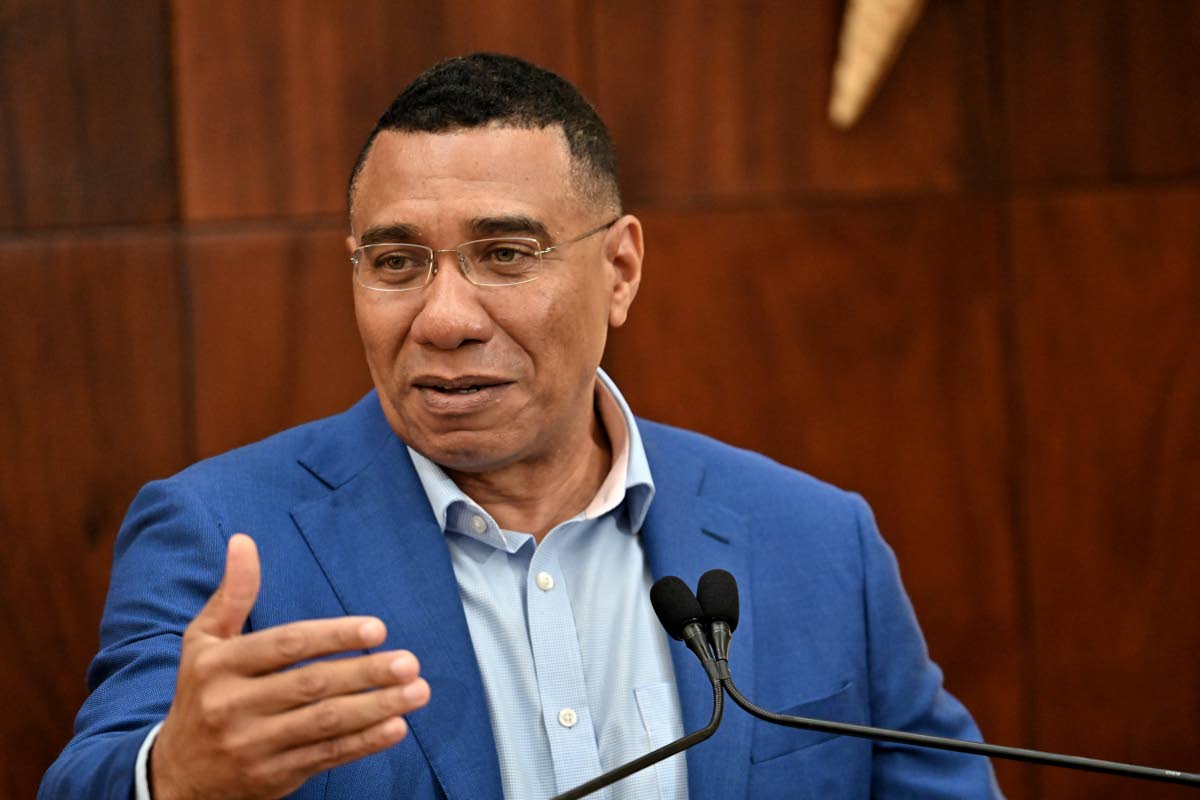 Prime Minister Dr Andrew Holness. Photo - Rudolph Brown
‘The Melodians’ released “ By the Rivers of Babylon” in 1970 to voice the painful reality of a poor black people under siege by an uncaring neo-colonial government.
In the late 1960s and early 1970s, Rastafarians in Jamaica faced severe state repression under Prime Minister Hugh Shearer’s Jamaica Labour Party (JLP) administration.
Though governed by a predominantly black political class after Independence in 1962, the new rulers kept the old colonial pecking order – viewing Rastafarians, Black Power advocates, and the urban poor as threats to public order, tourism, and elite wealth.
The Walter Rodney Riots of October 1968 – sparked when Shearer barred the radical Guyanese historian from re-entering Jamaica after his “Groundings” with Kingston’s poor – marked a turning point against widespread poverty, police brutality, and the forced trimming of Rastafarian locks.
Reggae music emerged as a spiritual and political outcry against injustice. And, as was asked in “ By the Rivers Babylon” … the oppressor required from us a song: “But how can we sing a song in a strange (Babylon) land”.
That cultural wave — embodied by Delroy Wilson’s rallying cry “ Better Must Come” — joined forces with progressive politics to sweep Michael Manley and the People’s National Party into power in 1972. Music cracked open the colonial fortress.
“WEH DI MONEY DEH?”
Now, over half a century later, political arrogance remains unchanged. Whenever ordinary Jamaicans demand accountability for public funds, the ruling establishment rarely produces a ledger; it produces an insult.
That is the raw reality behind the current bangarang between dancehall king Anthony ‘Beenie Man’ Moses Davis – joined by conscious voices like Wayne Lonesome — and the twin pillars of the current JLP administration: Prime Minister Dr Andrew Holness and Deputy Leader Desmond McKenzie.
When Beenie Man stepped before international media and dropped his biting commentary, ‘Weh Di Money Deh?’, he channelled the righteous anger of working-class families still battered and displaced a year after Category 5 Hurricane Melissa devastated the island.
He asked a basic democratic question: Where is the relief money, and why has a failing government withheld it from the people who built this country? Rather than opening the books, political leaders chose personal mockery.
THE AUTHORITARIAN TAUNT FROM JAMAICA HOUSE
Prime Minister Dr Andrew Holness framed legitimate public questions over hurricane relief as a threat to national stability, arguing at a recent public event that “it undermines and destroy the legitimacy of Government” .
Then came his chilling taunt, directed clearly at Beenie Man: “I will continue to say it over and over again, and I don’t care who vex ... Go make a song of it.”
Think about the arrogance in those words. By telling a grassroots icon to “go make a song of it”, the Government tries to reduce working-class protest into belittlement and harmless entertainment.
Clearly, this signals that the black masses may dance to their misery and export their suffering for tourists, provided they never demand proper audits or real accountability.
This is the classic sleight-of-hand – real rahtid ‘hullowgow’ —– or, as Wayne Lonesome puts it, “a political distraction”. In this sense, demands for justice by Beenie Man and others are painted as an attack on society.
‘NOBODY NAH BUY IT’: CORONATION MARKET BANGARANG
If Holness’s response reeked of talking down to the people, Deputy JLP Leader Desmond McKenzie’s performance on a West Kingston platform was pure political Coronation Market bangarang and bullying.
Demanding “substance [rather] than fluff”, McKenzie sneered at Beenie Man’s chart history, telling a partisan crowd the veteran deejay hadn’t topped the charts in 20 years. He then mocked the artiste’s new track: “Dat deh record deh nah sell at all. Nobody nah buy it.”
Here lies the mental enslavement of the ruling elite. Dismissing a call for economic justice because “nobody nah buy it” puts commercial sales ahead of basic morality. To an out-of-touch political class, a citizen’s cry for survival only matters if it turns a profit or wins votes.
This is where Dr Carter G. Woodson’s The Mis-Education of the Negro hits the nail on the head. Because they sit in Parliament, the political ruling class thinks it is okay to pour scorn on the suffering victims of Hurricane Melissa and social justice advocates like Beenie Man.
Truly pathetic! How sad!
What makes the Government’s chest-beating indefensible is that Beenie Man, Wayne Lonesome, and their peers are merely echoing Jamaica’s own auditor general.
As reported by the auditors, out of $1.4 billion mobilised for hurricane victims, a meager two per cent had reached the people by early 2026. Meanwhile, nearly 60,000 households – from St. Elizabeth and Westmoreland to St James and Clarendon – were left beneath shredded tarpaulins, navigating impassable roads and terrible ‘sufferation’.
THE PARLIAMENT OF THE STREET
My dear friends, for generations, black resistance in the Caribbean has relied on independent culture to expose ruling-class hypocrisy. From Marcus Garvey’s Liberty Hall to Bob Marley, Peter Tosh, Bounty Killer, Wayne Lonesome, and Beenie Man, the sound system and the microphone have always served as Jamaica’s true Parliament of the Street.
This is a living marketplace of ideas, carrying forward the street-level activism of St William Grant and other titans of black resistance — a people’s assembly where the locked-out masses put the powerful on trial when Gordon House shuts its doors. In a society still scarred by plantation economics, ghetto rhythms remain the people’s primary newspaper, courtroom, and voice of protest.
Mr Holness and Mr McKenzie can mock Beenie Man’s chart numbers and boast to party faithful that “nobody nah buy it”. Yet, across inner-city corners and rural districts, Jamaicans are not buying the Government’s broken records of incompetence, arrogance, and alleged misuse of public funds.
Just as By the Rivers of Babylon and Better Must Come”outlived Shearer-era repression to reshape history, Weh Di Money Deh? will remain the loudest anthem of accountability across Jamaica and the African diaspora until every dollar meant to heal a Hurricane Melissa-battered nation is accounted for.
No amount of political spin from Jamaica House can silence the cries for justice from the hungry, betrayed people ravaged by Hurricane Melissa and their social justice advocates like Beenie Man!
That’s the bitta truth.
Norris R. McDonald is an author, economic journalist, political analyst, and respiratory therapist. Feedback can be sent to columns@gleanerjm.com or miaminorris@yahoo.com.