Mark Shields | Enforcement, not smart traffic lights will save lives
Loading article...
-
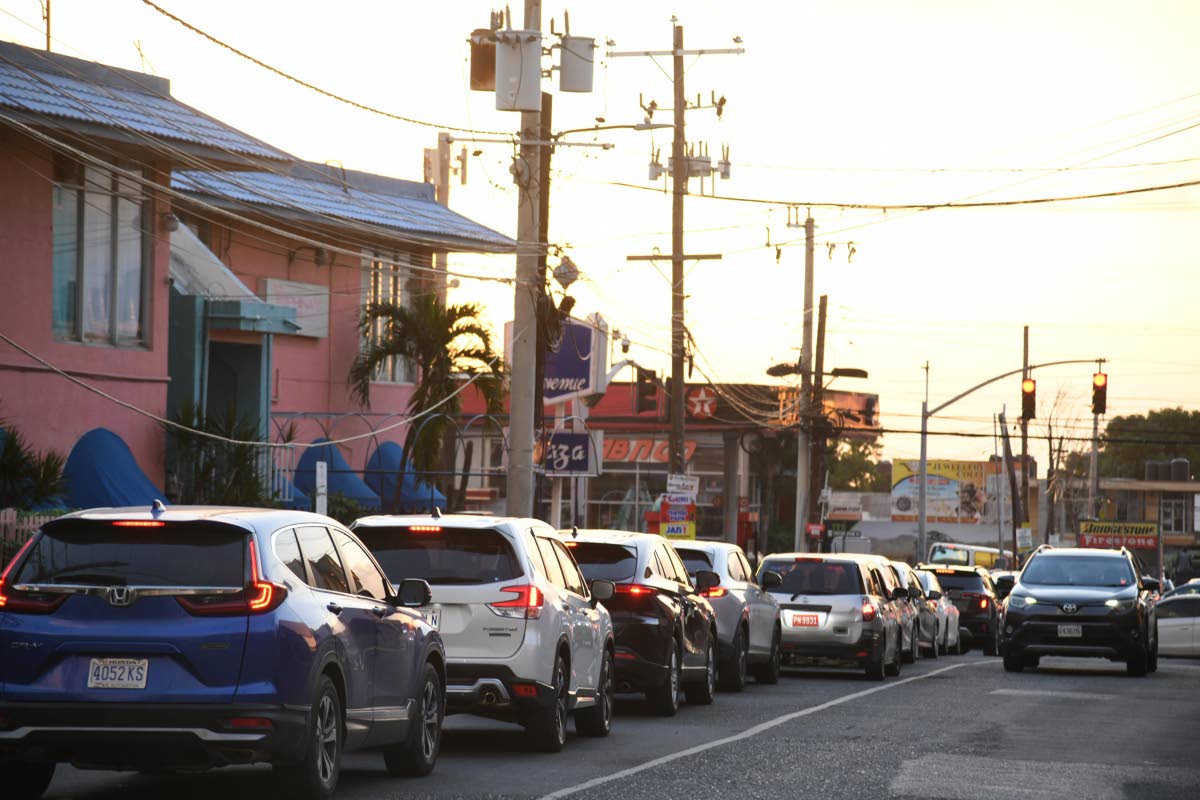 In this December 2025 photo traffic is seen at a standstill at South Avenue, Kingston. Photo - File
-
In this December 2025 photo traffic is seen at a standstill at South Avenue, Kingston. Photo - File
-
 Mark Shields. Photo - File
The announcement of the installation of camera-based video-detection systems at major signals has been presented as a major step forward in traffic management and modernisation. It is certainly welcome.
Modern traffic systems are long overdue, but we must ask an uncomfortable question: Are we investing in the right priority? Because improving how traffic flows is not the same as improving road safety. And right now, Jamaica’s road safety crisis is a driver-behaviour problem.
The new system will help traffic lights respond to real-time congestion. Vehicles will be detected by cameras instead of outdated electromagnetic loops buried in asphalt. Signals can adjust dynamically. Congestion may ease. All of this is positive. But none of it will stop red-light running, excessive speeding, dangerous overtaking, lane indiscipline, reckless motorcycle riding, or minibus lawlessness. A smoother journey to the next intersection does not prevent someone from running the red light when they get there.
Across the world, the biggest reductions in road deaths came from electronic traffic enforcement. Countries that achieved dramatic road-safety improvements did so through red-light cameras, speed cameras, average speed enforcement, automated ticketing, and licence plate recognition systems. The common factor was simple: drivers began to believe they would be caught.
Road-safety improves when the perceived certainty of punishment increases — not when traffic moves more efficiently. Road crashes are a national public health and economic crisis.
Every serious collision creates a chain reaction of costs: emergency response and ambulance services; hospital trauma care and surgery; long-term rehabilitation and physiotherapy; disability support and social services; lost productivity and income; and families losing breadwinners or becoming long-term caregivers.
Many victims survive crashes but suffer life-changing injuries that remove them permanently from the workforce. Others require years of medical care. The ripple effects are felt across families, employers, and the national economy.
In countries such as Barbados, Trinidad & Tobago, Mauritius, and Iceland, road-safety strategies treat enforcement as a public-health intervention. These countries recognised that preventing crashes is far cheaper than treating victims.
Jamaica’s health system quietly absorbs the cost of trauma care every day. Orthopaedic wards, neurosurgical units, and emergency departments carry the burden of road violence. The financial impact is enormous but rarely calculated publicly. Electronic traffic enforcement is not just about tickets and fines. It is about preventing the injuries that fill hospital beds. Every serious crash avoided saves public healthcare resources, keeps workers in the labour force, protects family income and stability, and reduces long-term disability costs.
ECONOMIC POLICY
Put simply, safer roads are critical to economic policy. The truth is uncomfortable but obvious to anyone who drives daily: many drivers in Jamaica do not believe traffic laws will be enforced. The current system relies heavily on manual enforcement: limited police resources, sporadic roadside checks, slow court processes, and weak follow-through on tickets. The perceived risk of being caught remains low. And when the risk is low, dangerous behaviour becomes normalised.
No country can manually police modern traffic volumes effectively. Automation is the only scalable solution. For years, successive governments have promised amendments to the Road Traffic Act to enable electronic traffic enforcement. The benefits are well known: fewer road deaths, fewer serious injuries, behavioural change at scale, significant revenue from violations, reduced need for roadside enforcement, reduced opportunities for corruption allegations, and faster and fairer ticket processing. Yet despite repeated promises, the legislative framework required to fully enable automated enforcement remains unfinished. Meanwhile, Jamaica continues to lose lives on the roads at an unacceptable rate.
The current investment signals a troubling possibility: we may be prioritising traffic efficiency over road safety. Smart signals help vehicles move faster through intersections. But without enforcement, faster movement can simply mean faster approach speeds, more aggressive driving, and more severe collisions. It is entirely possible to improve congestion while leaving fatalities largely unchanged. That would be a tragic missed opportunity.
To modernise Jamaica’s road-safety framework, electronic traffic enforcement must become a national priority. This includes red-light camera enforcement, speed camera networks, average speed enforcement on major corridors, automated ticket issuance and processing, and integration with vehicle licensing and insurance databases. This is proven, scalable, and used worldwide. And importantly, it pays for itself.
NO VISIBLE END GAME
There is one final issue that deserves honest public discussion. Electronic traffic enforcement was removed from the Ministry of Transport some years ago and placed under the Ministry of National Security. Since then, the concept has remained trapped in studies, pilots, and discussions — but with no visible end game. This is not a criticism of the Ministry of National Security’s broader work. In recent years, it has played a critical role in the reduction of murder and serious crime. That progress deserves recognition. But it raises a logical question: Why has the same urgency not been applied to reducing road deaths?
Road fatalities claim hundreds of lives annually. They devastate families, burden the health system, and damage the economy. Yet electronic traffic enforcement — one of the most proven tools available to reduce these deaths — has stalled. Perhaps the explanation is simpler than we think. Electronic traffic enforcement sits at the intersection of traffic management and road safety. Traffic management sits with the Ministry of Transport. Road safety should sit alongside it. When the two are separated, progress slows.
Bringing traffic management and traffic enforcement under one ministry would allow a single, coherent strategy — where smart traffic systems and electronic enforcement are developed together, not in parallel silos. That is not controversial. It is simply common sense. After years of promises to enable electronic enforcement, the public deserves clarity. When will Jamaica fully commit to automated traffic enforcement? And until behaviour changes, road deaths will continue.
Smart traffic lights are a start. But enforcement is what saves lives.
Mark Shields is former deputy commissioner of police, Jamaica Constabulary Force, and managing director of Shields Crime & Security Ltd. Send feedback to columns@gleanerjm.com.