Dennis Minott | Selective outrage and surrender of Jamaica’s health sovereignty
Loading article...
-
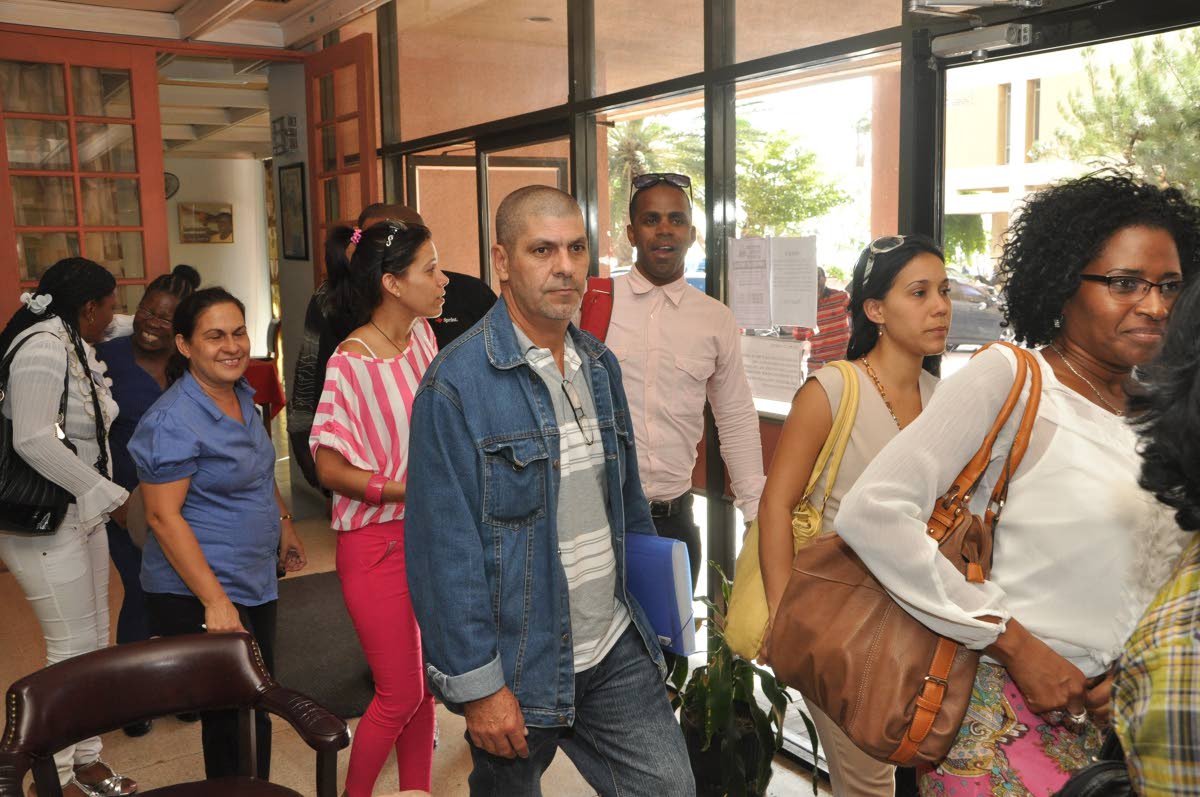 This 2014 photo shows Cuban doctors and nurses at the Ministry of Health offices. Photo - File
-
This 2014 photo shows Cuban doctors and nurses at the Ministry of Health offices. Photo - File
-
 Dennis Minott
“The first duty of the state is not diplomatic elegance but the protection of life.”
A state’s first duty is not to flatter foreign power or to evade diplomatic discomfort but to preserve the life, health, and functional security of its people. It is precisely from that perspective that the abrupt ending of Jamaica’s long-standing medical cooperation arrangement with Cuba must be judged. What has been presented as a technical diplomatic adjustment is, in truth, a decision with flesh-and-blood consequences for Jamaican patients.
Dudley McLean II, in a letter to this newspaper, has already exposed an uncomfortable hypocrisy in our national conversation. For nearly half a century, Cuban doctors and nurses quietly sustained fragile corners of Jamaica’s health system, particularly in rural parishes such as Portland, where many residents – including this writer – know from direct experience that their competence and humanity are beyond dispute. Yet these same professionals now find themselves subjected to moralistic scrutiny while the wholesale importation of Chinese labour for major infrastructure projects is treated as routine diplomacy. Evidently, our moral outrage is highly selective.
Mr McLean’s observation does more than expose inconsistency. It reveals the deeper failure at the centre of this episode: the erosion of Jamaica’s health sovereignty.
The Government has confirmed that the long-standing bilateral arrangement ended after the two states failed to agree new terms even though Cuban professionals were still serving in public facilities across the island, and nearly 300 remained under contract in recent weeks. What makes this development politically grave is not merely that a useful programme ended but that rupture was allowed to occur before readiness.
The Ministry of Foreign Affairs has acknowledged that the governing agreement had already expired in February 2023 and that Jamaica is now prepared to engage Cuban personnel individually under Jamaican labour law. That admission is devastating. It means that the authorities knew for three years that the framework had lapsed, knew the public system remained dependent on these personnel, and still reached March 2026 without a settled, lawful, and continuity-preserving replacement.
DOESN’T BECOME WISDOM
Administrative negligence does not become wisdom merely because it is announced in polished diplomatic language.
If there were legitimate concerns about labour standards, salary channels, passports, or international compliance obligations, those issues required urgent renegotiation well before the brink was reached. Instead, Jamaica has been left scrambling to improvise individual contracts after dismantling the very framework that ensured predictable staffing. That is not sovereignty. It is reactive statecraft.
Health sovereignty means the capacity to secure essential care on terms consistent with national law, institutional continuity, and patient need. On that test the State has plainly failed.
Defenders of the decision will insist that legality must prevail. In principle they are correct. No democratic state should knowingly maintain arrangements it believes may violate labour norms. But that argument collapses immediately once a more elementary administrative question is asked: What transition architecture was established before termination?
Where was the phased replacement plan? Where was the parish-by-parish risk audit? Where were the staffing buffers for rural hospitals? Where was the emergency recruitment bridge, the retention incentives for local professionals, the published contingency framework for vulnerable communities?
Law without operational sequencing is not good governance. It is performative rectitude at the population’s expense.
The right to health imposes a practical obligation on governments to maintain accessible, available, and functioning care, particularly for the poor, the rural, the elderly, and those whose only dependable encounter with specialist medical attention may have come through Cuban doctors, nurses, and technicians. By the Government’s own account, Jamaicans benefited substantially from eye care and general services delivered through this cooperation.
TRANSFERING THE RISK
When a ministry knowingly weakens an already strained delivery chain without secured substitutes, it is not defending the national interest. It is transferring risk downward to ordinary citizens least able to absorb it.
And it is precisely here that Mr McLean’s warning about selective outrage becomes so important. If labour standards truly concern us, then consistency demands that the same scrutiny be applied across all international labour arrangements whether involving Cuba, China, or any other partner. Otherwise, this sudden moral awakening is not principle at all but geopolitical fashion dressed up as conscience.
The issue, therefore, extends beyond foreign policy into the domain of ministerial fitness.
A minister of health who cannot guarantee continuity in critical human resources and a minister of foreign affairs who allows a strategically vital bilateral arrangement to terminate without a durable successor have each failed at the centre of their portfolios.
Ministers are custodians of systems whose interruption harms lives. When they preside over foreseeable breakdowns in those systems, resignation is not cruelty. It is constitutional hygiene.
Some will argue that Jamaica can simply hire the Cuban professionals directly under local law. Yet that defence only sharpens the indictment. If direct engagement was always the cleaner legal option, why was it not negotiated, structured, and installed before the collapse of the previous arrangement? Why was continuity left to last-minute improvisation?
Governments are judged not by rescue language after a crisis but by anticipatory competence before it.
Where public-health dependence is long-standing, transition must precede termination. Where legality is in question, renegotiation must be urgent rather than leisurely. Where vulnerable lives are implicated, continuity must outrank posturing. A government that fails these elementary duties cannot claim prudence, competence, or stewardship of the public trust.
Jamaica required prudence, sequencing, and statecraft. It received drift, exposure, and disruption.
And that is why the continued presence of the responsible ministers in Cabinet is politically and administratively untenable.
Dennis A. Minott, PhD, is a physicist, green energy consultant, and long-time college counsellor. He is the CEO of A-QuEST. Send feedback to columns@gleanerjm.com.