Delano Seiveright | Stop chasing perfection, start delivering recovery with NaRRA
Loading article...
-
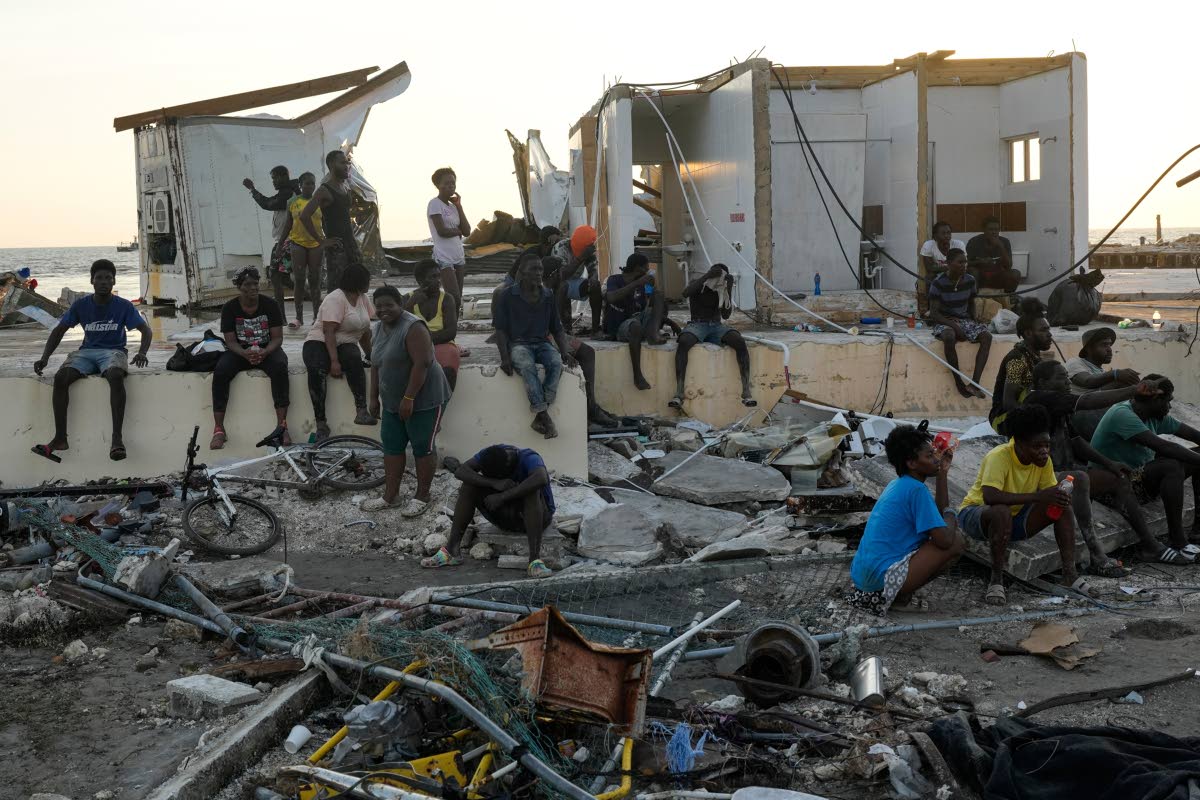 In this October 30, 2025 photo people are seen gathered among debris near a bridge in Black River, Jamaica, in the aftermath of Hurricane Melissa. Photo - AP
-
In this October 30, 2025 photo people are seen gathered among debris near a bridge in Black River, Jamaica, in the aftermath of Hurricane Melissa. Photo - AP
-
 Delano Seiveright, Minister of State, Ministry of Industry, Investment and Commerce. Photo - CONTRIBUTED
Let me be clear from the outset: the National Reconstruction and Resilience Authority (NaRRA) Act is not routine legislation. It is one of the most consequential decisions this Parliament will make in a generation, because it goes to the heart of a simple but urgent question.
Hurricane Melissa did not just damage infrastructure; it exposed structural weaknesses. The scale of impact is undeniable, approximately US$12.2 billion in damage, more than 215,000 structures affected, over 600 schools impacted, and significant disruption to hospitals, roads, drainage systems and utilities. Entire towns and communities were torn to shreds.
So this is about rebuilding a country and doing it properly. And that is why the NaRRA Act matters.
LEARNING FROM FAILURE
We do not have to guess what happens when recovery is poorly organised. The world has already shown us.
In Haiti after the 2010 earthquake, billions were pledged. A formal body, the Interim Haiti Recovery Commission, was established. Yet coordination broke down. Donors operated in parallel. Government capacity was limited. Projects stalled. Haiti’s chronic and longstanding governance issues aside, it was a disaster and a half.
In New Orleans after Hurricane Katrina in 2005, one of the most developed systems in the world struggled. Federal, state and local authorities failed to coordinate effectively for quite a while. Bureaucracy slowed response. Some communities took more than a decade to recover.
In Puerto Rico after Hurricane Maria in 2017, funding was not the issue. Billions were allocated. A central coordinating office was established; but overlapping oversight, including multiple federal agencies, created delays, duplication and bottlenecks. Years later, large portions of funding remained unspent, and recovery lagged with one expert estimating completion of recovery in the year 2051.
The lesson is consistent, recovery does not fail because of a lack of funding, it fails because of fragmentation, slow approvals, and weak execution.
WHAT IS NaRRA DESIGNED TO DO?
The NaRRA Act is an attempt to ensure Jamaica does not fall into those same traps.
At its core, it establishes a single coordinating authority to plan, prioritise and drive reconstruction. That has been criticised as being “too broad”. But reconstruction is broad. You cannot fix roads without drainage. You cannot rebuild housing without utilities. You cannot restore communities without infrastructure. The alternative to breadth is not precision, it is fragmentation.
The real question is whether the system is structured. And this bill is.
Projects must be approved by Cabinet. Programmes and plans must be properly developed and costed. There are requirements for audit and financial controls, reporting to Parliament, and transparency through a public electronic register of projects. There are also mechanisms to accelerate approvals, with safeguards, including expert input and due process.
This is not a free-for-all. It is structured flexibility under law.
LEADERSHIP, NOT CONFUSION
There has also been concern about concentration of power.
Put plainly: in a national reconstruction effort, someone must be clearly responsible. When responsibility is scattered, accountability disappears. And when accountability disappears, results suffer. NaRRA addresses that by combining clear leadership with multiple layers of accountability, Cabinet oversight, ministerial direction, audit and financial controls, reporting to Parliament, and public transparency. Beyond that, NaRRA is a time-bound, mission-driven authority that will automatically terminate upon completion of its mandate, with assets, responsibilities and records transferred in accordance with the act.
Beyond the act itself, Jamaica’s broader democratic framework remains intact and active, including the Public Accounts Committee, chaired by Opposition Member of Parliament Julian Robinson; the Public Administration and Appropriations Committee, chaired by Opposition Member of Parliament Peter Bunting; the Auditor General’s Department; the Integrity Commission; the judiciary; and a vigilant media.
In addition, the Government has established the Jamaica Reconstruction and Resilience Oversight Committee, chaired by Professor Peter Blair Henry, a Jamaican of international standing, currently a senior fellow at Stanford University’s Hoover Institution and a board member of major global corporations. This provides an additional layer of external oversight and public accountability. This is not power without limits. This is leadership within accountability.
BALANCING CRITICISM WITH URGENCY
There is no issue with criticism. Debate is essential in any democracy. Scrutiny makes legislation better. But we must guard against a familiar risk: endless debate that leads to watered-down and useless bureaucracy and, even worse, inaction.
Perfection, in circumstances like this, is not achievable. There will be issues. There will be adjustments. There will be things that, in hindsight, could have been done differently.
That is the nature of real-world execution. But we are operating in a moment of urgency. And, in a world that moves at extraordinary speed, time is not a luxury we have in abundance.
Too much time has already passed. The question now is whether we move forward with structure and discipline or allow delay, duplication and uncertainty to take hold.
PROGRESS ALREADY MADE
It is also important to acknowledge what has already been done.
Jamaica has moved quickly to restore utilities. The country has mobilised a credible financing package of approximately US$6.7 billion from multilateral institutions, including the International Monetary Fund, the World Bank Group, the Inter-American Development Bank, and others.
And, with the establishment of NaRRA as a central coordinating mechanism, we have taken a critical step toward organising that recovery effort.
These actions have helped to anchor confidence at a critical moment, giving businesses, investors, and, most importantly, our citizens a visible path back to stability and growth. That matters.
MOMENT WE CANNOT WASTE
As Prime Minister Dr Andrew Holness noted during the debate, Jamaica has long had the vision for development. What has often been missing is the institutional machinery to turn that vision into reality.
NaRRA is part of that machinery. This is a moment of urgency, but also a moment of opportunity. We can rebuild stronger. More resilient. More competitive. But only if we execute. In the end, well done is better than well said.
Delano Seiveright is member of parliament for St Andrew North Central and minister of state in the Ministry of Industry, Investment and Commerce. Send feedback to columns@gleanerjm.com