Imani Tafari-Ama | Has Washington become Jamaica’s compass?
Loading article...
-
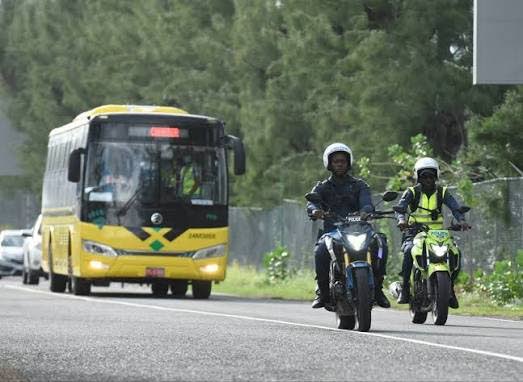 This photo shows third-country nationals deported from the United States being escorted by JCF. Photo - File
-
This photo shows third-country nationals deported from the United States being escorted by JCF. Photo - File
-
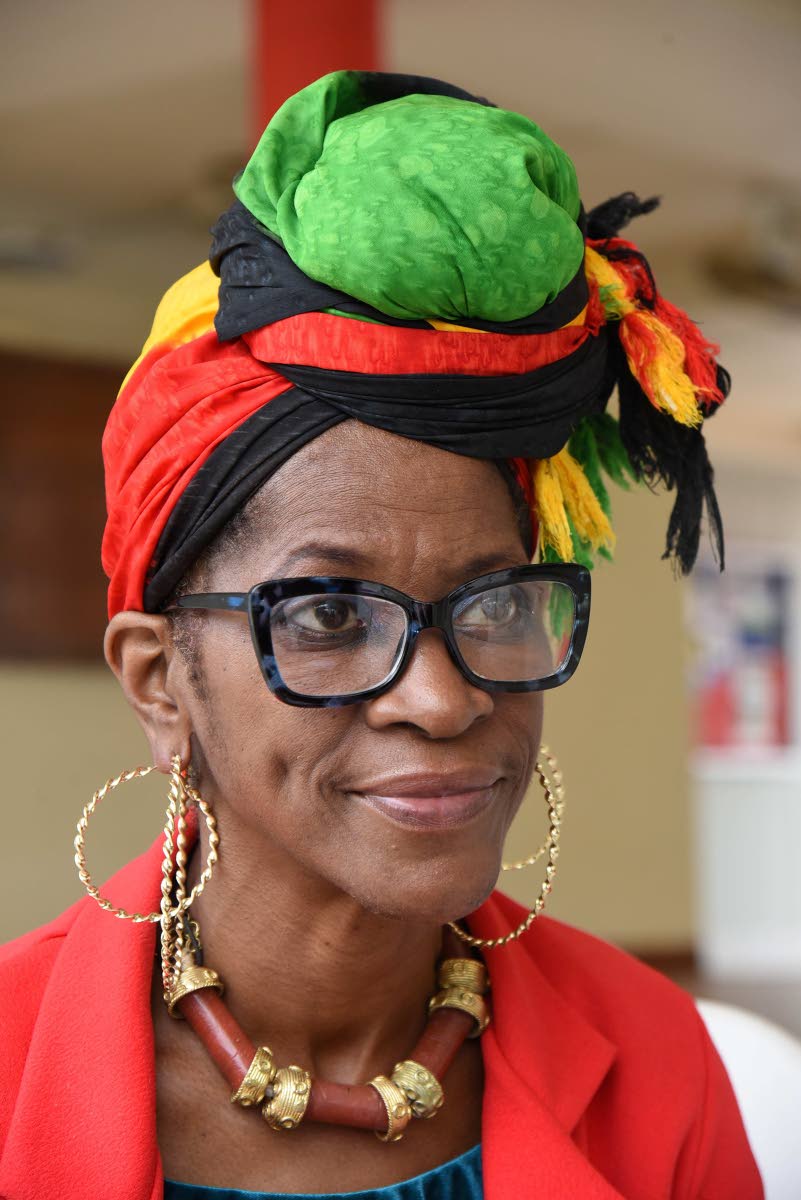 Imani Tafari-Ama. Photo - Contributed
The Democratic Party victory in the United States (US) midterm elections on November 3 is consequential not only for the declining superpower, but also for the satellite countries that have increasingly capitulated to US authority.
Jamaica is one such country, as demonstrated by its foreign-policy decisions over the past several months. The question now is whether the political weakening of Donald Trump at home will create space for Caribbean governments to reclaim their independence of thought and action.
Many Jamaicans were outraged when the Government announced the discontinuation of its longstanding medical cooperation arrangement with Cuba. Cuban doctors, nurses and other medical professionals had provided invaluable services to underserved communities for decades. Although the Government maintained that the decision arose from disagreements over employment arrangements and compliance with Jamaican labour laws, the timing and wider geopolitical context raised uncomfortable questions.
The US had openly criticised Cuba’s overseas medical missions, and its objections were hardly a secret. The Government denied that American pressure determined its decision. Nevertheless, the public was entitled to question whether Jamaica’s national interests had been adequately protected.
That frustration resurfaced when Jamaica abstained from voting on the annual United Nations (UN) resolution calling for an end to the US economic, commercial and financial embargo against Cuba. For more than three decades, Jamaica had consistently voted in favour of the resolution. On October 28, however, the country departed from that tradition, joining 24 other abstaining countries. Trinidad and Tobago went further, casting an outright vote against the resolution.
DISAPPOINTING
The explanation offered by Foreign Affairs Minister Kamina Johnson Smith was disappointing. She argued that repeating the same vote annually, without improving conditions in Cuba, made little sense when the humanitarian crisis was worsening. She also attributed Cuba’s declining socioeconomic circumstances partly to its own political and economic arrangements. While there is legitimate room for criticism of Cuba’s domestic governance, this argument risks obscuring the extraordinary consequences of more than six decades of US economic restrictions.
The embargo has severely constrained Cuba’s access to international finance, investment, technology, medicines and essential supplies. Its extraterritorial reach has also affected third-country partners. To suggest that the annual UN resolution has achieved nothing because the embargo remains in place, is to misunderstand the purpose of multilateral diplomacy. These votes are not merely exercises in repetition. They constitute an international expression of opposition to unilateral coercion and an affirmation of the principles of sovereign equality, non-interference and freedom of international trade.
Indeed, the 2026 resolution received 130 votes in favour, 17 against and 25 abstentions. Although support was considerably lower than in previous years, the overwhelming majority of participating countries still opposed the embargo. Jamaica’s abstention therefore represented more than a procedural adjustment. It signalled a significant departure from a longstanding foreign-policy position.
TROUBLING
The timing was particularly troubling. On October 27, the day before the UN vote, Jamaica’s House of Representatives had approved a Government-sponsored motion addressing the economic and humanitarian situation in Cuba. The motion expressed concern about the suffering of the Cuban people and supported constructive engagement between Washington and Havana, including the reduction of economic restrictions. Yet, the following day, Jamaica abstained from the international resolution calling for an end to those restrictions.
The government maintains that the parliamentary motion did not direct it to vote in favour of the UN resolution. That may be the constitutional and procedural distinction. But it does not resolve the larger question of political consistency. If the government recognises the destructive consequences of economic restrictions, why was it unwilling to register its opposition through the established international mechanism? The Jamaican people deserve a fuller explanation than the assertion that an annual expression of solidarity has become ineffective.
Historically, Jamaica has enjoyed a reputation for exercising independent judgement in international affairs. The foreign-policy tradition associated with Michael Manley, particularly during the 1970s, demonstrated that a small Caribbean country could engage powerful international actors without surrendering its principles. Jamaica’s relationships with Cuba and other countries of the Global South were expressions of a wider commitment to non-alignment, regional cooperation and the right of nations to determine their own political and economic futures.
Sovereignty does not mean that Jamaica must agree with every decision made by Cuba, nor does it require unquestioning opposition to the United States. It means that our decisions must be informed by our own assessment of national and regional interests, international law and fundamental principles. Friendship with Washington should not require political subservience, just as solidarity with Havana should not preclude constructive criticism.
Meanwhile, the American political landscape has changed, with Democrats securing control of both chambers of Congress, the incoming Congress will have greater capacity to scrutinise the Trump administration, obstruct legislation and challenge aspects of his domestic agenda. Trump may retain executive authority, but the political environment in which he operates has become considerably less accommodating.
However, Jamaicans should not assume that a Democratic victory will automatically produce a more enlightened US policy towards Cuba. The embargo has survived successive Republican and Democratic administrations. While Barack Obama’s presidency showed that a different approach was possible, subsequent reversals also demonstrated how fragile such progress can be. The Democrats’ electoral success is therefore no magic bullet for Cuba or for Caribbean governments seeking relief from American geopolitical pressure.
The Monroe Doctrine, with its longstanding presumption of US primacy in the Western Hemisphere, remains an important historical reference point for understanding the unequal relationships between Washington and its Caribbean neighbours. But Jamaica is not without agency. Our geographical proximity and economic vulnerability do not erase our right to independent decision-making.
The question facing Jamaica is whether we will continue to stand on the principles of international solidarity, self-determination and non-interference, or whether we will allow the changing political preferences of Washington to become the compass by which our foreign policy is navigated.
The next UN vote on Cuba will provide another opportunity to answer that question. Our sovereignty is not a diplomatic courtesy to be exercised when convenient. It is a fundamental right that must be defended, particularly when doing so is politically uncomfortable.
Imani Tafari-Ama, PhD, is a Pan-African advocate and gender and development specialist. Send feedback to i.tafariama@gmail.com and columns@gleanerjm.com.