Sean Major-Campbell | Towards a kingdom-based order
Loading article...
-
 Sean Major-Campbell
-
 x
x
-
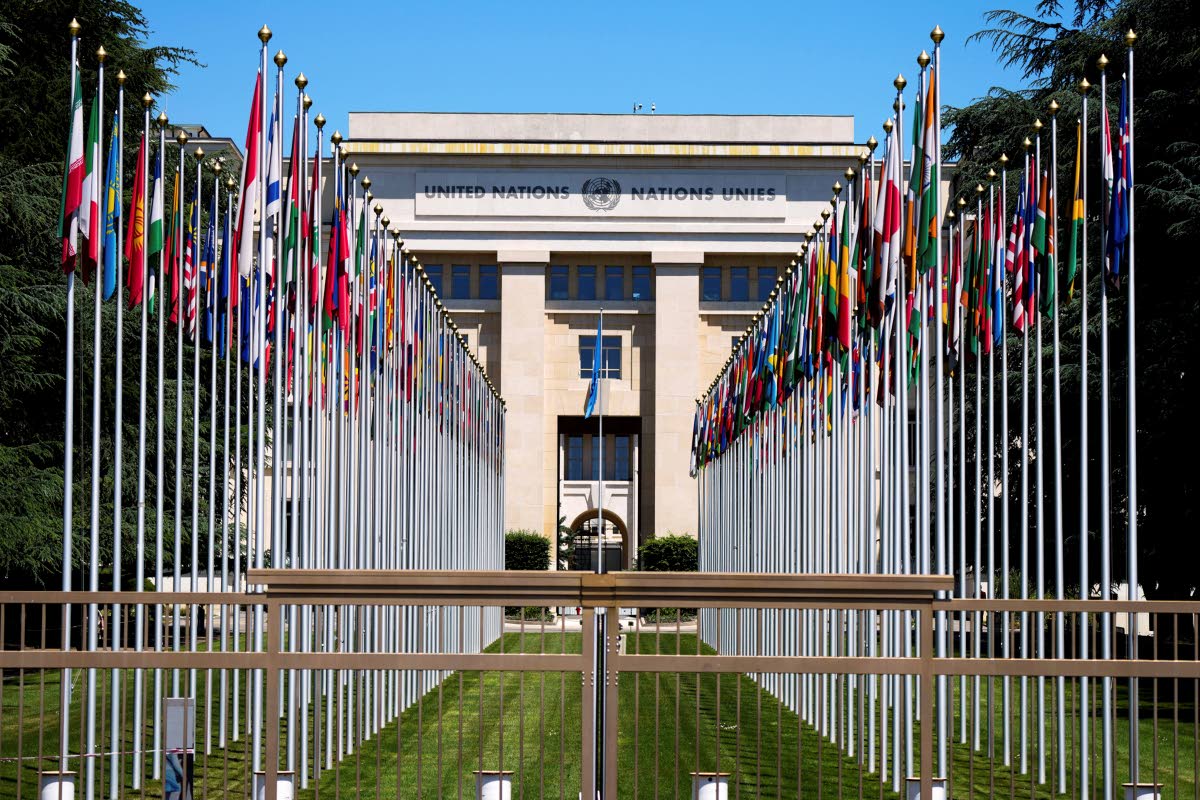 FILE - Flagpoles line in rows in front of a building of the United Nations in Geneva, Switzerland, June 14, 2021.
-
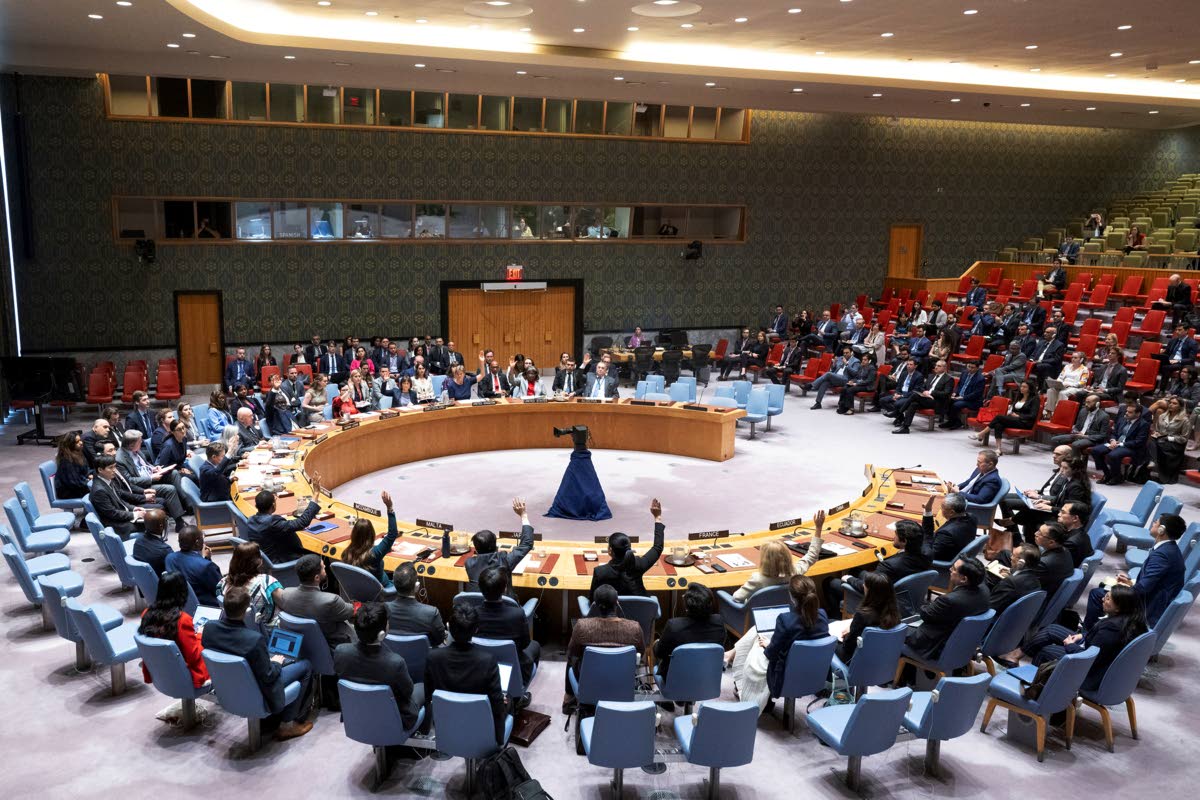 In this photo provided by the United Nations, members of the UN Security Council vote to approve its first resolution endorsing a cease-fire plan aimed at ending the eight-month war between Israel and Hamas in Gaza, Monday, June 10, 2024.
The rules-based international order is no more. Caribbean unity appears to be an aborted project. What will sovereignty look like for powerless nation states? And how is this processed in the realm of religious faith?
Conflict prevention and lawful resolution were high ideals of the post–World War II endeavour. The regulation of state behaviour through a global system of laws and institutions helped promote cooperation toward a safer world. Yet, it was never perfect, given the propensity of the strong to conveniently ignore the principle of universality when keeping the rules.
While Russia, China, and Iran often operated outside this seemingly stable system, one must appreciate that the principles of self-determination, sovereignty, and territorial integrity have, generally speaking, protected small, developing, and emerging nation states. However, there has been a seismic shift in the assumed machinery for peace established after World War II.
The kingdom-of-God value system continues to present a message consistently held by the ‘Jesus Movement’, regardless of the political hegemon of the day. This is because the Church, though in the world, should never be of the world. Christians may live Christ consciousness anywhere, despite prevailing political ideology.
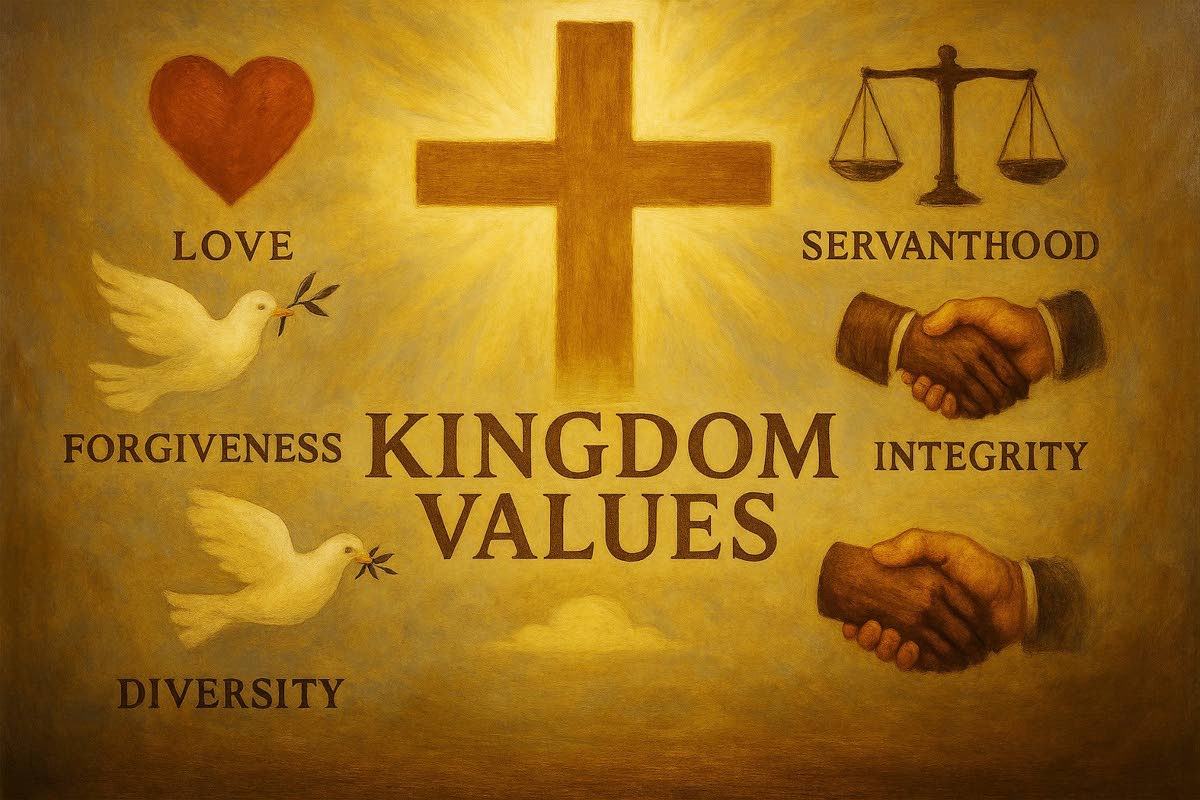
Kingdom values determine that love informs compassion and empathy; humility informs servanthood; righteousness informs justice; integrity and honesty flow from hearts committed to truth; and the spirit of forgiveness seeks and pursues peace. Diversity, equity, and inclusion are understood to be consistent with the life and teachings of Jesus Christ.
Kingdom values shape personal lives, which in turn contribute to holistic community life. To be “woke” is to be aware; it is to be a critical thinker. Spirituality therefore transcends perfunctory actions and becomes deliberate in how relationships are formed through respect, a duty of care, and unconditional regard for all. To be woke is to cultivate emotional intelligence while consciously anticipating the best outcomes for all concerned.
It may be “out with the old and in with the new” regarding the emerging world order. However, those informed by kingdom values must remain concerned about the most vulnerable. It may sound strange, but advancing kingdom values is not about imposing the Christian religion on the world. The family of God is inclusive, making room at the table for anyone who desires unity and love, even in diversity.
The best form of governance in the modern world is secular governance, which seeks to enact laws that protect everyone, regardless of political or religious doctrine. Christian nationalism and Islamic extremism are best addressed within the framework of secular governance, which seeks to operate on principles of universality, including equality and justice for all.
Cooperative secularism appears to best serve small nation states like Jamaica and other Caribbean territories. When the state acknowledges the place and space of religious organisations, cooperation can occur in ways that serve the nation’s best interests. It further ensures the protection of weaker and more vulnerable groups.
The separation of church (religion) and state does not mean the absence of cooperation. Secularism leans neither toward atheism nor toward religion; it simply serves the goal of a respected humanity. The emerging world order will only bring peace to places where religious framing is not used to lend legitimacy to war.
A kingdom-based order sees the whole human family under an umbrella of love. God’s moral order includes the well-being of people from every tribe, tongue, nation, and colour. This order sees God’s will reigning in the hearts of people over and against the selfish ambitions of the world and its evil powers. Love, light, and peace are not the preserve of any one religion. The sooner we accept this, the better it will be for our world.
We speak different languages and express concepts in different ways, and that is okay. It is okay for me to use Christ concepts to convey the light, life, and love of God. It is okay for our Muslim sisters and brothers to affirm the light, life, and love of Allah as advanced by the Prophet Muhammad. It is okay for our Jewish sisters and brothers to affirm the shalom of G-d as revealed through their tradition concerning the light, life, and love of G-d.
If your religion leads you to believe you own a monopoly on truth and divinity, then you are in a volatile zone that works against peace and unity for all. May we seek to remove stumbling blocks to the universal flourishing of our shared humanity. We do this when we encourage and actively advance emotional intelligence, empathy, human rights, and justice for all. Justice for one. Justice for all.
No amount of praying, fasting, singing, decreeing, or declaring will bring about a just order without the reign of God in our hearts. Too many people are doing religion without the spirit of God’s grace and mercy. Too many have missed the gift of life in Jesus Christ, crucified yet risen. Too many have substituted Christic presence with performative piety devoid of love in action. This permission structure explains why some Christians can coldly perpetuate prejudice and hate without any sense of concern or remorse.
Churches and religious groups will see significant positive change when difficult dialogue is embraced, systemic issues are subjected to constructive criticism, and harmful rhetoric is evaluated in the light of Christ’s teaching. Cultural biases and monolithic leadership ought to give way to enlightened and diverse ways of being. Openness to the least among us can bring new life to the work and witness of the Church and to the continued service of the nation.
What do you think about a kingdom-based order for our world?
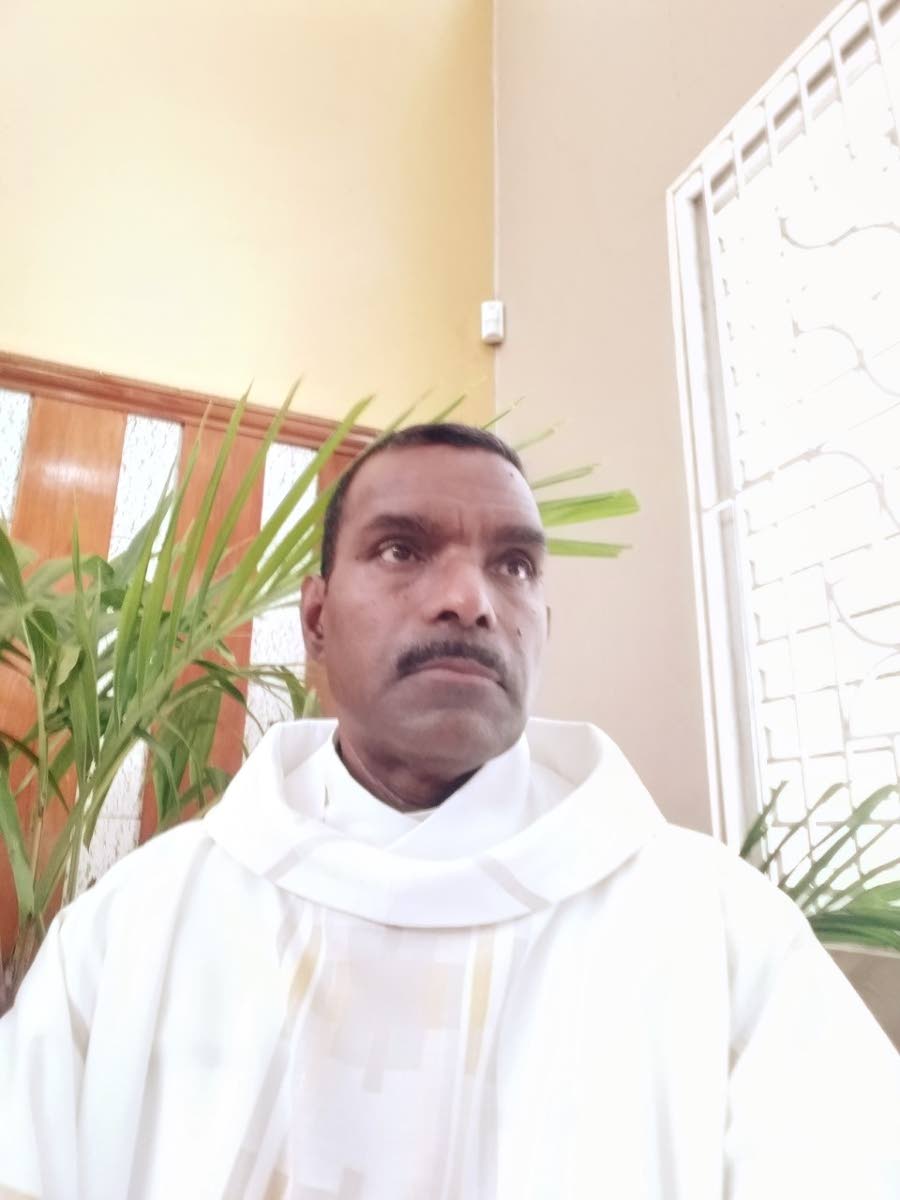
Fr Sean Major-Campbell is an Anglican priest and advocate for human rights and dignity. Please send feedback to columns@gleanerjm.com and seanmajorcampbell@yahoo.com