Education ministry rallies stakeholders in hunt for 300 students missing from school
Loading article...
-
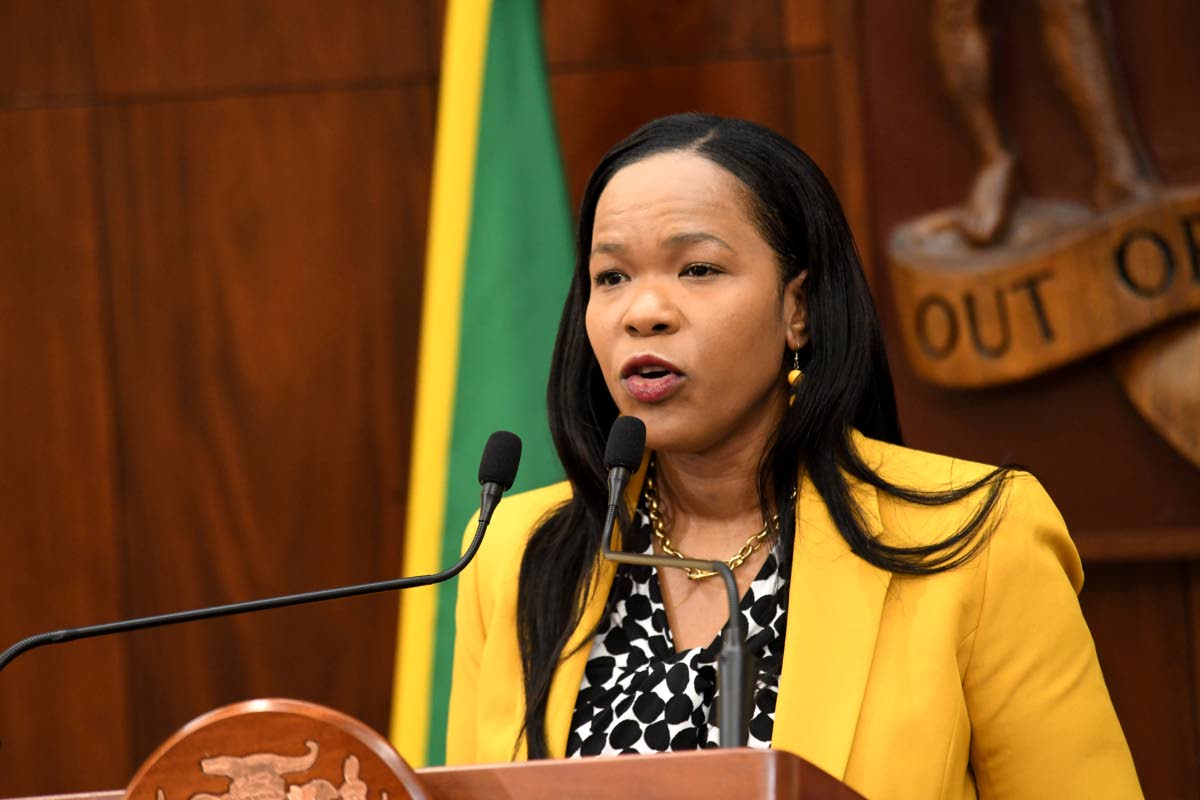 Dr Kasan Troupe, permanent secretary in the education ministry.
-
 Dr Adrian Stokes, chairman of the Education Transformation Oversight Committee.
The Ministry of Education, Skills, Youth and Information has indicated that it has engaged multiple stakeholders to help locate the more than 300 students who have been missing from the formal school system since the passage of Hurricane Melissa in October last year.
Speaking yesterday during a quarterly press briefing hosted by the Education Transformation and Oversight Committee (ETOC), Dr Kasan Troupe, permanent secretary in the education ministry, said the ministry has revamped its Find The Child initiative, which was first launched during the COVID-19 pandemic.
School professionals such as guidance counsellors, deans of discipline, family life educators, and regional directors have been enlisted in the search for children, along with members of the wider community, which includes pastors and local grass-roots organisations.
“When we returned in January, we were over 1,000. But if you compare that to COVID, we can celebrate some gains here. It was very difficult for the ministry to locate our children, but we have been doing much better,” she said.
The ministry has not been able to account for 335 students since the Category 5 hurricane ravaged the island in October.
Troupe outlined several challenges persons face when searching for the children, including community members not being familiar with their given names, families having relocated elsewhere, and home addresses that are no longer valid due to the complete destruction of the house.
She stated that the ministry is also yet to put in a mechanism where it can precisely track students who relocated and changed schools.
GRATEFUL
“We do have some more work to do in the ministry to address that. But notwithstanding, we must celebrate the work on the ground for all our helping professionals in the field, our principals who have been calling, our guidance counsellors, you have been on the call ... you have been out there, and we are extremely grateful,” she said.
Meanwhile, ETOC Chairman Dr Adrian Stokes noted that more than 372,300 students are currently enrolled in schools but expressed concern about those absent from formal education.
“We need to ascertain the status of the students because the focus is really to ensure that no child is left behind. So 300 in the context of over 300,000 students doesn’t sound like a big number from a statistical perspective, but each life and each student is very, very important to us,” he stated.
Providing an update on the implementation of the Orlando Patterson Report’s recommendations, Stokes noted that the process remained on track, with 37 per cent completed so far, an increase of five per cent from the last quarterly briefing.
The Patterson Report, designed to address long-standing gaps in Jamaica’s education system, spans an eight-year implementation period from 2023 to 2031, with ETOC responsible for monitoring the process.
Of the 365 recommendations outlined in the report, 189 are currently being implemented by the Ministry of Education, with 86 completed.
“The project plan calls for a completion rate of 40 per cent by end of the current period, that is by March 31, 2026. From the guidance given by the ministry, the progress rate should be at or around the 40 per cent mark by the end of March. Which means for quarter four … we should be on target, which is a good position to be in at this stage of the implementation,” he said.
Stokes noted that the transformation plan had to be amended because of the impact of Hurricane Melissa, with priorities reordered to ensure speedy and resilient recovery.
“The infrastructure pillar was always a critical one for this transformation effort. What Melissa has done, it has created an opportunity for us to front-load and beef up the infrastructure spend that was being contemplated,” he said.
“In the original plan, some 234 schools were slated for infrastructure upgrade over the transformation period. This has now increased to over 600 schools being targeted for major upgrade,” he added.
He noted that eight schools will be rebuilt over the period as part of the overall upgrading of school infrastructure.
Stokes noted that the Government would need to make some “bold choices” to ensure that proper funding is secured to rebuild at the scale and speed needed. He contended that the national Budget cannot accommodate the scale of the financial capital needed to rebuild and suggested that the Government enact measures to bring in private capital as part of its capital-mobilisation strategy.
“For every school built by the Government, the State should seek to sell that school to pension funds and other long-term investors and enter simultaneously into long-term contracts with those same investors,” he said.
Alternatively, he posited that pension funds be used to build schools and then those schools be leased back to the Government.
“On a long-term basis, a school sold to Jamaican pension funds and leased back to the Ministry of Education is not a privatisation. It’s what we would call a mobilisation. The State retains control. Students keep their classrooms, pension savers gain stable, long-duration returns,” he said.
sashana.small@gleanerjm.com