Tower farming takes root in Havendale home
Loading article...
-
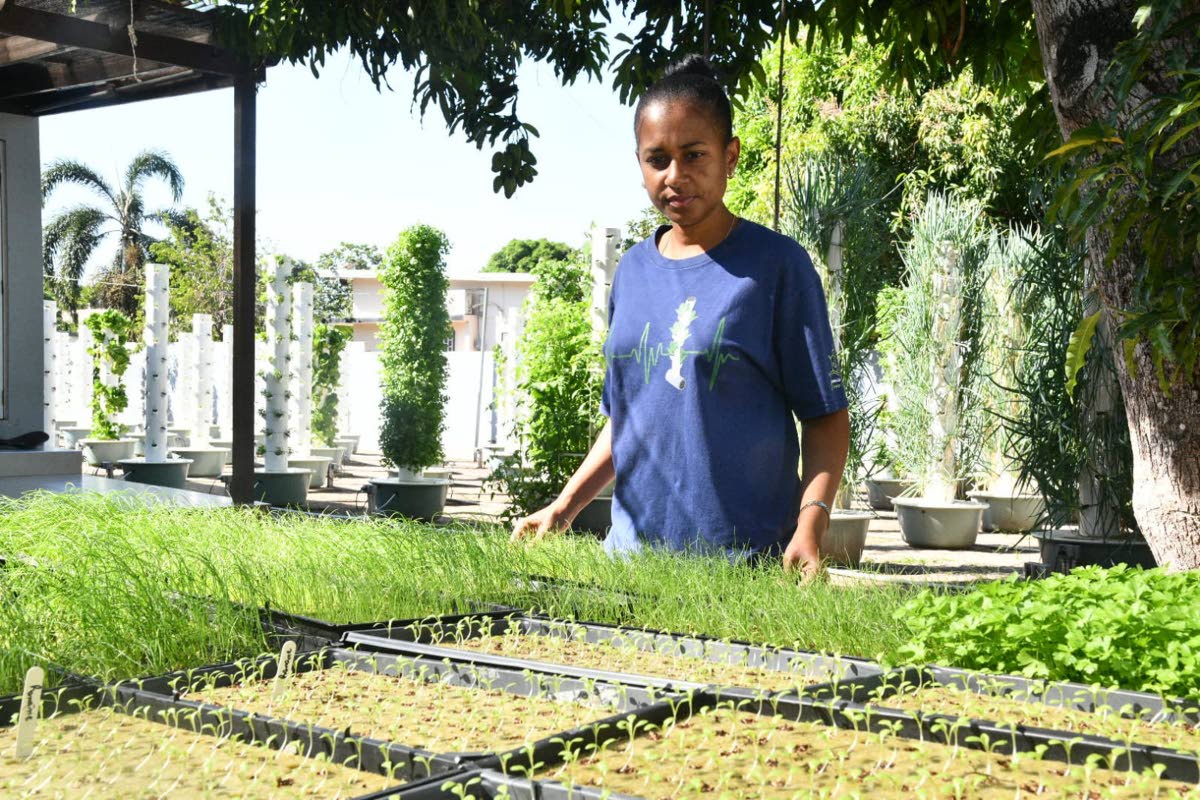 Managing Partner and Operations Director of Jamaica Tower Farms, Kerrie-Anne Gray, looks over seedlings to be planted on aeroponic towers for maturation, while explaining the operations of her commercial farm in Havendale, St Andrew. Photo - Contributed
-
Managing Partner and Operations Director of Jamaica Tower Farms, Kerrie-Anne Gray, looks over seedlings to be planted on aeroponic towers for maturation, while explaining the operations of her commercial farm in Havendale, St Andrew. Photo - Contributed
-
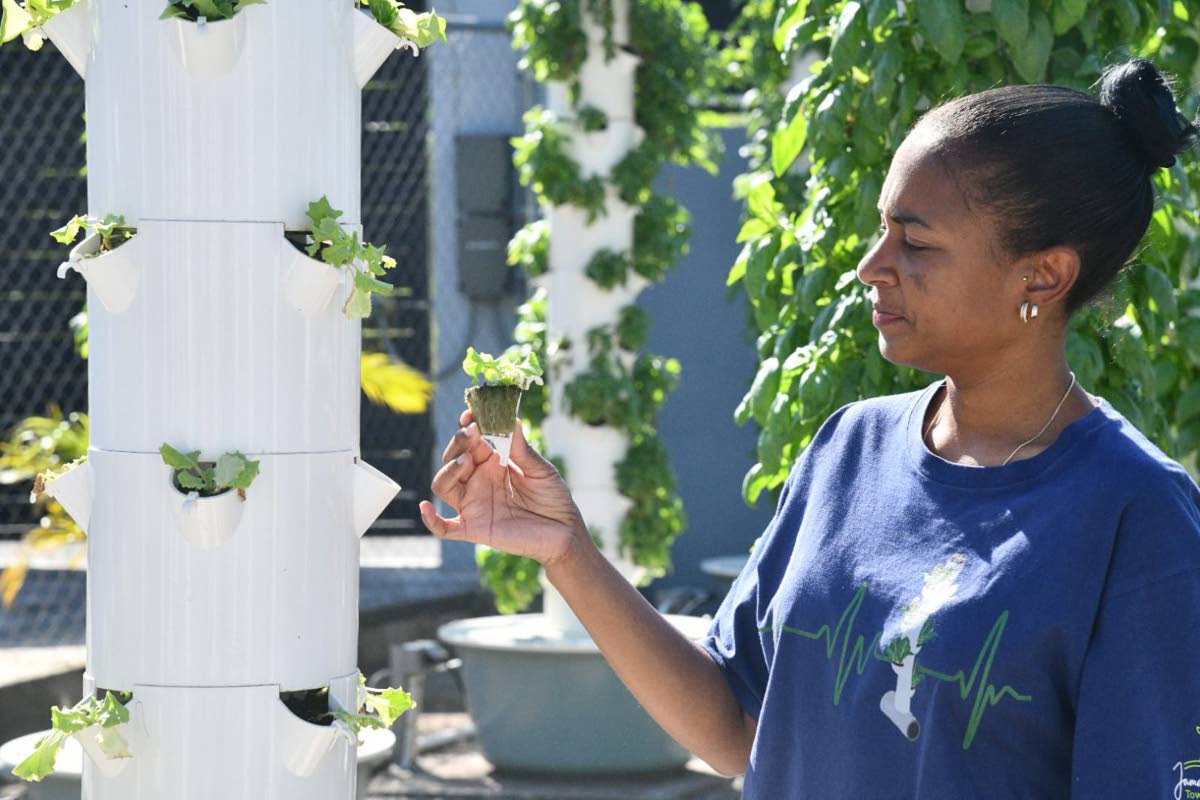 Kerrie-Anne Gray carefully removes a seedling from an aeroponic tower at her commercial farm. Photo - Contributed
-
 Kerrie-Anne Gray, stands between aeroponic towers overflowing with basil as she explains the operations of her farm in Havendale. Photo - Contributed
While the Corporate Area pulses with commerce and traffic, a quieter transformation is taking place in the backyard of a Havendale home. There, amid the hum of residential life, a pair of technology professionals is attempting something audacious: turning a suburban plot into a model for climate-resilient, high-yield agriculture.
Kerrie-Anne Gray, together with her partner, John Mark Clayton, is demonstrating that feeding a nation need not depend on expansive rural acreage or generations of farming lore. Their tools are aeroponic towers – vertical structures in which plant roots dangle in open air and are misted with nutrient-rich water. It is farming without soil, acreage, or, seemingly, limits.
Drawing on their backgrounds in ICT and telecommunications engineering – and propelled by their enthusiasm for agriculture – the duo launched Jamaica Tower Farms in June 2023. Gray now serves as managing partner and operations director. The concept was simple enough: use technology to overcome the constraints of space, soil quality and weather.
Since then, the pair has been operating what amounts to a commercial farm on the narrow footprint of a suburban backyard, producing more than 4,000 plants per cycle. The venture began modestly, with Scotch bonnet peppers cultivated on 100 towers arranged on a one-eighth-acre lot. Once the peppers were harvested, the team filled any spare spaces with leafy greens and scallions. Aeroponics, Gray notes, has no fallow season: “downtime” is unnecessary when there is no soil to recover. The system supports continuous, back-to-back planting.
The crops themselves are far from meagre. The backyard now produces multiple varieties of lettuce, as well as cilantro, parsley, basil, scallion, tomatoes, sweet peppers and the original Scotch bonnets. Some vegetables – carrots, potatoes, ginger and other root crops –remain unsuitable for aeroponics, but the towers accommodate most high-demand leafy produce.
RESPONSIVE MARKET
The market has responded. Gray says they supply supermarkets, hotels and restaurants. “We also have a few private residential customers who collect their kits every week or two, depending on availability,” she notes. The operation has quickly carved out a niche in an economy where unpredictable weather routinely disrupts supply chains.
Natural disasters, in particular, haunt Jamaican farmers. Tower farming, Gray argues, offers a degree of resilience that soil-bound fields simply cannot match. She recalls Hurricane Melissa in October 2025. “During Hurricane Melissa, we were able to take up the towers, bring them on the inside, and then right after, we brought [them] back out, and [the plants] were still growing. So, we were still able to supply supermarkets with romaine lettuce and scallion the day after Hurricane Melissa,” she says. In a sector accustomed to weeks, even months, of post-storm losses, such continuity borders on miraculous.
Gray is careful not to position aeroponics as a replacement for traditional farming. Rather, she sees it as a complementary system – one that equips farmers for the realities of climate change. “We are in a time now where we experience climate change… so we have to prepare ourselves,” she says. “Recovery is not just about after the hurricane… it’s not just about trying to replant; it’s also about strengthening what you have. So we’re not trying to tell persons not to do traditional farming. We’re actually trying to say, include smart farming into your systems, so that we’re better prepared to handle any type of climate change.”
For residents curious about growing their own food, the barriers are equally low. Gray notes that a standalone residential tower requires just one square metre of space and can yield up to 52 plants – enough for personal use or modest commercial sales. Jamaica Tower Farms installs the units, prepares the site and trains owners to operate and maintain the towers.
Expansion is already on the horizon. The Havendale site, Gray says, has the capacity to accommodate up to 300 towers – ample room for a model of urban agriculture that could spread beyond one quiet backyard.