Tangled and dangerous
Loading article...
-
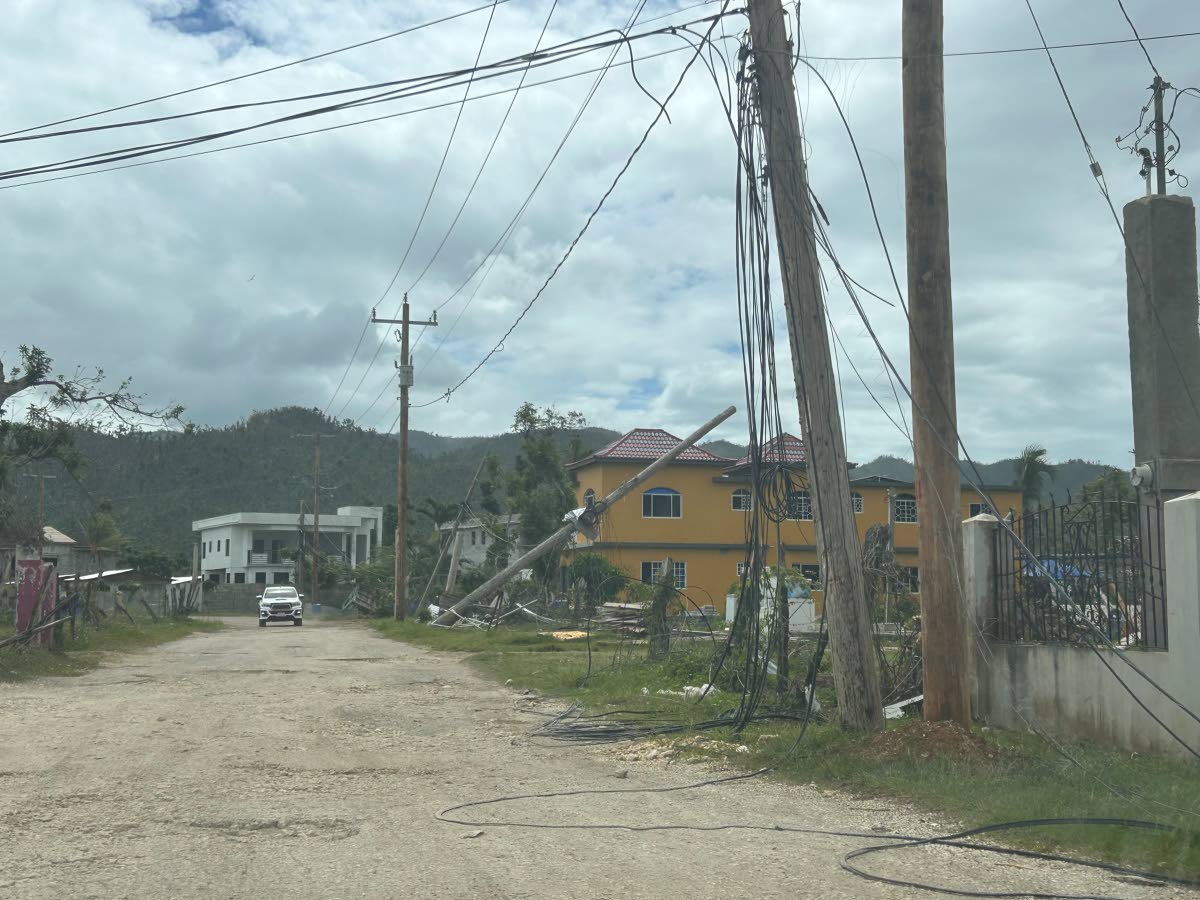 Cables hang from a utility pole and trail along the roadside in Carawina, Westmoreland.
-
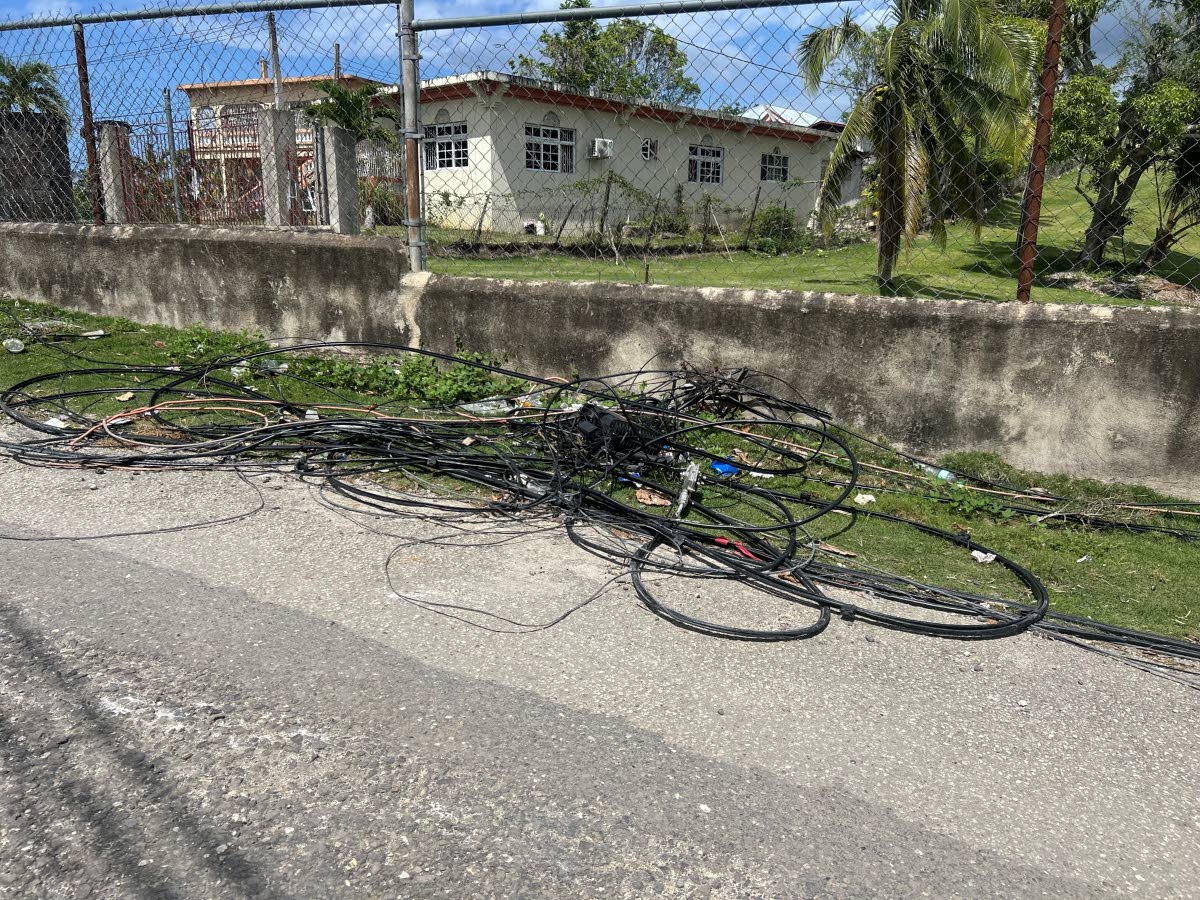 Discarded and tangled wires line the roadside in the Sheffield community of Westmoreland.
-
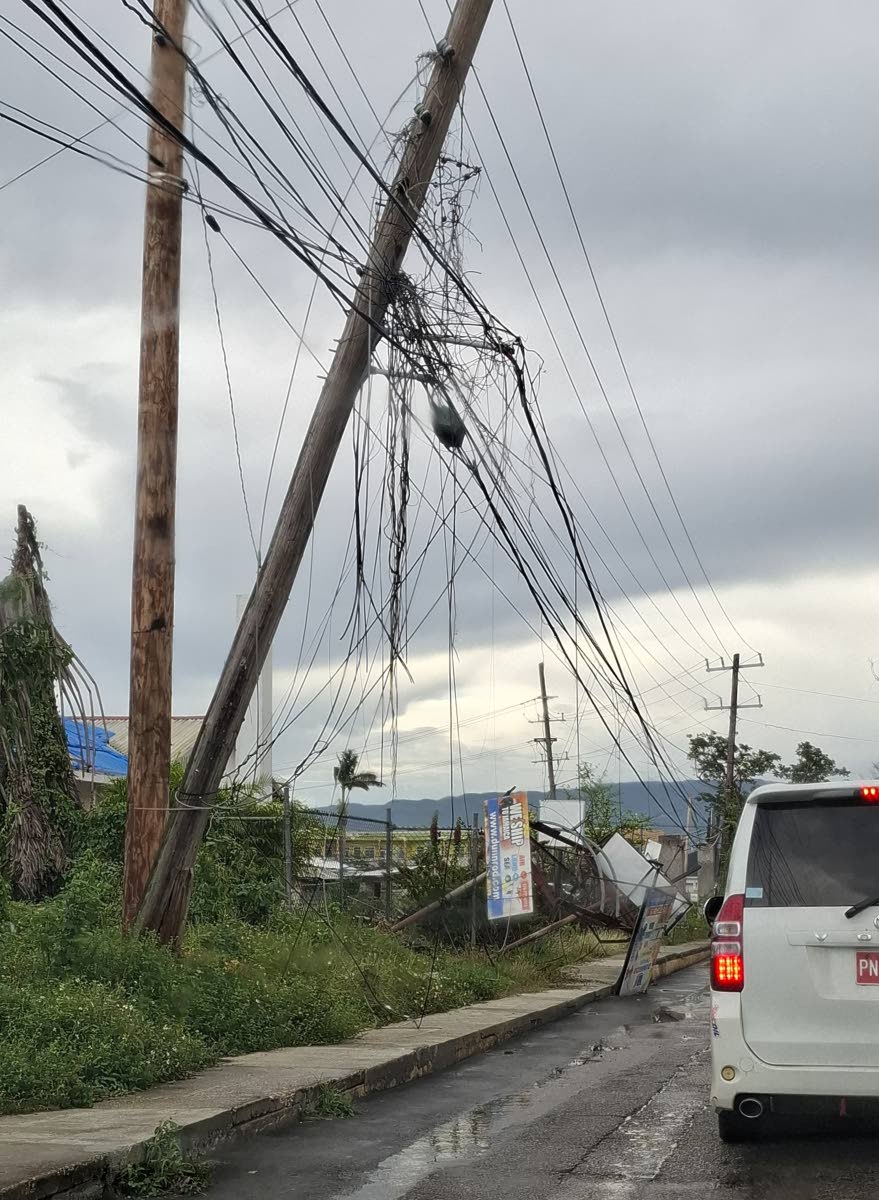 Low-hanging wires line in a section of Savanna-la-Mar, months after infrastructure damage caused by Hurricane Melissa.
-
 A tangle of wires on the sidewalk along Lewis Street in Savanna-la-Mar.
-
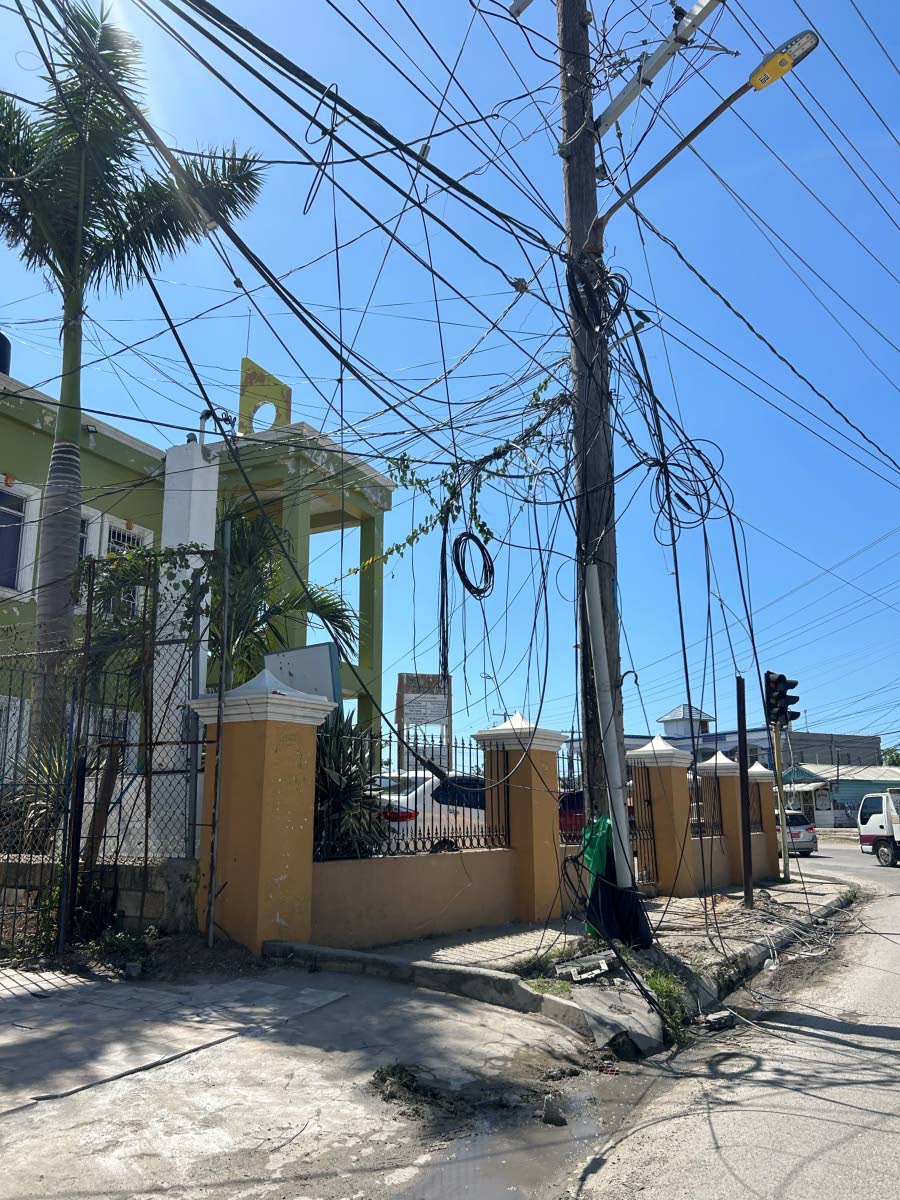 Low-hanging cables drape across a sidewalk at Dunbar’s River in Savanna-la-Mar, forcing pedestrians into the busy roadway and raising safety concerns.
Five months after the passage of Hurricane Melissa, the danger hasn’t passed. It’s hanging – literally – over nearly every road, sidewalk, and gate in Westmoreland, especially in the capital.
What used to be a routine drive remains a gamble as low-hanging wires now snake along roadways and sidewalks, turning everyday movement into a split-second calculation between safety and disaster. One wrong move, one unseen cable, and the outcome could be catastrophic.
“I have seen instances where vehicles are passing wires and the wires hook up in their wheels, you know. That is a hazard,” one driver told The Sunday Gleaner, describing the risks motorists continue to face. “Even right now, I was driving and me see a wire hanging down the same way, so we still need some urgent attention as it relates to the removal of these wires.”
These aren’t hypothetical fears. Close calls are already happening. A single reported motorbike incident has amplified concerns that it’s only a matter of time before luck runs out.
Savanna-la-Mar Mayor Danree Delancy did not mince words when he raised the alarm at a Westmoreland Municipal Corporation meeting in February, pointing to that very crash as a warning sign of what’s coming.
“I’ve been told of at least one incident where loose-hanging wires have caused a motorbike accident. Luckily, I was told the person was not seriously injured. We want to make it known that we [could] have fatalities as a result of these situations,” Delancy said.
The mayor expressed frustration at what he described as the uneven response efforts among utility providers, noting that while some companies have started to address the issue, others have been slow to act.
“I’ve called upon the companies to be true champions, to try and do something about them. To my knowledge, only the JPS (Jamaica Public Service Company) has responded in a positive way,” he said. “It is the other companies, local cable companies, local communication companies that have yet to act on this matter.”
He added that he has personally been making efforts to have some of the wires removed, but stressed that broader cooperation is needed.
“We are making a plea, we are making an appeal. Once again, utility companies with these loose-hanging wires, … please, please do something about it,” Delancy urged.
But the danger isn’t just on the roads – it’s everywhere.
In Savanna-la-Mar, residents say sidewalks have become obstacle courses of dangling cables, some brushing dangerously close to the ground. The simple act of walking now demands constant vigilance.
“As if walking in Sav wasn’t hard already, honestly, walking in this area right now stressful bad,” one pedestrian lamented last week. “From Melissa passed, whole heap of wires are on the sidewalks. Some of them hanging low, some nearly touching the ground. And the worst part, nobody is coming to fix it.”
The pedestrian described the experience as dangerous and exhausting.
“People life at risk”
“You have to look up, look down, sidestep wires, and still can’t even tell if they’re live or not. We not taking no chance to get electrocuted. So, most times, you end up walking in the road. And that’s dangerous because the cars will not ease up for you,” she said. “At this point, me just feel like it’s careless. People life at risk and nothing not changing. Something needs to be done. And it needs to be done now.”
Drivers aren’t spared either. The same threat follows them home.
“Even where I live now, there are wires hanging down, and whenever I open the gate, you know, it’s always a hindrance,” one motorist lamented to The Sunday Gleaner.
Even critical services are being choked by the hazard. Waste management crews say the wires are actively blocking their ability to work.
“It has impeded us. It has impacted us. The loose [wires], they have impacted us. They have impeded us from doing our work,” Dramaine Jones, western regional operations manager of the National Solid Waste Management Authority (NSWMA), told The Sunday Gleaner.
Ownership of the cables
He said that a major challenge is determining ownership of the cables.
“The issue that we’re having with different parish councils is that they have been in touch with the utility companies in terms of removing them. It’s just that, in other words, nobody wants to claim them,” he said.
Jones clarified that the NSWMA is not responsible for removing the wires, noting that such matters typically fall to utility providers.
Regulators also say that their role is limited.
In a response to The Sunday Gleaner, the Broadcasting Commission of Jamaica, on behalf of Don Dobson, senior director, monitoring compliance and investigation, explained that its remit only covers fibre-optic and coaxial cables used for subscriber television services.
“A normal fibre-optic or coaxial cable used for subscriber television services is not inherently dangerous. However, loose or poorly secured cables can create aesthetic concerns and, in more extreme cases, may impede normal vehicular use of the roadway,” the commission stated.
It added that while it does not conduct routine inspections, it intervenes when issues are reported.
“Once a cable becomes loose or detached, the owner is expected to take corrective action within a reasonable time … . Whenever we become aware of such situations, … we intervene with the relevant operator to secure corrective action.”
The commission also noted that it has not received recent reports from Westmoreland but remains prepared to act if necessary.
Electricity restoration
is a priority
Meanwhile, JPS says post-hurricane electricity restoration efforts are being prioritised, with clean-up to follow in phases.
“Some of the clean-up happens while you’re doing restoration, but the priority right now is being given to getting the power back on,” said Winsome Callum, JPS communications director.
She explained that coordination with other utility companies is ongoing due to shared infrastructure.
“We have to coordinate with them because we have joint pole agreements with them … . They actually are also going out and removing their cables,” she said.
Callum acknowledged public confusion over which entity is responsible for the wires.
“It’s understandable that people will assume that a lot of the cables or all the cables belong to JPS. We do not expect the average man in the street to know the difference,” she said, while urging citizens to keep their distance from any fallen or low-hanging lines.
mickalia.kington@gleanerjm.com