Haile Selassie students to benefit from literacy, life‑skills programme
Loading article...
-
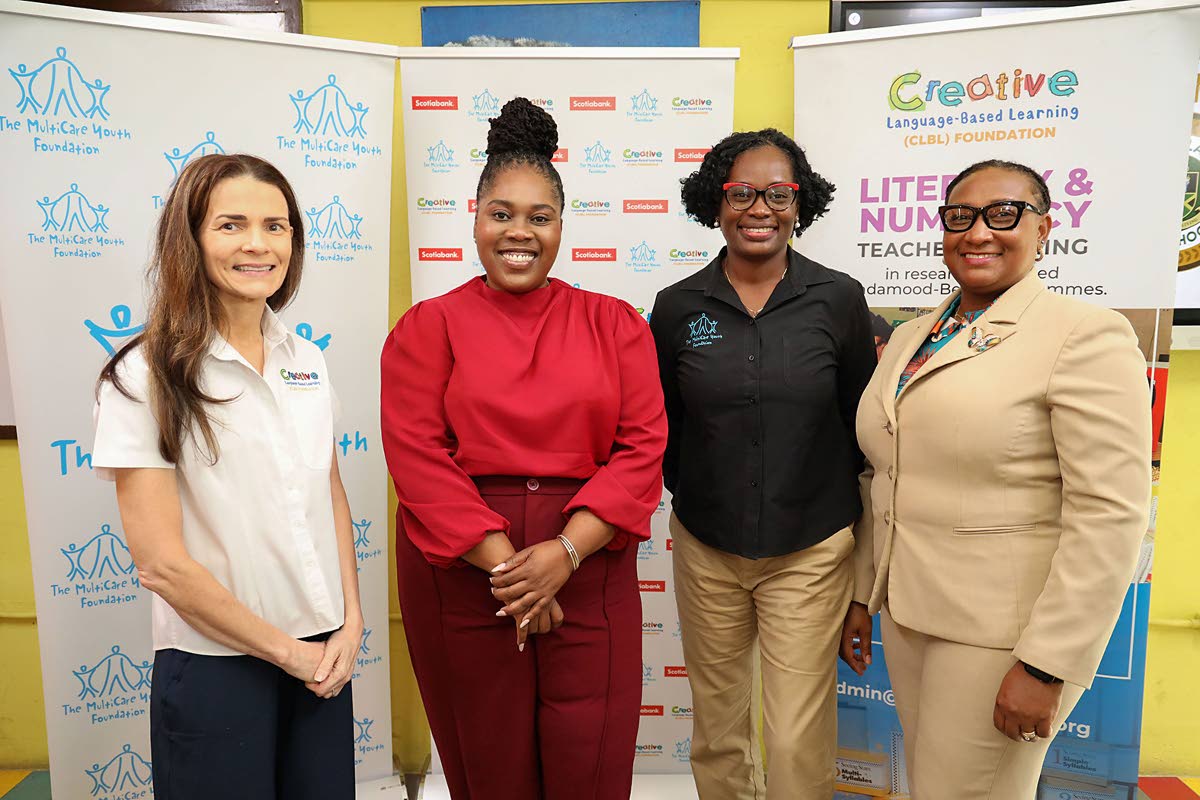 From left: Mandy Melville, founding chair of the Creative Language Based Learning Foundation; Deleen Powell, public affairs and communication manager, North Caribbean Region, Scotiabank; Mitzian Turner, executive director of The MultiCare Youth Foundation and Haile Selassie High School Principal Anniona Jones following the recent programme launch. Photo - Contributed
-
From left: Mandy Melville, founding chair of the Creative Language Based Learning Foundation; Deleen Powell, public affairs and communication manager, North Caribbean Region, Scotiabank; Mitzian Turner, executive director of The MultiCare Youth Foundation and Haile Selassie High School Principal Anniona Jones following the recent programme launch. Photo - Contributed
-
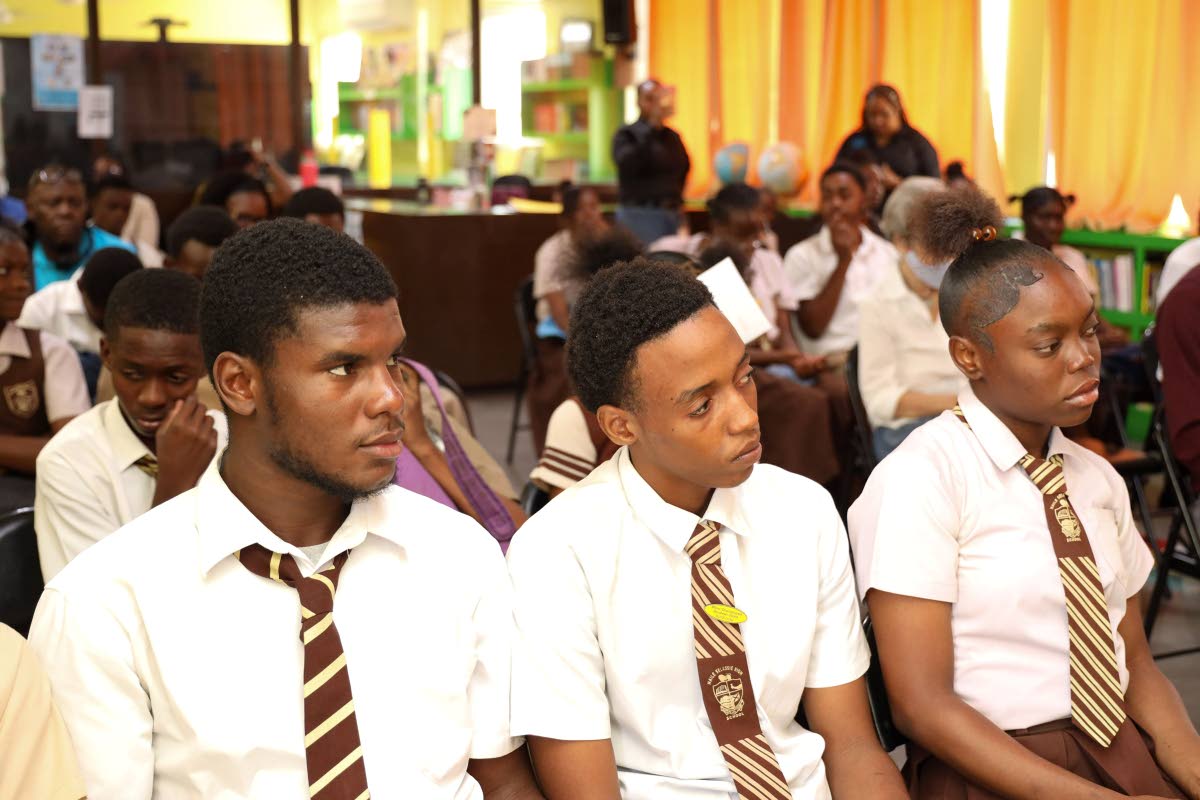 These youngsters are among 40 Haile Selassie High School students now benefiting from the Scotiabank Teach to Transform Project. Photo - Contributed
Forty students and six teachers at Haile Selassie High School in Payne Land, Kingston, will benefit directly from the one-year Scotiabank Teach to Transform project.
The initiative, however, seeks to influence far more than a single school. It is designed to support children across Jamaica who struggle with literacy and other academic or social challenges and to equip the teachers who must help them.
The project is being piloted by the MultiCare Youth Foundation (MYF), the philanthropic arm of the ICD Group, in partnership with the Creative Language-Based Learning (CLBL) Foundation. Scotiabank has provided $10 million in funding.
MYF’s executive director, Mitzian Turner, said the two organisations had formed the Consortium Foundations for Change to deliver what they describe as a collaborative approach to system reform in youth development, education and national security. “It is important to note that this project was born out of recognised observation of some of the complex issues facing our students,” she said.
Turner thanked the Scotiabank Foundation for its support and pointed to longstanding obstacles: high illiteracy rates, limited access to evidence-based reading methodologies, inadequate remedial programmes and weak psychosocial support – conditions that feed cycles of crime, violence and constrained economic prospects. “This reality requires an urgent, targeted and integrated approach that simultaneously addresses some of the root causes while providing much needed immediate support,” she added.
Scotiabank’s public affairs and communications manager, Deleen Powell, said the project aligns with the bank’s commitment to strengthening communities by widening access to opportunity. “At Scotiabank, we believe strongly that education is one of the most powerful tools for transformation. When we invest in educators, we invest in generations of students,” she said.
The Ministry of Education’s director of safety and security, Richard Troupe, praised the consortium’s work and commended Haile Selassie High for its persistence in improving student outcomes. He urged the 40 students engaged in the programme to act as agents of change and reminded teachers that they were pioneers. “When we transform the way we teach, we are transforming the students,” he said.
The project’s design is deliberately multigenerational, supporting both students and educators while pursuing immediate improvements and longer-term systemic reform. Students will develop foundational literacy, workplace competencies and prosocial behaviours, with the aim of raising graduation rates, boosting employability and reducing vulnerability to crime.
Teachers and school leaders will benefit from a training-of-trainers model meant to embed the programme’s methods into the wider school system. Selected teachers will receive specialist instruction in literacy-intervention strategies, along with tools, resources, coaching and mentorship to ensure effective delivery – improvements expected to benefit both current and future cohorts.
Students will also receive life-skills training in communication, decision-making, conflict resolution, professionalism, CV writing and financial management, along with structured personal and career guidance. Opportunities for one-to-one mentorship and counselling are included. Through group cognitive behavioural therapy, participants will learn skills to manage trauma, stress, anxiety and behavioural challenges, helping them build resilience and self-determination.
Alongside its financial support, Scotiabank and the Scotiabank Foundation will offer additional activities, including financial-literacy sessions and facility tours for students.