Earth Today | New cities initiative to inspire solutions to waste crisis
Loading article...
-
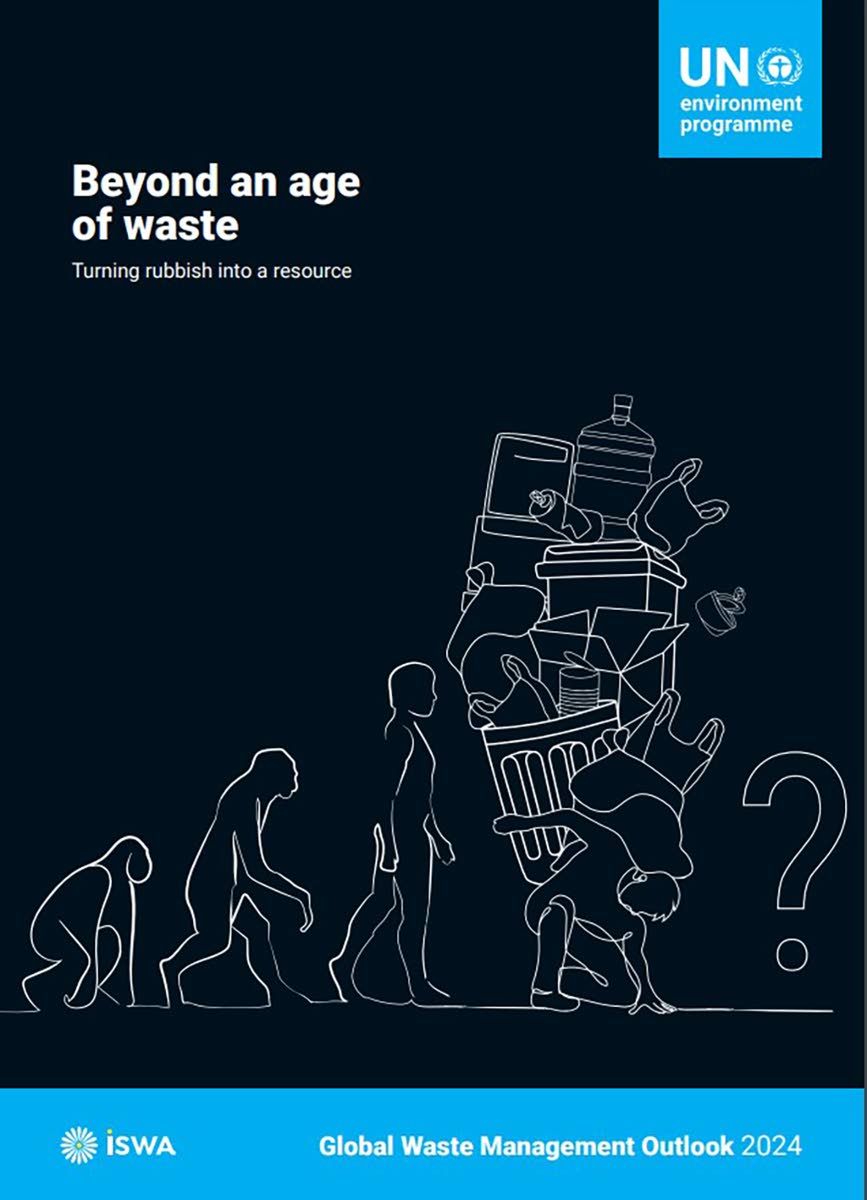 UNEP report titled ‘Beyond an age of waste: Turning rubbish into a resource’. Photo - Contributed
-
UNEP report titled ‘Beyond an age of waste: Turning rubbish into a resource’. Photo - Contributed
-
 Inger Andersen, executive director of UNEP.
THERE IS a new initiative to help solve the world’s waste woes, as data out of the United Nations Environment Programme (UNEP) paints a picture of a planet in a growing mess.
According to the 2024 Global Waste Management Report, the more than two billion tonnes of municipal solid waste generated worldwide each year could wrap around Earth’s equator 25 times “if packed into standard shipping containers and placed end-to-end”.
And it does not end there. In addition to municipal waste, the UNEP report, titled Beyond an age of waste: Turning rubbish into a resource, said human activity produces significant amounts of agricultural, construction and demolition, as well as industrial and commercial and healthcare waste.
“This waste is produced on farms and building sites and in factories and hospitals. Municipal waste is generated wherever there are human settlements. It is influenced by each person in the world, with every purchasing decision, through daily practices and in the choices made about managing waste in the home. The way people buy, use and discard materials determines the amount of energy and raw materials used and how much waste is generated. Municipal waste is thus intrinsically linked to the triple planetary crisis of climate change, pollution and biodiversity loss,” the report explained.
Now, the United Nations Secretary General’s Advisory Board on Zero Waste is looking to show countries how to more efficiently handle their ballooning waste, with the announcement of its 20 Cities Towards Zero Waste Initiative.
The named cities are Accra, Ghana; Bologna, Italy; Chefchaouen, Morocco; Dar es Salaam, Tanzania; Dehiwala City, Sri Lanka; Florianópolis, Brazil; Gaziantep, Türkiye; George Town, Malaysia; Hangzhou City, China; Iloilo City and San Fernando in the Philippines; Kisumu, Kenya; Kuala Lumpur, Malaysia; Lilongwe, Malawi; San Fransico, United States; Sanya City and Suzhou City, China; Varkala, India, Yokohama, Japan; and Zapopan, Mexico.
“These 20 cities matter, not because they have the best roadmaps on paper, but because they are turning ambition into action. What sets them apart is their willingness to implement real solutions, from source segregation and composting to reuse systems, informal sector inclusion, and citizen engagement,” noted José Manuel Moller, deputy chair of the advisory board, in a March 27 release from the UNEP.
“They are showing that zero waste is not a distant vision or a communications exercise. It is practical, local, and achievable when cities lead by example. At a time when many are still planning, these cities are proving that implementation is the real test of leadership,” he added.
Supported by the UNEP and UN Habitat, the initiative – announced just ahead of International Day of Zero Waste, celebrated on March 30 – aims to not only recognise leadership and innovation but to also promote knowledge exchanges; support implementation of the circular economy approaches at the local level; and inspire others to pursue their own zero waste transition.
“Solutions to pollution and waste are opportunities to reimagine our economies through innovation, circularity, and equity. From strong producer responsibility models in San Francisco and Suzhou City to refill systems in Bologna, and the inclusion of waste pickers in Kuala Lumpur and Zapopan, the 20 Zero Waste Cities are proof of this,” noted Inger Andersen, UNEP’s executive director.
“These cities can inspire communities around the world to accelerate action against the pollution and waste crisis,” she added in the release.
pwr.gleaner@gmail.com