Earth Today | Brewing environmental worries over space travel
Loading article...
-
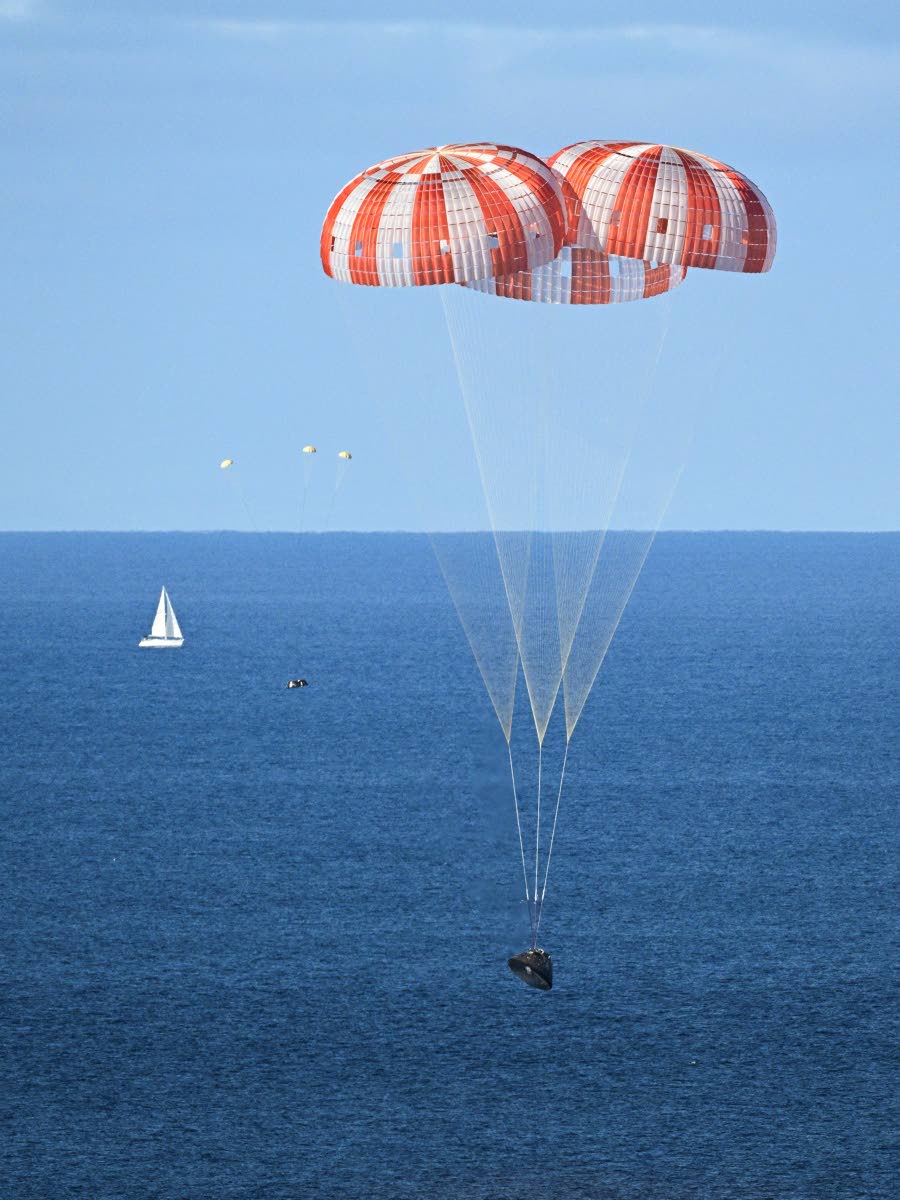 In this photo provided by NASA, NASA’s Orion capsule descends under its main parachutes over the Pacific Ocean off the coast of California, following the Artemis II mission on Friday, April 10, 2026.
-
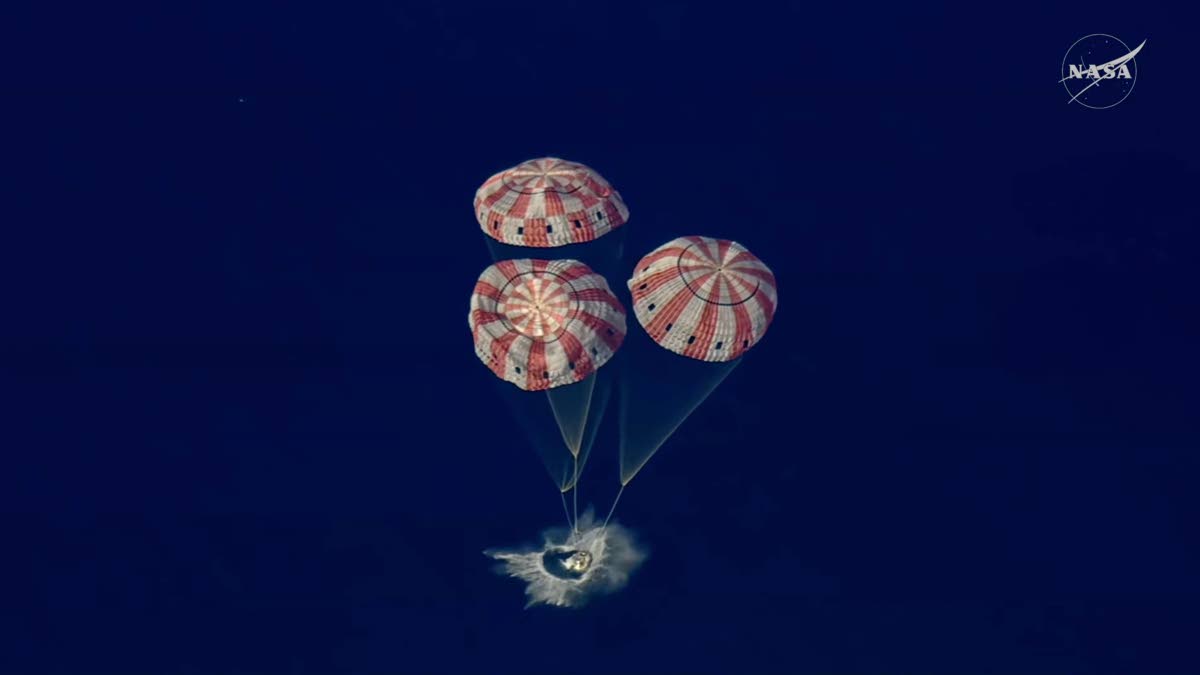 In this image from video provided by NASA, the Artemis II Orion capsule splashes down in the Pacific Ocean, on Friday, April 10, 2026.
THE UNITED Nations Environment Programme (UNEP) has once again called attention to the burgeoning waste problem, this time because of space travel.
In the wake of NASA Artemis II’s recent return to Earth, following the first crewed mission to the Moon in more than half a century, UNEP has reminded that there are some 130 million pieces of debris orbiting Earth, with implications for life on the planet.
“Every rocket launch releases soot, aluminium particles, chemical compounds and gases into the atmosphere. These emissions can influence atmospheric chemistry, increase air pollution and damage the ozone layer,” reveals an April 10 UNEP story that addresses six key questions related to space travel and the environment.
And there is danger there.
“There’s the growing cloud of debris forming around our planet. Old satellites and fragments from collisions are accumulating, heightening the risk of impacts that create more space debris. If these items stay in space, they can crash into the satellites we rely on. If they survive re-entry, they can fall back to Earth, posing risks for communities and ecosystems,” noted the piece.
“Large satellite constellations and orbital debris are also making the night sky brighter and noisier, interfering with astronomy and our ability to study the universe,” it added.
Against this background, the UNEP has noted the need for not only more research to understand the scale of the problem but also for a coordinated response that includes attention to data sharing, spacecraft design and sustainability standards, together with an enabling legislative and regulatory environment.
A 2025 Issues Note published by the United Nations Office for Outer Space Affairs and the UNEP, echoes these suggestions. It noted, among other things, that actions, including the prioritised pursuit of resource efficiency and circularity, were key, in addition to strengthening “the understanding of the environmental impacts of space”.
“Fuel, energy and water use, as well as waste production, are substantial environmental issues throughout the production life-cycle of spacecraft. Both launchers and the materials in spacecraft become waste unless they can be recycled or re-purposed (such as space capsules or reusable launchers) with such technology in early development,” explained the Issues Note, which is titled Safeguarding Space: Environmental issues, risks and responsibilities.
Ultimately, it said, given the fast-growing deployment of spacecrafts, “while space agencies, regulators and launching states have started implementing sustainability measures and standards to reduce impacts”, there is “the urgent need for sustainable practices to manage potential orbital congestion and environmental impacts to all layers of the atmosphere.”
“A multilateral, interdisciplinary approach is needed to better understand the risks and impacts and how to balance them with the essential daily services and benefits that space activity brings to humanity,” the document added.
pwr.gleaner@gmail.com