The transfer race - Parents spend thousands chasing preferred high schools as other institutions struggle with empty classrooms
Loading article...
-
 A section of Cumberland High School in Portmore, St Catherine.
-
 Stewart Jacobs, president of the National Parent-Teacher Association of Jamaica.
-
 Anniona Jones, principal of Haile Selassie High School and president of the Jamaica Association of Principals of Secondary Schools.
-
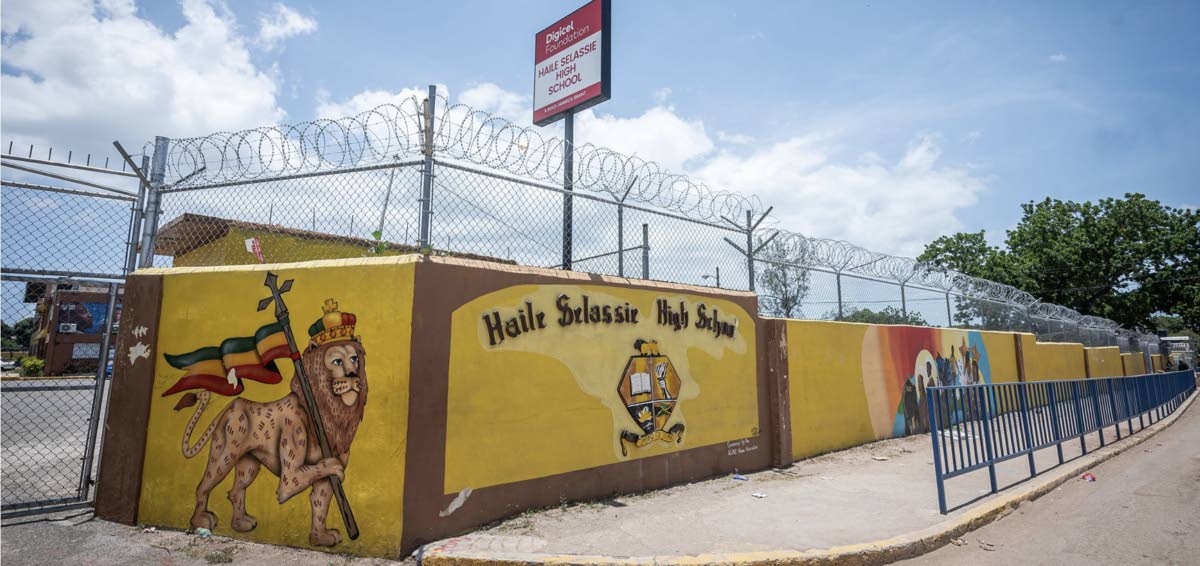 Principal Anniona Jones says Haile Selassie High is more than willing to accept any potential transfer student.
When St Catherine mother T.K. Gentles* handed over $3,500 to secure a transfer for her son to Cumberland High School, she knew the money did not guarantee success.
But for her, it was a risk worth taking.
More than two weeks after beginning the process, Gentles finally received the answer she had been waiting for. Her 15-year-old son had been accepted.
“I am just so happy that he got in. I was really worried,” she told The Sunday Gleaner, noting that the transfer was a practical decision, not simply about gaining entry into a preferred school. Moving her son from Mona High in St Andrew to Cumberland High in Portmore, St Catherine, means reduced transportation costs for the family.
Her experience reflects a growing reality across Jamaica’s secondary education system: parents are willing to spend thousands of dollars seeking transfers to schools they believe can provide greater opportunities for their children or to rein in expenses.
But behind the race for places lies a deeper contradiction: while some schools are overwhelmed by demand, others with qualified teachers, established programmes and available classrooms are struggling to attract students.
For St Catherine mother S. Parkinson*, the decision to seek a transfer was driven by what she believed was the best environment for her son.
Her son passed and was placed at Excelsior High School after sitting the Primary Exit Profile tests, but the St Andrew school was not among the seven preferred institutions on his exam entry form. Parkinson sought a transfer and eventually secured a place for her son at Kingston College (KC).
She paid $4,500 for KC’s transfer application and another $5,000 when she applied to St George’s College. The latter did not respond, she told The Sunday Gleaner.
For her, KC offers more than academics.
“KC is in close proximity to my work, and I have always admired the brotherhood, support and camaraderie that KC old boys have,” she said. “My son is energetic, and I wanted him to be in an environment that fosters both education and sports.”
Parkinson believes the demand for traditional high schools reflects wider concerns among parents about unequal experiences across Jamaica’s public education system.
“There are always going to be top-tier schools and middle schools, but I think that all public schools – all government-owned institutions – should be at a certain level,” she said. “The reality is that some schools, despite the strides they have made, are simply not at that level. And that is why parents are always wanting their children to go to traditional high schools.”
For J. Harding*, the search for a transfer was driven by a combination of logistics, family connection, and personal history. Her youngest daughter was placed at The Queen’s School, located near their home on Constant Spring Road in St Andrew and close to where Harding works.
Harding had hoped the 12-year-old would follow in the footsteps of her eldest sister to St Andrew High School for Girls, which is also Harding’s alma mater.
Harding said she applied to St Andrew High and paid about $2,000 for the transfer application and recommendation letter from her daughter’s preparatory school.
“We tried to see if she could have gotten the transfer to her first choice because her grades were not so far off, and, logistically, in terms of the travel time in the mornings, [it would be a better option],” she said, noting also that as a past student and active parent at St Andrew High, she believed the transfer might have been possible.
Her daughter attended summer school at St Andrew High and went through orientation and registration activities while awaiting a decision. But the call never came. Harding eventually learnt during a visit that the transfer was denied.
“Most of her friends will be going to St Andrew High, but as I told her, ‘I am going to try, but there is no guarantee. Wherever you are placed, you go there and do well’,” she said, noting that although disappointed, she reminded her daughter that success would not be determined solely by the name of the school she attended.
The experiences of Gentles, Parkinson and Harding illustrate some of the reasons parents engage the transfer system – from reducing costs and travel time to seeking perceived academic, cultural and social advantages.
But the growing demand for places has also raised questions about the non-refundable fees attached to the process.
COSTLY CASES
President of the National Parent-Teacher Association of Jamaica (NPTAJ), Stewart Jacobs, said some schools charge as much as $8,000 and $15,000 for transfer applications, despite having limited spaces available.
He believes parents should not be paying large non-refundable sums when the possibility of acceptance is low.
“They know that the child can’t get in. They know they don’t have the space, yet they are still taking the $15,000 from the parents. They need to do better than that,” Jacobs said, questioning the purpose of the fees. “If a parent wants to apply to five schools, are they going to pay five times?”
Documents reviewed by The Sunday Gleaner from one traditional high school in St Andrew outline the conditions attached to its transfer process.
There is a $15,000 non-refundable application fee and the documents state that application does not guarantee acceptance. Students are required to attend summer school and meet a minimum average of 85 per cent before getting the final nod.
But while parents compete for spaces, some schools are struggling with their own problems.
Principal of Old Harbour High School and President of the Association of Principals and Vice-Principals, Lynton Weir, said his institution has been swamped by transfer requests.
The St Catherine-based school, which operates on shifts, received 400 first-form students from the Ministry of Education, Skills, Youth and Information this year, but Weir said more than 200 additional students have been seeking transfers.
“We have over 200 applications, and I cannot respond to all of them,” he said on Thursday.
“After today, not even oxygen we can take in. That’s it!” he told The Sunday Gleaner.
Weir attributed the demand to rapid housing developments in the Old Harbour area, Jamaicans returning because of changing immigration policies overseas, and more than 13 feeder primary schools. He added that many families affected by Hurricane Melissa can no longer afford to send their children far away from home.
The same is not true for all high schools, however.
At Haile Selassie High School in Kingston, Principal Anniona Jones said the institution is facing declining enrolment despite having space and experienced teachers.
The school, built to accommodate about 1,200 students, is expected to enrol fewer than 200 students this September. It received only 53 grade seven placements from the ministry this year, and only 12 students had registered up to last week.
Jones, who is also president of the Jamaica Association of Principals of Secondary Schools (JAPSS), said her school does not charge transfer application fees.
“We have teachers with master’s degrees in their areas, certified. The average teacher in our school has over 16 years’ experience. The ratio in our school is one teacher to about seven students, and that is going to fall to about four,” she told The Sunday Gleaner.
She pushed back against suggestions that the school’s location in the often-volatile Payne Land community could be behind the reason for its fading attraction.
In rural St Elizabeth, Roger Clarke High School is facing a similar challenge.
Principal George Lewis said the school received 45 grade seven placements this year, up from 33 last year, but it has capacity for 120 new students.
He said at least 15 students have requested transfers out of the school, with some families relocating after Hurricane Melissa, and others leaving communities affected by population decline.
Ironically, Lewis said rising transportation costs have made the school more attractive to some families who previously overlooked it.
TRANSFER AUTONOMY
The Ministry of Education told The Sunday Gleaner that the transfer process is largely managed at the school level and that school boards determine fees charged within public educational institutions.
Boards of management are responsible for the governance and administration of schools, with membership drawn from key stakeholder groups, including government-appointed members, community representatives, parents and teachers.
The government-appointed members are selected through the National Council on Education, with recommendations from members of parliament forming part of that process.
Responding to transfer cost criticisms, Jones explained that school boards operate with autonomy but must remain within national education policy.
“The different policies are set at the school level, but they can’t violate national policy,” she said.
The ministry said regional offices had received 211 transfer requests as of July 10, with 111 processed and approved.
Schools are permitted to reserve approximately five per cent of their spaces for transfer students, with additional vacancies created when students leave.
Jones acknowledged the frustration surrounding transfer fees but said schools also face financial challenges.
“If we calculate, based on our programme, that we need as much as $80,000 per child for each school year] and the Government is giving us $40,000, we still have a deficit that needs to be filled,” she said, noting that transfer fees are part of some schools’ fundraising items.
*Names changed.
corey.robinson@gleanerjm.com