We’ve broken the glass ceiling, but have we overcome? – Luz Longsworth
Loading article...
-
 Dr Luz Longsworth, senior corporate director, Sandals Corporate University, receives a toast from the audience during the Seaside Chat at the launch of her book, Through The Glass Bottom Book last Wednesday. Photo - Ashley Anguin/Photographer
-
Dr Luz Longsworth, senior corporate director, Sandals Corporate University, receives a toast from the audience during the Seaside Chat at the launch of her book, Through The Glass Bottom Book last Wednesday. Photo - Ashley Anguin/Photographer
-
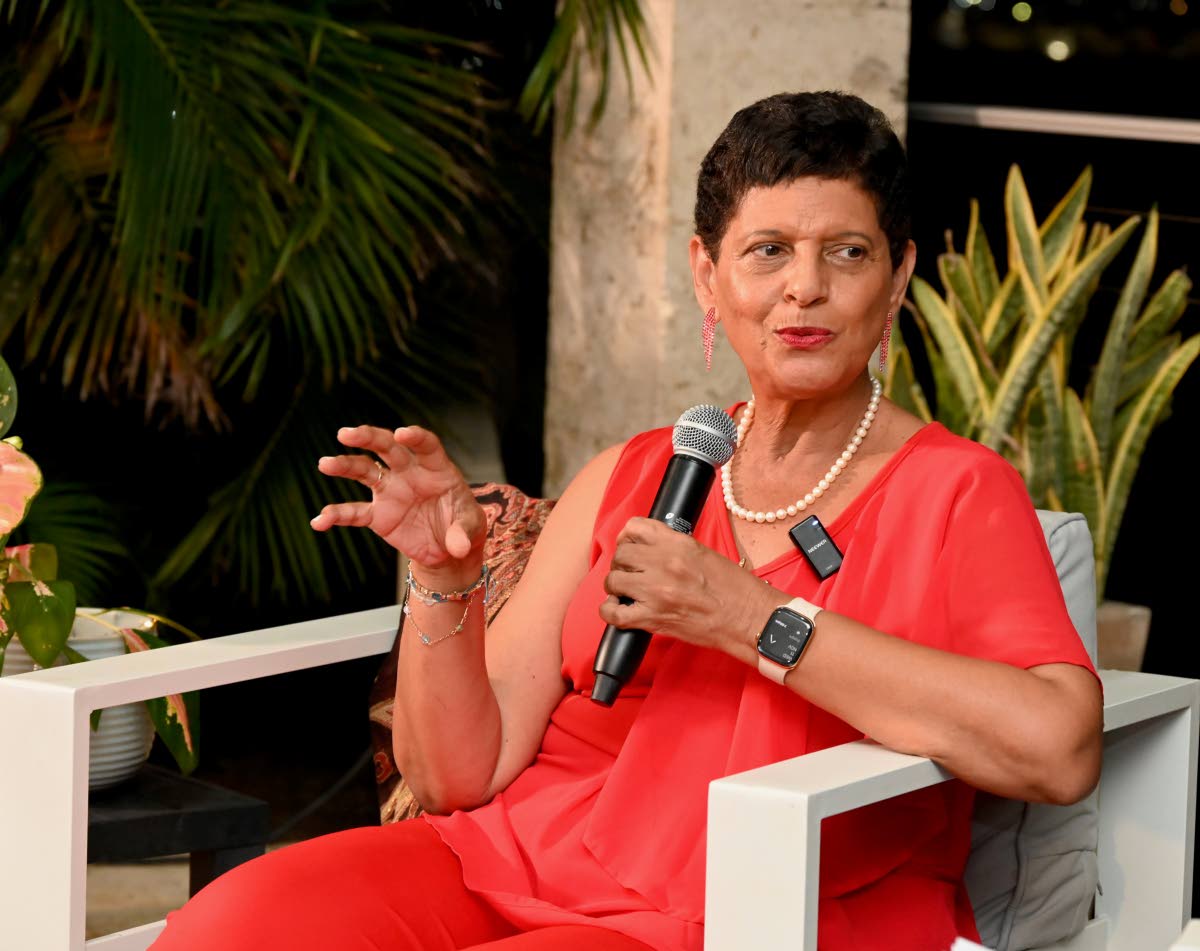 Dr Luz Longsworth, senior corporate director, Sandals Corporate University, addresses the audience. Photo - Ashley Anguin/Photographer
-
 Dr Luz Longsworth, Senior Corporate Director, Sandals Corporate University gets a toast from the audience during her Through The Glass Bottom Book at the Book Launch Seaside Chat at Westport in Freeport Montego Bay on Wednesday, November 11, 2026. Photo - Ashley Anguin
-
 Photos by
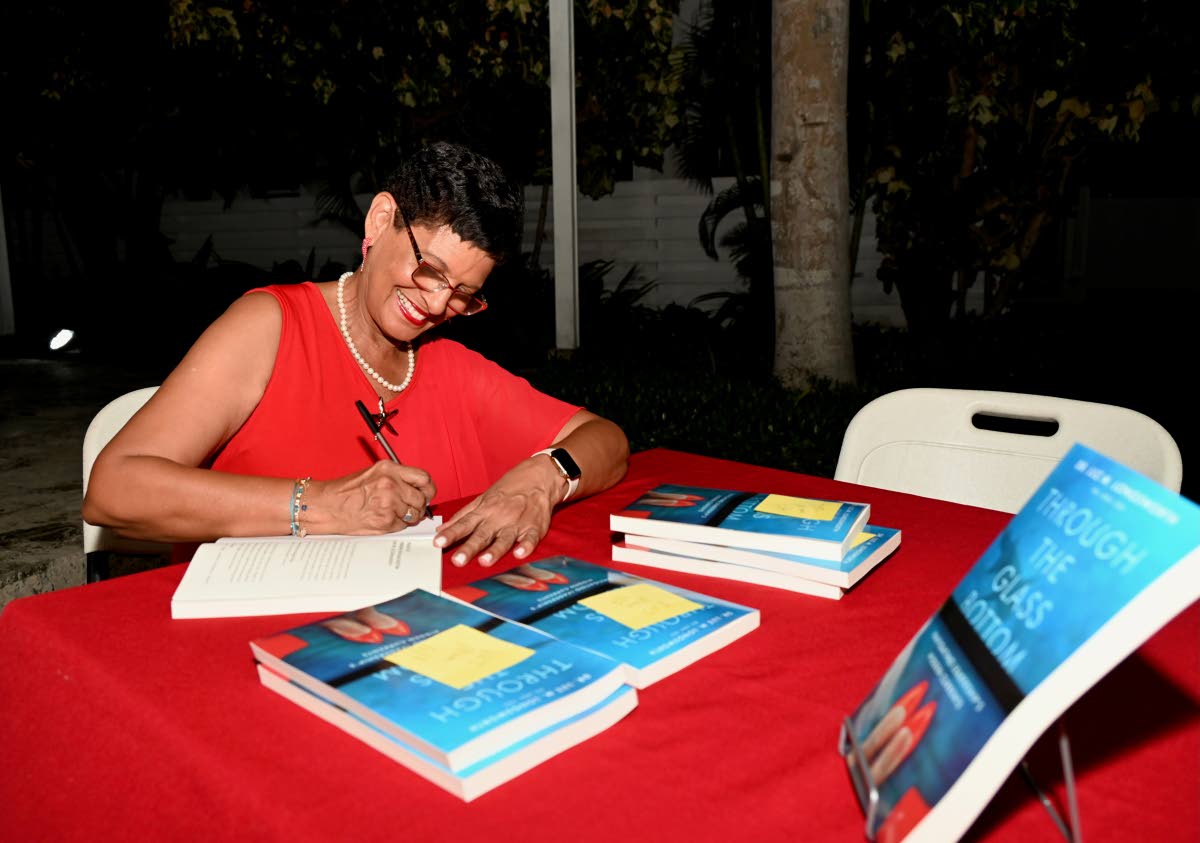
Dr Luz Longsworth, senior corporate director, Sandals Corporate University, signs copies of her book ‘Through The Glass Bottom Book’ during the seaside chat at Westport in Freeport Montego Bay, St James last Wednesday. Photo - Ashley Anguin/Photographer
WESTERN BUREAU:
Women have shattered glass ceilings, claimed executive offices, and risen to the highest levels of leadership. But Dr Luz Longsworth is challenging the notion that reaching the top means the battle is won.
“We have broken a lot of ceilings, but we have not overcome,” the veteran academic and corporate leader declared last Wednesday evening, warning that women’s growing presence in powerful positions should not be mistaken for the disappearance of barriers to their success.
“Don’t let our firsts be our lasts,” she urged.
Speaking against the backdrop of the Caribbean Sea at Westport in Montego Freeport, St James, Longsworth challenged an increasingly familiar Jamaican narrative that women are now running everything.
She pointed to the country’s history of having only one female prime minister as an example of why breaking barriers must be followed by deliberate efforts to ensure that progress continues.
For Longsworth, the real danger lies not only in the obstacles women encounter on their way to the top, but in the unseen forces operating beneath their achievements.
It is a philosophy she explores in her new book, Through the Glass Bottom … Navigating Leadership’s Hidden Currents, a deeply personal collection of letters to her daughter, Marissa, drawing on decades of triumphs, disappointments and difficult decisions.
During a candid seaside conversation at the book’s Montego Bay launch, Longsworth explained why she believes women must begin looking beneath the glass ceiling they have spent generations trying to break.
“We really need to be looking below what is happening in our organisations,” she said.
The glass-bottom boat, she explained, provides a different perspective. Rather than concentrating solely on the barriers above, leaders must understand the organisational politics, hidden agendas and personal motivations capable of undermining their success.
And sometimes, she suggested, the greatest threats are not immediately visible.
Longsworth knows something about those hidden currents.
One of the most painful experiences of her distinguished career came not at the hands of a male colleague, but from a woman she had admired and hoped would become her mentor.
Instead, the professional relationship deteriorated, leaving her feeling disrespected, bullied and silenced.
“One of the most painful leadership experiences of my career was working for a boss I had once admired deeply,” she read from her book.
“It was without question the worst experience I’ve ever had with a supervisor, and all the more difficult because she was a woman I had hoped would mentor and champion me.”
The experience became so difficult that Longsworth contemplated leaving the university environment altogether.
Yet, despite the emotional toll, she knew academia remained where she wanted to be.
An opportunity eventually emerged to lead a small satellite campus of The University of the West Indies in western Jamaica.
Having previously overseen more than 20 campuses, accepting responsibility for one small operation appeared, by conventional standards, to be a backward career move.
But Longsworth saw something others might have missed: an opportunity to serve underserved communities and rediscover her purpose.
Mother’s advice
She remembered advice her mother had given her throughout her life.
“Bloom where you’re planted.”
And that is precisely what she decided to do.
“The campus grew, the people grew. My assistant began her doctorate. The ecosystem flourished because I chose to treat it as fertile soil rather than punishment,” she told guests.
What initially appeared to be a professional setback became a defining chapter in her leadership journey.
“You’re not starting over as a seed. You’re being replanted with roots,” she wrote.
Longsworth also spoke openly about the subtle indignities women continue to experience in leadership.
She recalled contributing an idea during a meeting, only for it to be dismissed. Minutes later, a male colleague presented essentially the same suggestion, and it was embraced.
Her response, she explained, was deliberately diplomatic.
“That is an excellent idea, as I had said earlier,” she would remark, making it clear that she and her colleague were thinking along the same lines.
It was her way of asserting herself without allowing the situation to descend into confrontation.
Longsworth compared the approach to navigating rough seas, recalling how resisting the movement of a boat during turbulent weather had once left her bruised and battered.
Learning to move with the waves, rather than fight every one of them, became another lesson in leadership.
But she was equally clear that diplomacy must not be confused with ignorance of the forces at work.
Organisational politics
Women, she argued, cannot afford to dismiss organisational politics simply because they do not wish to participate in them.
They must understand the currents beneath the surface, recognise the dangers, and make deliberate choices about how to respond.
The glass-bottom boat offers a measure of protection, allowing passengers to observe what lies beneath without jumping into dangerous waters.
It also creates an opportunity for experienced leaders to guide others through unfamiliar territory.
For Longsworth, that responsibility extends to women helping other women, ensuring that those who have already navigated difficult waters do not leave the next generation to face them alone.
But Longsworth’s reflections were not confined to the behaviour of others.
She acknowledged that one of the most difficult lessons of her career involved confronting her own shortcomings.
Having encouraged employees to speak openly about problems within an organisation she led, she was publicly challenged by a junior staff member who accused her of failing to hold managers accountable.
The employee questioned how Longsworth could promote openness and collaboration while remaining unaware of what some workers were experiencing.
The criticism was painful. Longsworth went home and cried.
But rather than punish the employee for speaking out, she recognised that the criticism was justified. The following morning, she confronted her senior management team.
“She’s not the one that needs to be fired. If anybody needs to be fired, it’s me because I have not done what I have promised,” she recalled telling them.
It was a defining lesson in vulnerability. “The hardest lesson for me was being vulnerable,” Longsworth admitted.
In the Caribbean, she observed, leaders are often expected to be forceful, commanding and seemingly incapable of uncertainty.
Her own calm, soft-spoken manner had sometimes been mistaken for weakness.
“You’re too nice. You can’t lead,” she recalled being told. But she rejects the suggestion that kindness and strong leadership are incompatible.
For Professor Densil Williams, principal of The University of the West Indies, Mona, Longsworth’s composure is among her most remarkable qualities.
Woman behind the book
Having known her for almost 20 years and worked alongside her in senior leadership for nearly a decade, Williams offered guests an insight into the woman behind the book.
“I’ve never seen someone who exudes such calmness under great stress and great anxiety and great uncertainty,” he said.
Williams also challenged the tendency to measure leadership by titles, positions and personal advancement.
“Do not get into leadership if you don’t like people,” he declared.
For the WI Mona principal, leadership without a genuine commitment to improving the lives of others is ultimately hollow.
He praised Longsworth for producing a book grounded not merely in academic theory, but in the realities of leading people through uncertainty and change.
“It’s not just scholarship for scholarship’s sake. It is scholarship that really comes from the heart,” he said.
Williams also embraced the book’s central argument that leaders must understand the hidden currents within organisations, warning that unresolved tensions and workplace stress can undermine both people and institutional performance.
For Marissa Longsworth, those lessons are anything but theoretical.
An attorney-at-law who operates her own firm, former president of the Belize Chamber of Commerce and honorary consul of Canada for Belize, Marissa has experienced the demands of leadership first-hand.
And, despite her own accomplishments, she readily admits that her mother remains her most trusted adviser.
From navigating complex legal and diplomatic responsibilities to leading the Chamber of Commerce during the COVID-19 pandemic, Marissa said her mother’s guidance has helped her through some of her most difficult professional moments.
“Her phone will ring when I am in the middle of a crisis, and she will bring me down, and she will say, ‘Okay, this is what you need to do.’”
Her friends began turning to Longsworth for advice as well, seeking guidance on challenges ranging from professional relationships to difficult leadership decisions.
Eventually, one suggested that she write down the wisdom they were constantly requesting.
Marissa agreed. There were, after all, occasions when she desperately needed her mother’s advice but could not reach her.
That simple suggestion helped give birth to Through the Glass Bottom, written as intimate letters from a mother to her daughter, but intended for anyone navigating the uncertainties of leadership.
And Marissa, who proudly introduced her mother as a bestselling author, brought laughter to the gathering when she explained the advantage of being the author’s daughter.
“I’m also lucky to have her at my disposal and call in exchange for hugs and kisses. The rest of you will have to pay cash or bank transfer.”
She told guests that the book had climbed into Amazon’s top 50 new releases and reached the top 30s in a Kindle category.
janet.silvera@gleanerjm.com