Colin Steer | Memories of Mississippi
Loading article...
-
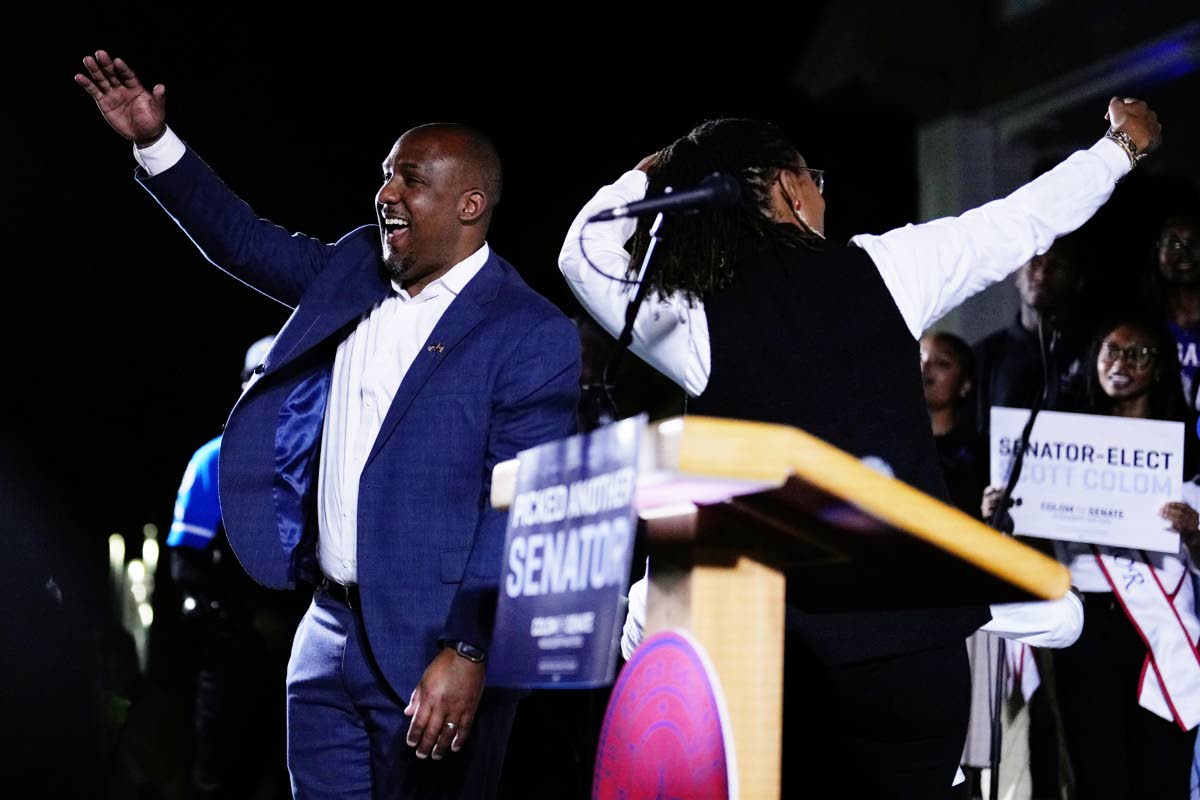 Mississippi Democratic Senator-elect Scott Colom reacts at an election event in Jackson, Mississippi on November 11. Photo - AP
-
Mississippi Democratic Senator-elect Scott Colom reacts at an election event in Jackson, Mississippi on November 11. Photo - AP
-
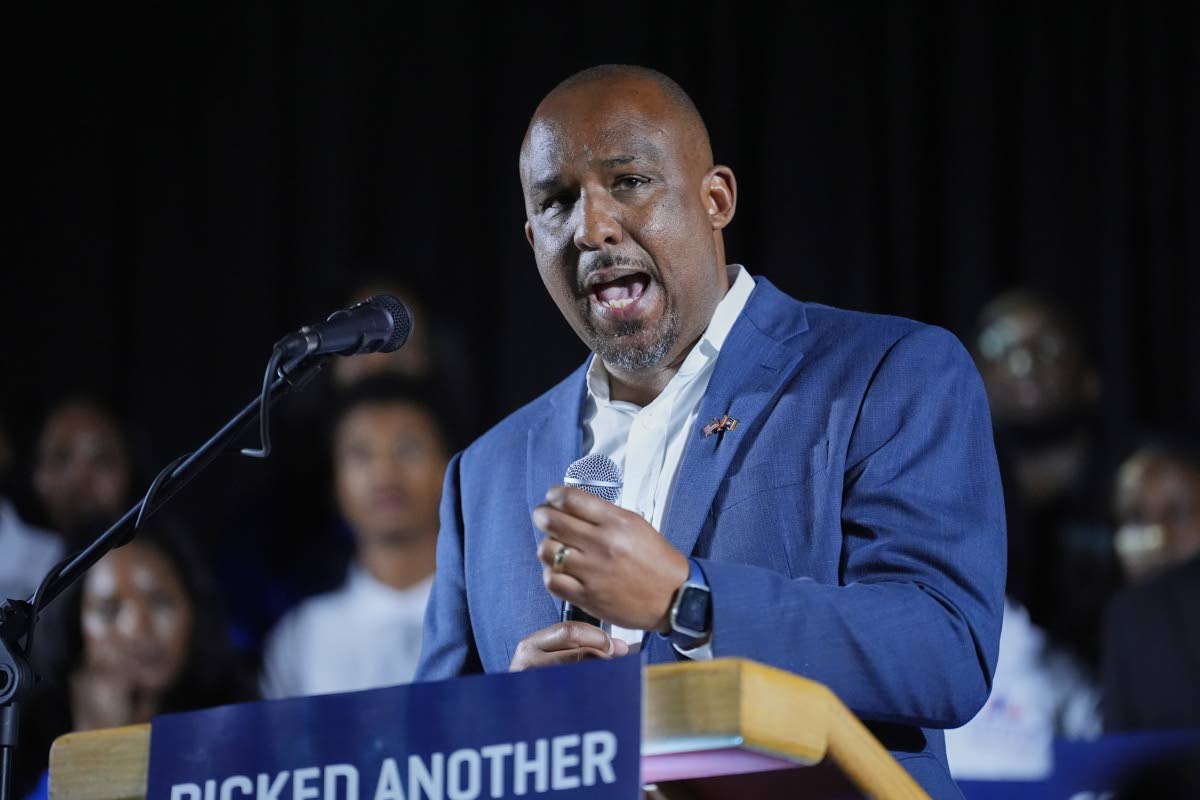 Mississippi Democratic Senator-elect Scott Colom speaks at an election event in Jackson, Mississippi. Photo - AP
-
 Colin Steer
The election of Scott Colom as Mississippi’s first Black United States senator since the Reconstruction era (1865 - 1877) has stirred some vivid memories of a four-day visit I made to that state some 30 years ago.
In the immediate aftermath of the election results, his victory over Republican incumbent Cindy Hyde-Smith in the November 3, 2026 midterm elections is being analysed by academics and media pundits within the context of a state whose political and social history has been deeply shaped by racial divisions, economic inequalities and resistance to change.
The election result brought back impressions that have remained surprisingly fresh with me over three decades. Of course, such a brief visit does not make one an authority on its sociology, politics or economy. Even when supplemented by wider reading before and after, personal observations provide only a limited understanding of the forces shaping a society. Nevertheless, certain encounters leave lasting impressions, particularly when what one sees on the ground bears such a striking resemblance to what I read in history books and newspaper reports and saw in television documentaries. Mississippi was one such place, for me.
My visit in February 1996 formed part of a US State Department-sponsored International Visitor Leadership Program designed to familiarise participants with the American presidential primary elections system. Our group comprised about a dozen election officials, journalists, public affairs officers, junior politicians and political executive assistants drawn from countries including Zimbabwe, Kenya, Jordan, Israel, Malta, Slovakia, Jamaica, Belize and New Zealand.
During the second week of the programme, we were divided into smaller groups and dispatched to four cities in the American South: My group drew Jackson, Mississippi.
The contrast with Washington, D.C., where we had assembled at the beginning of the programme, was immediate and striking. Washington had the familiar image of a powerful, cosmopolitan capital, with its imposing public buildings, modern infrastructure and bustling political institutions. Sections of Jackson appeared stuck in a by-gone era.
I still recall the light laughter among members of our group when, during a journey from the airport, we were told that we were approaching a crossroads. What came into view was simply two strips of intersecting roadway, controlled by traffic lights, with broad expanses of open land on either side.
There was nothing particularly remarkable about the intersection itself. What struck us was the contrast between our expectations of a state capital in the USA and the comparatively modest landscape before us, even as we made allowances that Mississippi could be considered as more rural than urban.
We would later see modern shopping plazas and other signs of commercial development. But significant sections of Jackson seemed almost frozen in time.
Some neighbourhoods and buildings reminded me of the images of the American South that had appeared in newspapers and television documentaries during the civil rights struggles of the 1950s and 1960s. There were ageing brick buildings, visible signs of urban decay and groups of homeless and destitute people waiting in lines for food. Old riverboats converted into mini casinos along the banks of the famed Mississippi River conveyed an image of robust entertainment for locals and tourists, and also that unstated yearning for a financial breakthrough.
Some colleagues later admitted to feeling a sense of depression as we travelled through sections of the city and its outskirts. What troubled us was not simply the presence of poverty. It was the visible deprivation in parts of one of the wealthiest countries in the world. Yes, Washington, D.C. has its signs of urban decay in parts as do other cities, yet something about Jackson was palpable.
Mississippi has long ranked among America’s poorest states, while also having the highest proportion of Black residents of any state. Its educational and public health challenges have similarly been persistent. However, education reforms in recent years have led to notable academic progress.
The predominantly Black Church and politics
Another of the memorable experiences of our visit involved the relationship between religion and politics. Despite coming from societies where churches have historically played important public roles, some of us we were nevertheless struck by the overt political activity we encountered at one predominantly Black church. Political posters and campaign flyers were displayed in the entrance foyer, just outside the main sanctuary. For some members of our group, the sight was surprising. It seemed an unusually direct expression of political engagement within a religious institution. But on reflection there was the recollection of the historical role of African American churches in the struggle for civil rights.
For many Black communities in the American South, the church was never simply a place of worship. It was also a centre of community organisation, political education, leadership development and collective resistance. During the civil rights movement, churches provided meeting places, organisational networks and moral leadership for campaigns against segregation and the denial of voting rights.
Religious leaders such as Martin Luther King Jr became nationally recognised figures, but countless local pastors and congregations also played significant roles in sustaining the movement. In Mississippi, the church became one of the few institutions capable of mobilising communities with some degree of independence.
During our visit, we learned of arrangements to transport elderly residents and others to polling stations to facilitate their participation in the electoral process. That seemingly ordinary activity carried considerable historical significance. In a state where African Americans had once faced extraordinary obstacles merely to register and cast a ballot, helping people exercise the franchise was not just a logistical exercise. It represented the continuation of a struggle to make constitutional rights meaningful in everyday life.
In this context, Colom’s victory is especially striking because Mississippi was regarded for decades as a dependable Republican stronghold. Yet it would be premature to interpret one electoral result as proof of a complete transformation in the state’s political culture. Elections are influenced by several interacting factors: economic dissatisfaction, candidate appeal, party organisation, voter mobilisation, demographic changes and the prevailing national political mood.
Younger generations may approach political choices differently from their parents and grandparents, and communities that have historically felt excluded from political power may become more assertive when they believe meaningful change is possible.
Thirty years later
Looking back on that February 1996 visit, I am conscious that my memories are inevitably selective. Jackson today is not the Jackson I encountered three decades ago. Cities evolve, populations change, institutions develop and political attitudes shift. Nevertheless, the impressions remain valuable because they offer a personal point of reference for considering the significance of the state’s latest political development.
Among the things that struck me most in 1996 was the uneasy coexistence of historical achievement and continuing deprivation. Here was a state that had witnessed some of the fiercest struggles for civil rights in modern American history, yet where the social and economic consequences of earlier injustices remained plainly visible.
Thirty years later, the election of Scott Colom offers another chapter in that long and unfinished story.
Colin Steer is a veteran journalist and communications specialist.