Gone in less than 120 seconds - Sophisticated thieves driving billion-dollar car-stealing racket
Loading article...
-
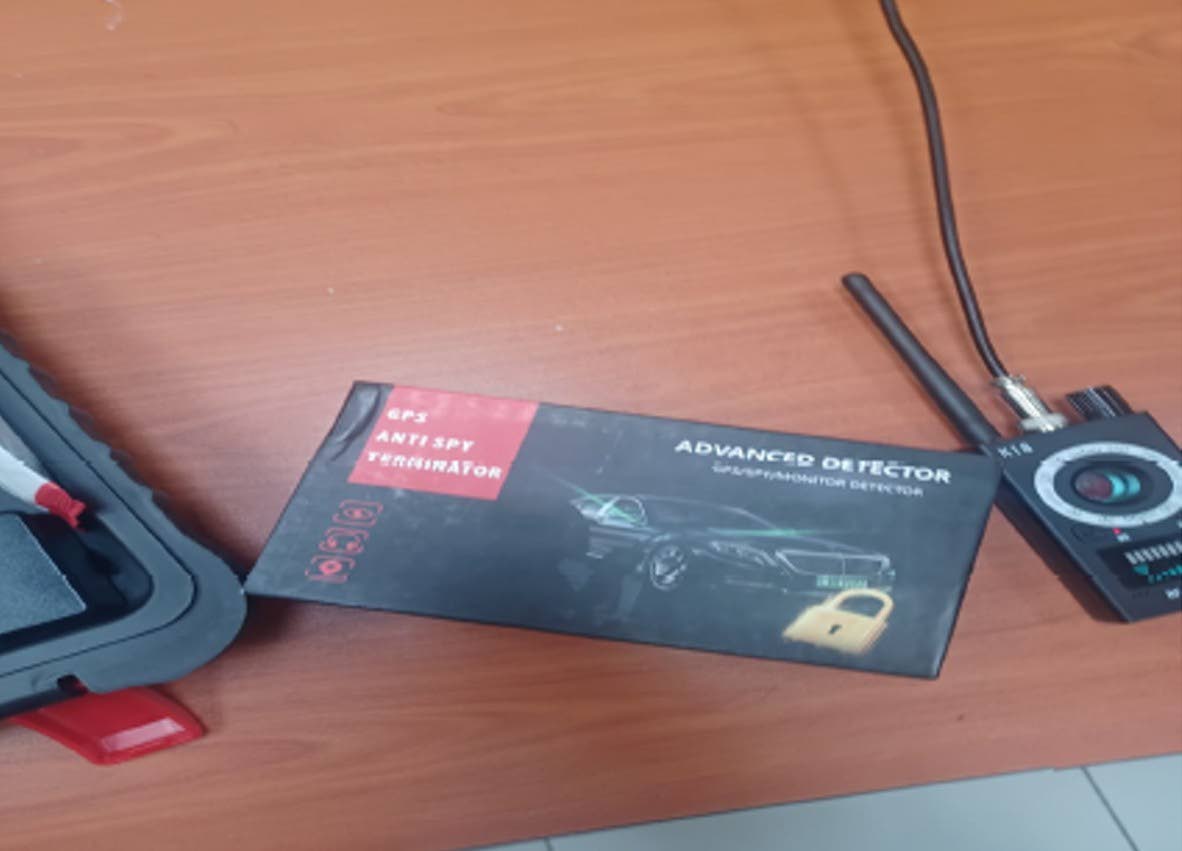 The GPS anti-spy terminator is used by criminals to disable GPS trackers, conceal vehicle location and evade recovery efforts. Photo - Contributed
-
The GPS anti-spy terminator is used by criminals to disable GPS trackers, conceal vehicle location and evade recovery efforts. Photo - Contributed
-
 This safety hammer is used by criminals to break windows to access door locks. Photo - Contributed
-
 The Flipper Zero device is used by criminals to relay signals, clone key fobs and exploit vulnerabilities in wireless systems. Photo - Contributed
-
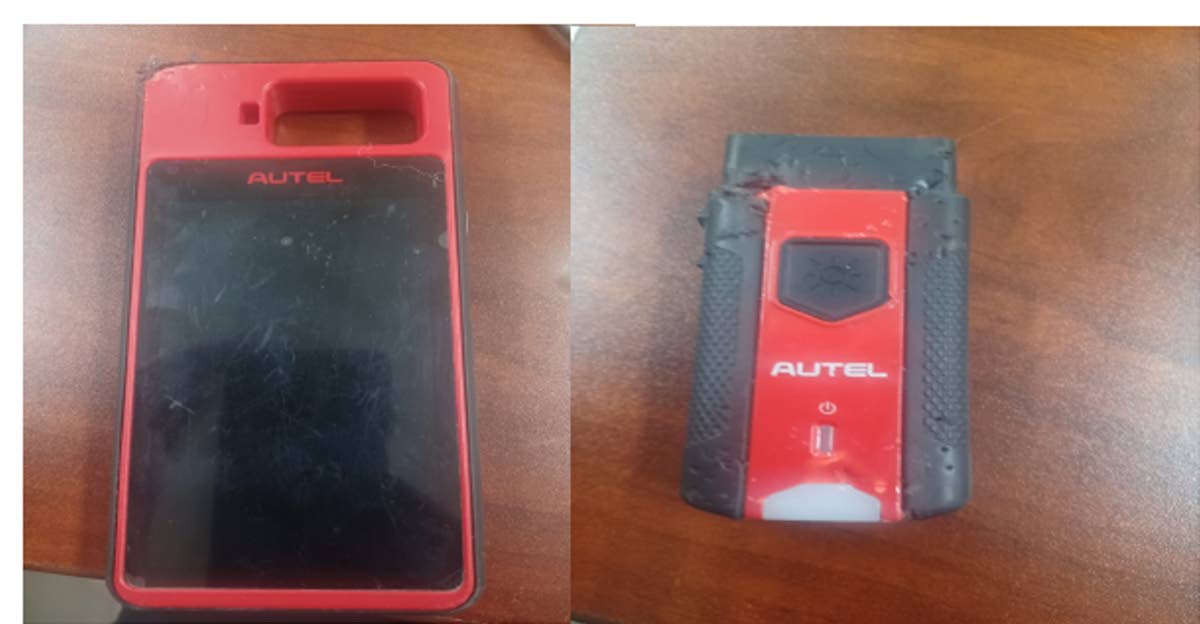 This Autel device is used by criminals to clone key fobs, bypass immobilisers, reprogramme ECUs and unlock vehicles. Photo - Contributed
A car entered a busy commercial plaza in Manor Park, St Andrew, shortly after 1 p.m. and stopped beside a Subaru G4 that was already parked there.
Video footage reviewed by the police shows the driver reversing and repositioning the car closer to the Subaru.
Seconds later, a man emerged from the car, got into the Subaru and, “in under two minutes they were driving out of Manor Park with the person’s vehicle”, one police investigator revealed.
“My analysis is that they were searching for the signal,” the investigator told The Sunday Gleaner, explaining why the car had been repositioned.
“The vehicle most likely had a keyless entry so it’s always searching for its key. So they were able to catch the signal and replicate it and fly the door with their device. It’s like they made another key and were able to access the vehicle without any damage,” the investigator said.
The incident occurred late last year, and the vehicle has still not been recovered.
Investigators say it provides a frightening example of the highly sophisticated devices now in the hands of car thieves, who, along with unscrupulous public-sector employees and business operators, are fuelling a billion-dollar stolen motor vehicle underworld.
Some 1,189 vehicles, valued at a total of $1.19 billion, were reported stolen (1,164) or robbed (25) between January 1 and November 8 this year, according to official police statistics. Fifty-seven per cent of the vehicles had no anti-theft device.
Of those vehicles, 174, valued at $245 million, have since been recovered, according to data compiled by the Police Stolen Motor Vehicle Division.
Back in May, The Gleaner reported that in just the first 43 days of the year, between January 1 and February 12, 123 motor vehicles were stolen or broken into across the island, resulting in an estimated $221 million in losses.
The Insurance Association of Jamaica (IAJ) said 920 motor vehicle thefts were reported to its member companies between January 1 and November 11 this year, an increase of 154, or 20 per cent, over the corresponding period last year.
Motor vehicle
theft claims
The association also disclosed that 50 per cent of its member companies reported paying out a total of $314.7 million over the same period to settle motor vehicle theft claims.
“Vehicle theft is a matter of concern for the public (policyholders), insurance companies and other stakeholders [such as law enforcement],” the association said in response to questions submitted by The Sunday Gleaner.
Police data also revealed that 243 people are currently before the courts on charges of larceny of motor vehicle, receiving stolen property, conspiracy to larceny of motor vehicle and other offences related to motor vehicle theft.
The areas around Hope Gardens, Emancipation Park in New Kingston and the National Stadium complex, including its parking lots and Arthur Wint Drive, are among the top five locations for motor vehicle theft, according to the police data.
Toyota models appear to be the preferred targets of car thieves, accounting for 536, or nearly half, of the vehicles stolen. The Voxy topped the list with 166, followed by the Probox with 90, the Mark X with 83, the Axio with 81, the Noah with 46, the Wish with 38 and the Crown with 32.
Toyota models
The IAJ said Toyota models accounted for 53 per cent of stolen vehicles reported to its member companies.
Mary Jane*, who drives a Voxy owned by her employer, is still “traumatised” more than a month after the vehicle was stolen from her home in St Catherine.
Jane said the vehicle was parked so close to her house that she could see it from either her bedroom or living room. In addition, a motion sensor system was installed at the house “so that if somebody comes within the vicinity of the door or the car then the motion sensor would go off”.
She recounted that she was awakened by the sound of dogs barking and the motion sensor light coming on at about 3:24 a.m. on October 13.
“I thought it was another dog that the dogs were barking at. I wasn’t even looking at how passionate they were barking,” she admitted.
Jane said she went to use the bathroom and returned to bed. She then glanced out the window and saw the Voxy’s tail lights as it went through the gate.
“That’s when I realised that somebody was really in the yard and when I looked outside the car was gone. A don’t even think it was 10 minutes,” she said, estimating how long the thieves took to steal the vehicle.
The Voxy was one of three vehicles reported stolen within a 24-hour period in St Andrew and St Catherine, according to police reports.
It was recovered about 10 minutes later by a private security company using a tracking device installed in the vehicle.
Jane said the thieves appeared to have stolen the vehicle by reprogramming its key “because when I got there [the location where it was recovered] my key couldn’t start it”.
For her, the mental toll has been overwhelming.
“I don’t want to go back around that vehicle. And this is such an extensive exercise. Even after getting back the vehicle you have to be putting in security features, cameras, lighting, gates, all kinds a sup’n,” she said.
Police investigators say car-stealing syndicates have devised various schemes to turn stolen vehicles into cash.
Emerging scam
In one emerging scam, investigators say victims are contacted by unknown individuals, some of them overseas, who demand payment in exchange for information about the whereabouts of their stolen vehicles.
Investigators believe this may have happened last weekend when a Toyota Voxy was stolen from the Mona campus of The University of the West Indies during its annual graduation ceremony.
The vehicle was subsequently recovered in St Catherine. However, the owners have stopped cooperating with the police after reporting that they were contacted by someone overseas demanding payment for information that could lead them to it, one investigator told The Sunday Gleaner.
Investigators say stolen vehicles are typically cloned and sold to unsuspecting purchasers or sold to unscrupulous business operators, who then dismantle them for spare parts.
“We have one person before the court now in a case where a vehicle was stolen and later recovered, but ownership is now an issue because there is tampering on the vehicle,” one investigator said, explaining that two different people now have official documents for the same vehicle.
The IAJ acknowledged that legitimate losses arising from motor vehicle theft may not result from any deliberate act or omission on the part of the policyholder. However, it said such incidents “unduly increases financial burdens” on both vehicle owners and insurance companies.
“Theft of insured motor vehicles often requires greater due diligence for claim processors due to the possibility of fraud. This increases the cost of claim settlement,” the IAJ explained.
livern.barrett@gleanerjm.com