Rosalea Hamilton | What’s missing in building Jamaica’s creative economy
Loading article...
-
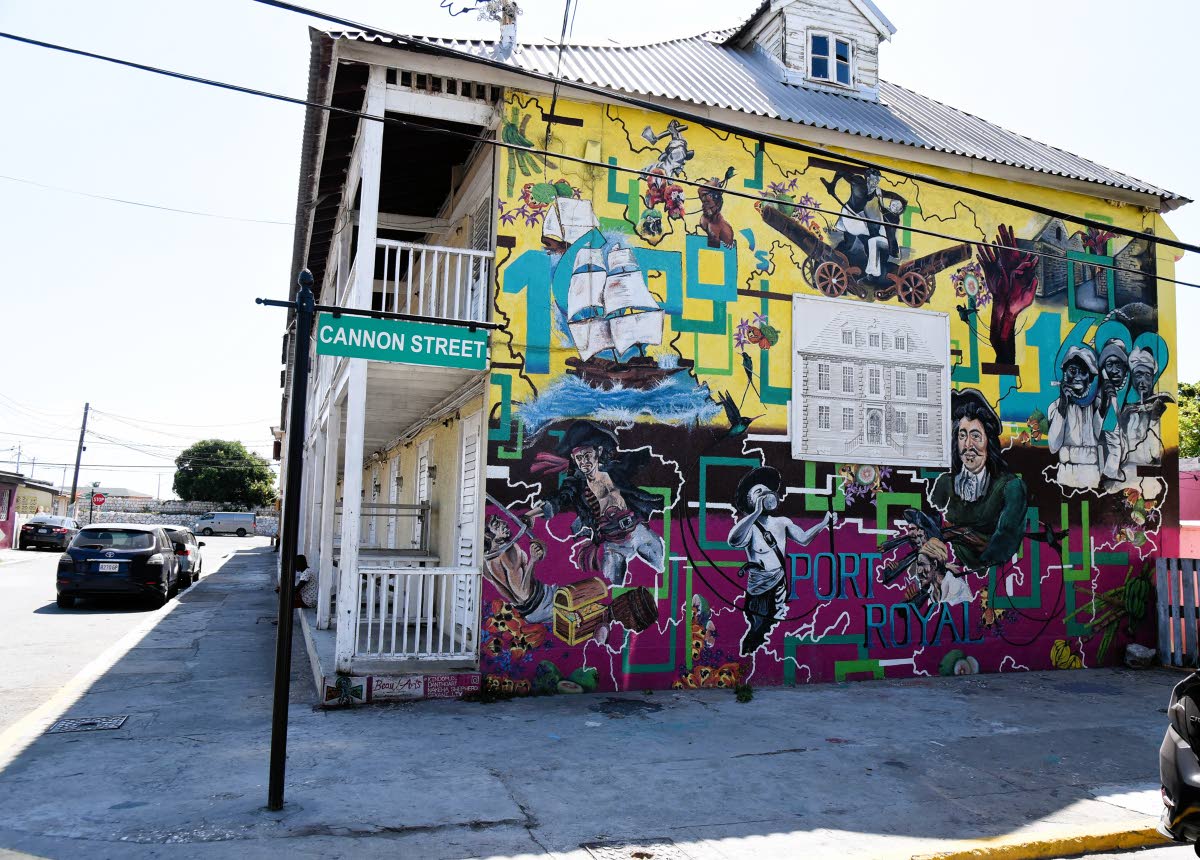 A mural depicting stories of pirates in Port Royal.
-
 Rosalea Hamilton
The Gleaner’s editorial of March 9 offered important insights about building Jamaica’s creative economy. It concluded: “Jamaica’s cultural capital is globally recognised. With the right policies, institutions and investment, the country can convert that influence into sustained economic prosperity.”
I agree! But I ask: since the meteoric rise of Bob Marley internationally in 1975, when Jamaica’s cultural prowess became unmistakably self-evident, why have we been unable to translate cultural influence into sustained economic prosperity?
Many Jamaicans, as well as development experts, have long recognised the transformative potential of our cultural/creative industries. In fact, since 2003, our National Cultural Policy sought to position Jamaica as a “Cultural Superstate” by leveraging cultural industries for sustainable economic development. Yet, 22 years later, the updated National Policy for Culture, Entertainment and the Creative Economy 2025–2035 is still attempting to position culture as a driver of economic growth. Again I ask: why have we been unable to achieve this over more than five decades?
The editorial suggests we need to strengthen “the structure that allows creativity to generate sustained economic value”. I suggest we go further. We must fundamentally restructure the framework for governance and policymaking so that the “right” evidence-based, inclusive policies can upgrade our institutions (especially educational institutions) and unleash our creative potential to diversify production, trade, and investment to enable sustainable development. That’s the critical missing strategy in building Jamaica’s Creative Economy.
GOVERNANCE CHALLENGE
The deeper challenge lies in the persistence of a highly centralised, top-down approach to governance that has existed since our 1962 Constitution. For more than six decades, the Executive branch has exercised constitutionally protected authority to make policy with limited mechanisms for meaningful oversight and accountability. As a result, when policy objectives are not fulfilled, there are rarely consequences. Equally troubling is citizens have not consistently demanded accountability for the power we delegate to those who govern.
We have yet to fully cultivate a truly representative democracy where elected representatives can effectively hold the Executive accountable and where citizens can meaningfully influence the social and economic policies that affect their lives. Too many of us disengage from the democratic process, including by abstaining from elections, yet simultaneously express frustration at the authoritarian use of power or the absence of political will to implement agreed policies.
Kennedy was right! Building a “democracy is messy, and it’s hard”. After 250 years, Americans are still trying to “perfect their Union” and build a democracy “for the People, by the People and of the People”. A key lesson is that democracy requires active engagement by citizens. Americans understand that they cannot leave policy choices entirely to politicians; they must continually hold their representatives accountable through both legal and political mechanisms. Democracy is not a spectator exercise!
In Jamaica, however, our constitutional framework reinforces Cabinet dominance in policymaking. Recently, in response to questions from the Opposition to the Finance Minister, the Speaker of the House asserted this constitutional policy-making power by stating: “This is not the place to defend government policy. Policy is set by the government and at Standing Finance [Committee] we discuss the numbers”.
This interpretation reflects the real meaning of Section 69(2) of the Constitution: Cabinet sets policy, that’s rubberstamped by the governing majority, with limited scope for meaningful input from non-executive parliamentarians and virtually none from local government representatives and citizens themselves. Under this structure, stakeholder bodies such as the Creative Industries Council lack a constitutional or legal foundation for shaping cultural policy. As a result, participatory governance remains a manifesto promise.
WHY IS THIS IMPORTANT?
Creative economies flourish when artistes, producers, entrepreneurs, educators, investors and communities actively participate in shaping the policy that governs their industries. Without these voices, policies risk becoming disconnected from the realities of creative production, innovation and trade, and opportunities for local economic development remain constrained. This disconnect helps explain why Jamaica has repeatedly produced cultural brilliance yet has struggled to upgrade institutions and empower local government to consistently translate creativity into broad-based economic prosperity.
How can we change this state of affairs?
It starts with us, especially creative/cultural industry stakeholders. We must ask: do we want participatory governance to enable us to actively participate in the policymaking process in collaboration with our representatives, including those at the local level? Or do we want to continue to leave it up to politicians, hoping that Cabinet makes and implements the right policies? Further, do we want to continue Cabinet policymaking with no adequate oversight and accountability of cultural policy decisions by our non-executive representatives in Parliament?
Changing the status quo requires a new Constitution. The stalled constitutional reform process can be restarted with effective and sustained civic and cultural advocacy. Jamaica’s cultural practitioners – musicians, actors, poets, storytellers, filmmakers and other creatives – possess powerful platforms that shape national consciousness. Their voices can help advance a simple but powerful message: people must have a meaningful voice in shaping cultural/creative-industry policies, and there must be adequate oversight and accountability to ensure timely and effective implementation.
A participatory governance and policymaking process, embedded in our Constitution, is a critical missing element for more effective policies about our creative/cultural industries and supporting industries.
Rosalea Hamilton, PhD, is founding director, Institute of Law & Economics. Send feedback to rosaleahamilton@gmail.com and columns@gleanerjm.com