BACK ON THE MAP - PM says Jamaica can no longer afford slow infrastructure delivery, citing cost of delays as Troy Bridge opens
Loading article...
-
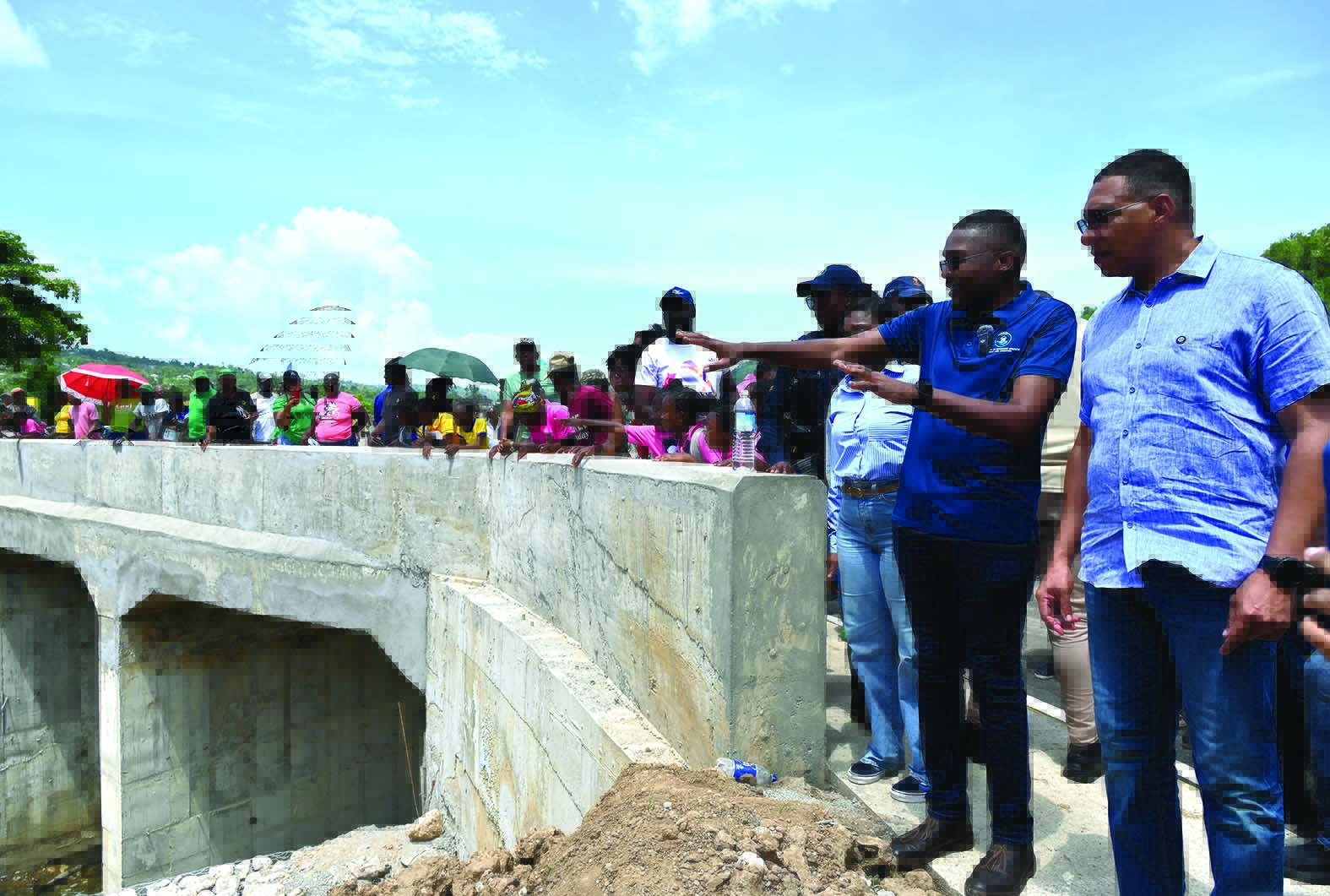 Robert Nesta Morgan (left), minister without portfolio in the Ministry of Economic Growth and Infrastructure Development, explains the structural integrity of the new Troy Bridge to Prime Minister Dr Andrew Holness. Ashley Anguin/Photographer
-
Robert Nesta Morgan (left), minister without portfolio in the Ministry of Economic Growth and Infrastructure Development, explains the structural integrity of the new Troy Bridge to Prime Minister Dr Andrew Holness. Ashley Anguin/Photographer
-
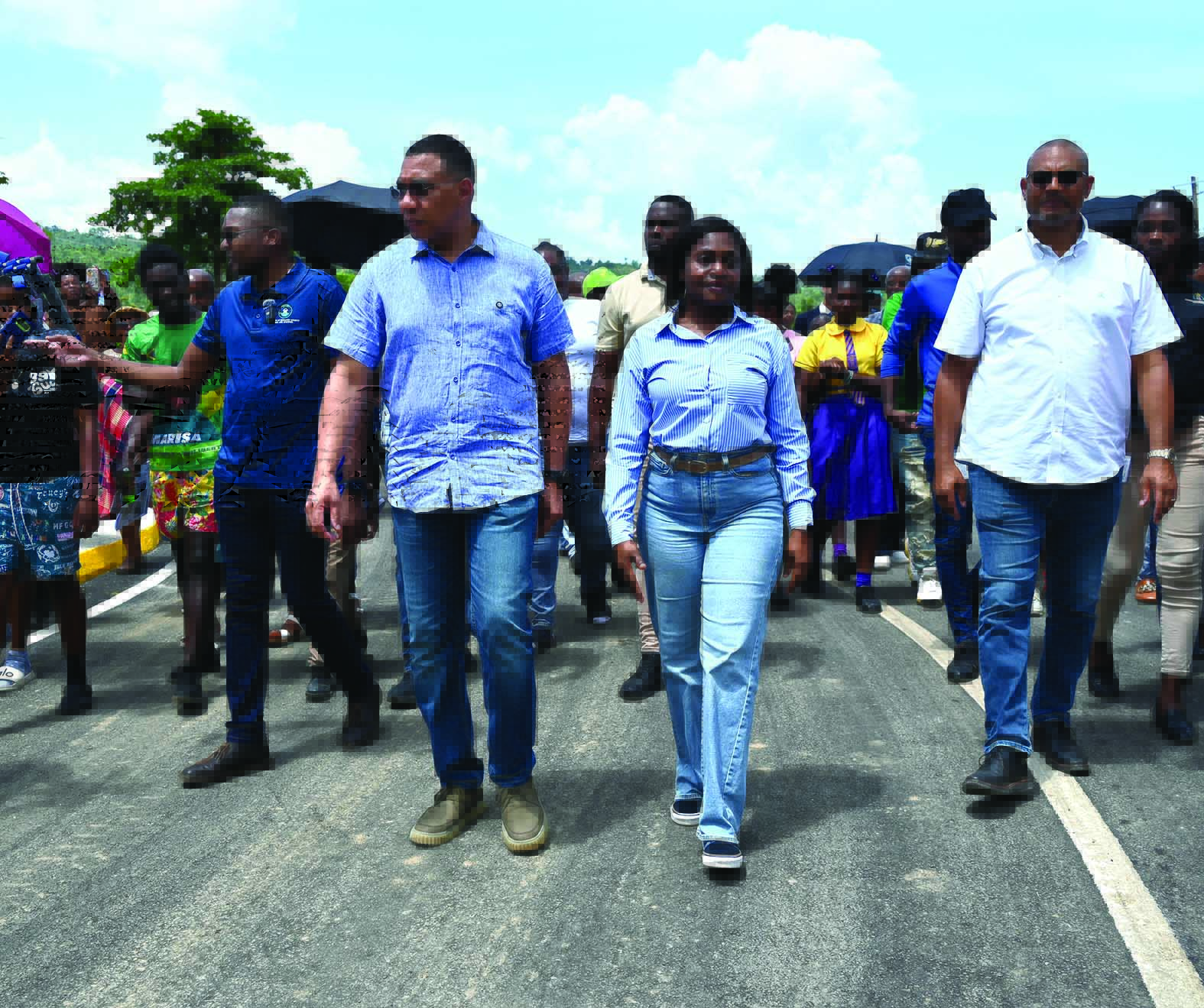 Walking the new bridge (from left) Robert Nesta Morgan, minister without portfolio in the Ministry of Economic Growth and Infrastructure Development; Prime Minister Dr Andrew Holness; Dannie Clarke, director, corporate communications and public relations in the Ministry of Economic Growth and Infrastructure Development; and Mikael Phillips, member of parliament, Manchester North Western. Ashley Anguin/Photographer
Western Bureau:
Prime Minister Dr Andrew Holness has declared that Jamaica can no longer afford a public bureaucracy that delays critical infrastructure projects for years, arguing that excessive procedures are driving up costs and placing unnecessary burdens on citizens.
Holness, who was speaking at Friday’s opening of the new Troy Bridge in Trelawny, which was built to replace an older structure that collapsed in August 2021, is pushing for major reforms to the Government's approval and investment systems.
“The system we have is quite effective at measuring the cost of building, but it is not effective at measuring the cost of not building quickly enough,” said Holness. “It would have cost us at least 30 per cent less if we had built this bridge four years ago.”
“The question deserves an honest answer,” continued Holness, in speaking to the five-year wait for the bridge's replacement. “The answer lies in the systems governments use to ensure that public funds are spent responsibly.”
“When a bridge remains closed for years, there is a cost. When a farmer must travel farther to market, there is a cost. When a student spends additional hours commuting, there is a cost,” he added.
Speaking specifically to the residents and students, who had gathered for the ceremony, Holness said the reopening of the bridge, which has now rectified the massive dislocation residents has been facing since 2021, represents far more than the completion of a construction project.
In reflecting on the rich history of the original Troy Bridge, which was built in 1869 and served communities in Trelawny and Manchester for more than 150 years before it was destroyed by Tropical Storm Grace, described it as a part of Jamaica’s history.
“The Troy Bridge is not simply a physical structure; it is part of the history of this community and part of the story of Jamaica itself,” said Holness, noting that the bridge predated motor vehicles and had withstood numerous hurricanes and generations of social and economic change.
He also used the occasion to highlight what he described as a broader national challenge involving Jamaica's ageing infrastructure, much of which was built more than a century ago and has exceeded their intended lifespans.
“We are not going to be able to repair overnight the 20,000 kilometres of roadways that we have, much of which was built over 100 years ago,” he said, in defending the Government's SPARK road rehabilitation programme.
“A lot of people said to us, when we're doing the SPARK programme, why not just take the money and patch the road? Every year we are patching. Sometimes we are patching the patch that we patched,” he said, while acknowledging the importance of engineering reviews, environmental assessments, procurement processes and fiscal evaluations.
“The purpose of a process is to produce a result. Unfortunately, many of our bureaucrats and technocrats, and some of our politicians, and many in the civil society who criticise the work of government, believe that the end of a process is another process,” he continued. “The objective is not to choose between accountability and efficiency. The objective is to achieve both.”
According to Holness, the Government is committed to modernising public investment and approval systems by reducing duplication, shortening approval timelines and creating accelerated pathways for critical infrastructure projects.
“We are determined to modernise our public investment and approval system. We are determined to reduce duplication. We are determined to shorten approval timelines. We are determined to create accelerated pathways for critical infrastructure projects,” he said, pointing to the creation of the National Reconstruction and Resilience Authority (NaRRA) as part of the Government's efforts to improve the delivery of infrastructure projects and strengthen the country's ability to recover from natural disasters.”
Over the years, the closure affected life on both sides of the brisge with schools such as Troy High losing several students whose parents determined they would not spend extra to send them on the longer alternative route.
Commerce was also affected in the area with delivery trucks having to take longer routes and several businesses lost customers as Troy lost its lifeline.
Stephanie Codling-Smith, the principal of the Warsop Primary and Infant School, welcomed the new bridge, which has reunited communities on both sides of the Hector River, which flows beneath the bridge.
“Today is a wonderful day. It is a good day for us here in this part of Jamaica,” she said. “We are happy to see the bridge standing firm, standing tall, and we are very happy for that. So today is really a good day.”
albert.ferguson@gleanerjm.com