Rooted in agriculture, growing in science
Loading article...
-
 Monique Holding
-
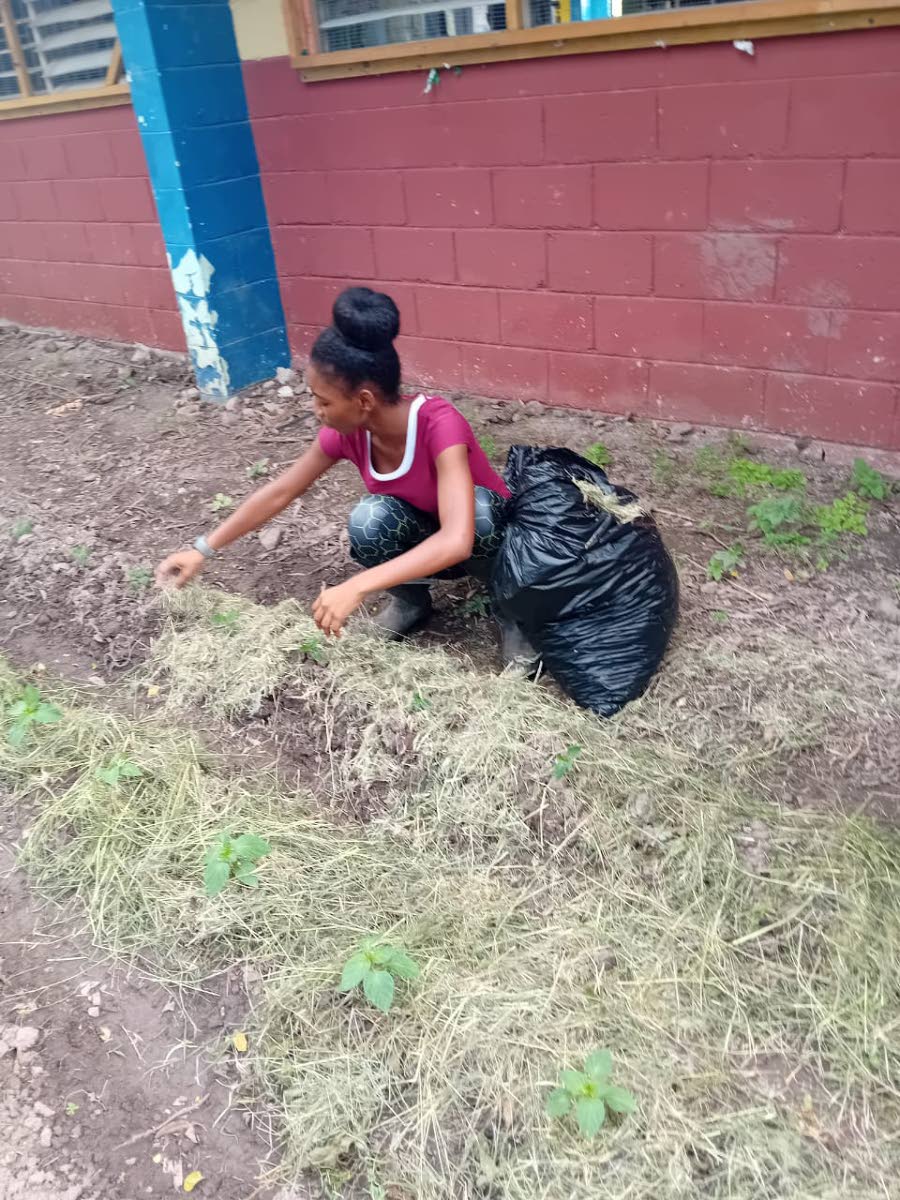 Monique Holding
When Monique Holding chose agricultural science in high school, she was not choosing between practical skills and academic achievement. Unknowingly, she was preparing herself for both.
Today, the former St Andrew Technical High School (STATHS) student is pursuing a Bachelor of Science in Biological Sciences at Northern Caribbean University (NCU), where she will begin her second year in September. Earlier this year, she was named the education ministry’s 2025 TVET Student of the Year, earning a two-year scholarship.
For Holding, the award is one of the proudest achievements of her academic journey. Equally proud were her agricultural science teachers, Davia Kettle and Audley Sanson, whose mentorship helped shape her success.
Her passion for the sciences, however, began long before she entered high school.
Growing up, Holding admired her horticulturist grandmother, whose flourishing home garden first sparked her curiosity about plants and the natural world.
“She has a beautiful garden around her home with all kinds of trees and plants and I would sit under a tree and watch her. Every Saturday at her house, I would watch everything that she did and she would teach me what she was doing.”
Although fascinated by agriculture, Monique always envisioned a future in medicine.
“I was always the medical person in my family,” she said. “I always wanted to become a surgeon or scientist.”
When the time came to select subjects in high school, she recalls being encouraged to pursue another option because agricultural science was not considered essential for a career in medicine. Trusting her instincts, however, she chose to continue studying the subject – a decision she now describes as one of the best she has ever made.
Looking back, she credits agricultural science with strengthening her understanding of biology, chemistry, and scientific concepts, providing a solid foundation for the fast-paced demands of university study.
“Doing AS actually branches off into biology, chemistry and even physics. When our agriculture teacher was teaching us in high school, he would always go into the mechanics of things. Even the elements and compounds we used, he would always link them back to chemistry and biology. Animal science and plant science always transformed back into biology. So, being at university was fast-paced, but it was easy to adapt because I was already familiar with what was being taught.”
Beyond the classroom, Holding has continued to apply what she learned. She uses sustainable agricultural practices and recycling techniques while maintaining her small personal garden. In the aftermath of Hurricane Melissa, those efforts helped her family become self-sufficient in pepper production.
Today, she is paying that knowledge forward through a passion project that teaches members of her community about the benefits of agriculture and sustainable farming practices.
“I didn’t know that I would love agricultural science this much. STATHS gave us the option of choosing it in grade 9, but we had the privilege of being introduced to it from grades 7 and 8. We got to learn about it, and we got to love it.”
According to Kettle, Holding’s commitment was evident from the very beginning.
“She showed a peculiar interest and commitment to the area from early on. Despite having varying interests, she maintained focus on agriculture, always working with the farmhand, her teachers, and school administrators to complete projects,” the teacher said.
Her involvement with the Jamaica 4-H Clubs also helped nurture her leadership skills and competitive spirit – qualities that continue to serve her well as a contestant in the Mr and Miss Central Jamaica Competition.
Financial challenges
According to Holding, mastery of the field didn’t come easily. In high school, she had to overcome severe financial challenges and teasing by bystanders of her farming attire (waterboots, gloves, hat, etc ) in order to continue pursuing agricultural science through to the Caribbean Advanced Proficiency Examinations level.
Monique’s experience reflects a broader shift in the ministry’s approach to education, one that integrates TVET with science, technology, engineering and mathematics (STEM).
According to the senior education officer with responsibility for agricultural science in the education ministry’s Technical and Vocational Education Unit, Okemo Duckie, TVET and STEM are complementary, with technical education providing students with practical opportunities to apply scientific knowledge.
“We try not to separate TVET and STEM because they go hand in hand. Agricultural science, for example, draws on biology, chemistry and physics, allowing students to learn the natural sciences in a practical, applied way. As a result, the transition from TVET disciplines into tertiary studies in science and related fields becomes much easier.”
He noted that this has long been reflected in students’ educational journeys.
“We have always seen students pursue TVET and then transition into a variety of professions. We have had students go into medicine, law, engineering and many other fields. The policy direction is that all students should experience TVET, with greater emphasis now being placed on integrating the technical skills developed through TVET with disciplines such as mathematics, languages, chemistry and the other sciences.”
Holding’s journey is one example of that philosophy in practice. By combining technical competence with a strong academic foundation, she has demonstrated that agricultural science can serve not only as preparation for careers in agriculture, but also as a springboard into higher education and professions across the STEM landscape.
Through initiatives such as the Rural Youth Economic Empowerment Programme, the National School Gardens Programme, and agricultural education initiatives of the education ministry, more young Jamaicans are discovering that agriculture is more than farming – it is a gateway to careers in science, medicine, research, entrepreneurship and innovation.
For Holding, that gateway has already opened.
editorial@gleanerjm.com