Drained by drought - Jamaicans urged to conserve as water woes worsen
Loading article...
-
 The Hermitage Dam in St Andrew on Augutst 24. On Monday, the dam stood at 31.4 per cent of capacity.
-
 Matthew Samuda, minister of water, environment and climate change.
-
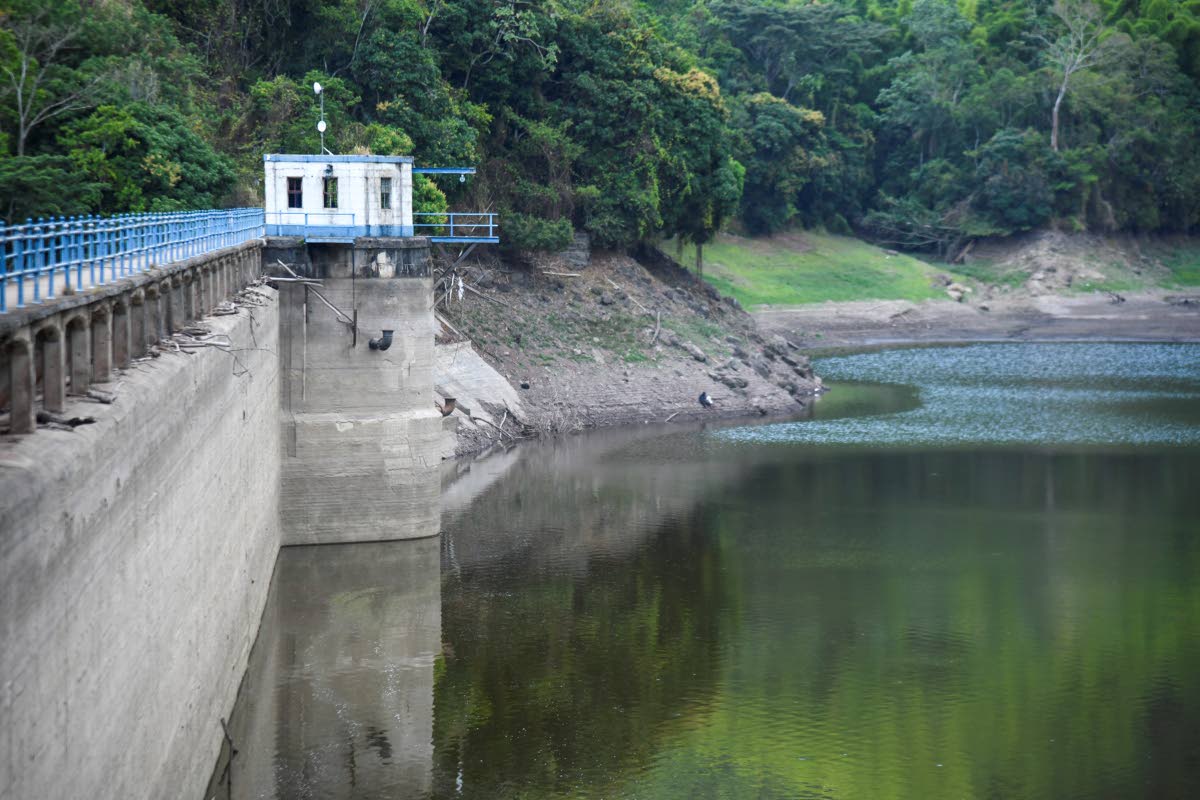 The Hermitage Dam in St Andrew on August 24. On Monday, the dam stood at 31.4 per cent of capacity.
Jamaicans are once again being urged to conserve water as the country continues to face severe drought conditions.
Matthew Samuda, minister of water, environment and climate change, said the prolonged lack of rainfall is placing increasing pressure on Jamaica’s primary water sources, making conservation essential.
“The projections and forecasts from the Met Service, which they have cross-checked with the Caribbean Meteorological Organization in Florida, do not suggest any rainfall of consequence in Jamaica over the next few weeks. And that is incredibly unusual,” Samuda said in a statement.
Jamaica has experienced significantly below-average rainfall over the past three months, at a time when the country would normally be receiving rainfall needed to recharge aquifers, replenish wells and rivers, and restore storage facilities.
The El Niño phenomenon is one of the main factors contributing to the prevailing dry conditions. El Niño developed in June and has continued to strengthen throughout July, with forecasts indicating that the trend will persist.
Evan Thompson, principal director of the Meteorological Service of Jamaica, recently noted that the likelihood of a strong El Niño has also risen to 55 per cent for the July-to-September period.
The situation is particularly concerning ahead of the back-to-school period, when household and institutional water demand is expected to increase.
Samuda said action is being taken to ensure that schools, farmers and early-childhood institutions have adequate water supplies amid the worsening drought conditions.
The National Water Commission (NWC) implemented a prohibition order against water wasting in several parishes on August 17. The affected parishes are St Mary, Portland, St Thomas, Kingston and St Andrew, St Catherine, and St Ann.
This followed weeks of daily water lock-offs.
Samuda also noted that the Government is intensifying its drought response, including significantly increasing the trucking of water to vulnerable communities.
He said approximately $86 million has already been spent on emergency water trucking through members of parliament to support communities affected by water shortages. With conditions expected to worsen, that response is expected to increase to about $500 million.
Municipalities will be resourced to respond to communities outside utility service areas, while the NWC will receive additional support to prioritise critical infrastructure, he said.
The minister stressed that water deliveries must be requested in advance, as priority will be given to hospitals, health centres, schools and places of safety, followed by vulnerable citizens and water-scarce communities.
In the meantime, he said the Government is accelerating critical water infrastructure works expected to provide much-needed relief to sections of St Ann and St Mary in the coming weeks, while major investments are also strengthening water security across the eastern end of the island.
He noted that work on the Minard Wells in Brown’s Town, St Ann, and the Agualta Vale Wells in St Mary could provide significant relief to communities currently affected by water shortages.
The Minard Wells, which serve more than 30,000 people, collapsed two years ago. As a result, the NWC was forced to operate the old well at between 40 per cent and 50 per cent capacity while construction of a replacement well progressed.
The new well is expected to be operational within a few weeks.
He said the Government is also working to complete improvements to the Agualta Vale Wells in St Mary within a few weeks. Once operational, the works are expected to significantly benefit central St Mary and communities extending towards the parish’s northeastern boundary, including Annotto Bay.
Samuda further reiterated that major investments are being advanced in the eastern and central corridors of the island, including the Rio Cobre Water Treatment Plant, which is projected to be completed in May 2027. It will add approximately 15 million gallons of water to the Kingston, St Andrew, Portmore and Spanish Town corridor.
He said the Government has also invested approximately $3 billion in new transmission infrastructure to move water from the Tulloch Spring while reducing losses. Non-revenue water in the Corporate Area has been reduced from 71 per cent in 2016 to approximately 38 per cent.
Additional works include replacing a transmission main serving Portmore; constructing a $1.2-billion to $1.3-billion transmission main from Ferry to Rockfort to improve supply to elevated communities in Red Hills; and further infrastructure upgrades around Washington Boulevard, as well as Wellington, Monroe and Seaview.
“These investments are critical because we are not simply responding to today’s drought; we are transforming the infrastructure so that communities can have more reliable water supplies as Jamaica continues to grow,” stated Samuda.
editorial@gleanerjm.com