Earth Today | New UN declaration opens the way for action on rising seas
Loading article...
-
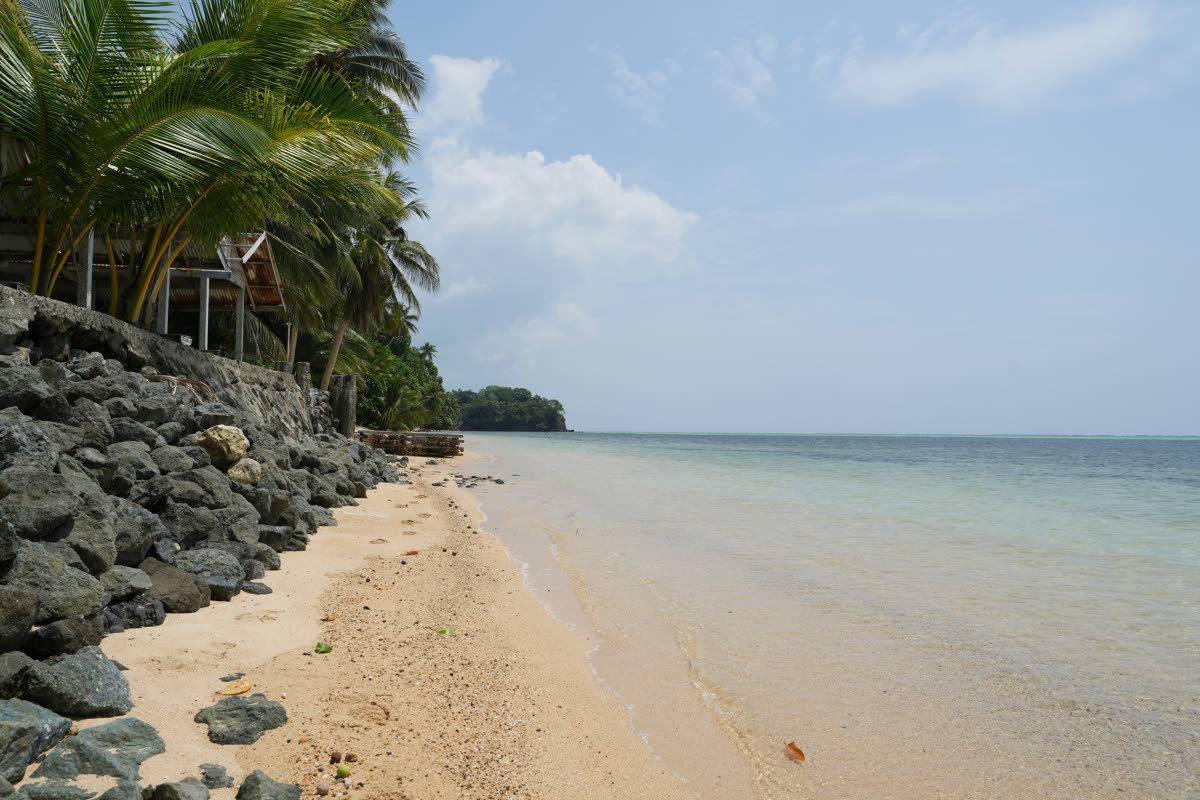 A sliver of beach remains after sea level rises on the coastline in Melekeok state, Palau, Thursday, September 3, 2026. Photo - AP
-
A sliver of beach remains after sea level rises on the coastline in Melekeok state, Palau, Thursday, September 3, 2026. Photo - AP
-
 The flag of the United Nations flies during the United Nations General Assembly (UNGA) at the UN headquarters, Monday, September 21, 2026. Photo - AP
THE UNITED Nations Declaration on Sea Level Rise, adopted last Thursday, reflects a call to action for countries to solve the sea level rise challenge associated with a changing climate.
It is a challenge, the declaration noted, that must be tackled on many fronts, not the least of these the best available science, and through the mobilisation of financing.
“We call for expanded access to bilateral, regional and international finance and ensuring timely and predictable disbursement, as well as better coordination and effectiveness. We emphasise the importance of streamlined and simplified procedures and systems across relevant funds, as appropriate, to reduce barriers to access,” reads a section of the declaration, which was adopted during the high-level segment of the 81st session of the United Nations General Assembly in New York.
Also important, the declaration said, is attention to the varied impacts to livelihoods, culture and heritage, as well as to the legal elements.
“We call on States to promote awareness and education campaigns at local, national, regional and international levels to inform the public about sea level rise and its causes, as appropriate. Sea level rise impacts culture and cultural heritage, including the loss of access to physical sites, living heritage, traditional lands, burial grounds, underwater cultural heritage, archaeological and sacred sites, and culturally significant coastal landscapes. Protection, preservation and documentation of cultural heritage is a priority, including through digitisation,” it said.
On the legal considerations, the declaration referenced the Advisory Opinion of the International Court of Justice “on the Obligations of States in respect of Climate Change, including in relation to sea level rise, as well as the Final Report of the Study Group of the International Law Commission on Sea-level rise in relation to International Law and its valuable contribution to enhancing the understanding and clarification of issues of international law arising in connection with sea level rise”.
The International Court of Justice’s Advisory Opinion, concluded, among other things, that “the legal obligation to co-operate requires States, in the context of sea level rise, to work together with a view to achieving equitable solutions, taking into account the rights of affected States and those of their populations”.
The declaration, meanwhile, also stressed the need for stability of maritime zones in response to physical changes resulting from sea level rise.
“We recall that, once a State is established, the disappearance of one of its constituent elements would not necessarily entail the loss of its statehood. We affirm the presumption in favour of continued statehood and, in this respect, we underscore the continuity of statehood in the face of sea level rise, as well as sovereignty, sovereign rights and responsibilities, and membership of the United Nations of such States, consistent with international law,” it said.
pwr.gleaner@gmail.com