Finance Minister flags revenue loss from online ‘order splitting’
Loading article...
-
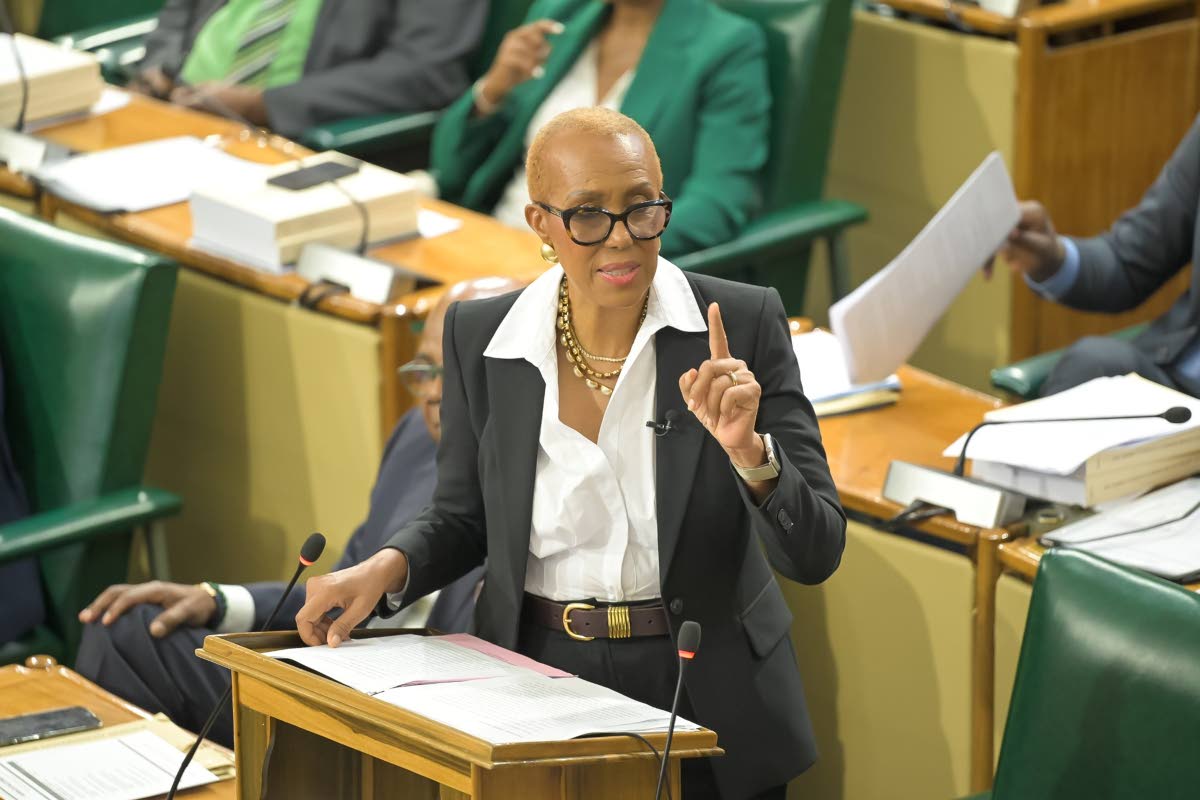 Minister of Finance and the Public Service, Fayval Williams, opens the 2026/27 Budget Debate in the House of Representatives on March 10, 2026.
-
 Online shopping (stock photo)
Finance Minister Fayval Williams has raised concerns about “order splitting”, a practice in which shoppers divide large online purchases into smaller packages to remain under the US$100 duty-free threshold.
Closing the Budget Debate on Tuesday, Williams said that while the threshold was intended to provide relief and “the unforeseen consequence is that no revenues flow to the treasury.”
“It was not expected that we would see splitting up of orders to avoid the taxes and duties... what we are seeing is a splitting of the orders to fall within the US$100 De Minimis allotment and an increase in the number of US$100 and under-valued packages,” she said. “That is quite regrettable and was simply not the intent of the De Minimis policy.”
Williams said: “When I draw a reference to our local retailers, it is because they are feeling the impact of untaxed goods coming in. One way this happens, and let me be frank with Jamaicans, is by way of splitting up of purchases so the purchases fall within the threshold of the De Minimus, i.e, [that is] US$100 and under purchases. So, to the Opposition Spokesman on Finance, I trust this explanation clarifies your assertion.”
Opposition Spokesman on Finance Julian Robinson also raised concerns about the proposed tax on digital services, arguing that it conflicts with the policy to increase the duty-free threshold to US$100.
What is De Minimis?
The De Minimis value is the maximum threshold below which imported goods are exempt from customs duties and taxes. In Jamaica, items with a free-on-board (FOB) value of US$100 or less qualify for this exemption, whether for commercial or personal use, according to information on the Jamaica Custom's Agency's website.
However, once the value exceeds US$100, duties and taxes are applied to the full cost, insurance and freight (CIF) value of the shipment.
The de minimis value for imported goods increased from US$50 to US$100 in April 2024.
The finance minister has argued that the proposed digital services tax is intended to ensure Jamaica gets its “fair share” of the global digital economy and to level the playing field for local businesses.
The Government is projecting to collect $300 million from the tax, which is expected to take effect in the final quarter of the 2026/27 fiscal year. That quarter covers January and March 2027.
Details on its implementation have not yet been outlined.
Follow The Gleaner on X, formerly Twitter, and Instagram @JamaicaGleaner and on Facebook @GleanerJamaica. Send us a message on WhatsApp at 1-876-499-0169 or email us at onlinefeedback@gleanerjm.com or editors@gleanerjm.com.