Wolmer’s student eyes future in robotics, biomedical engineering
Loading article...
-
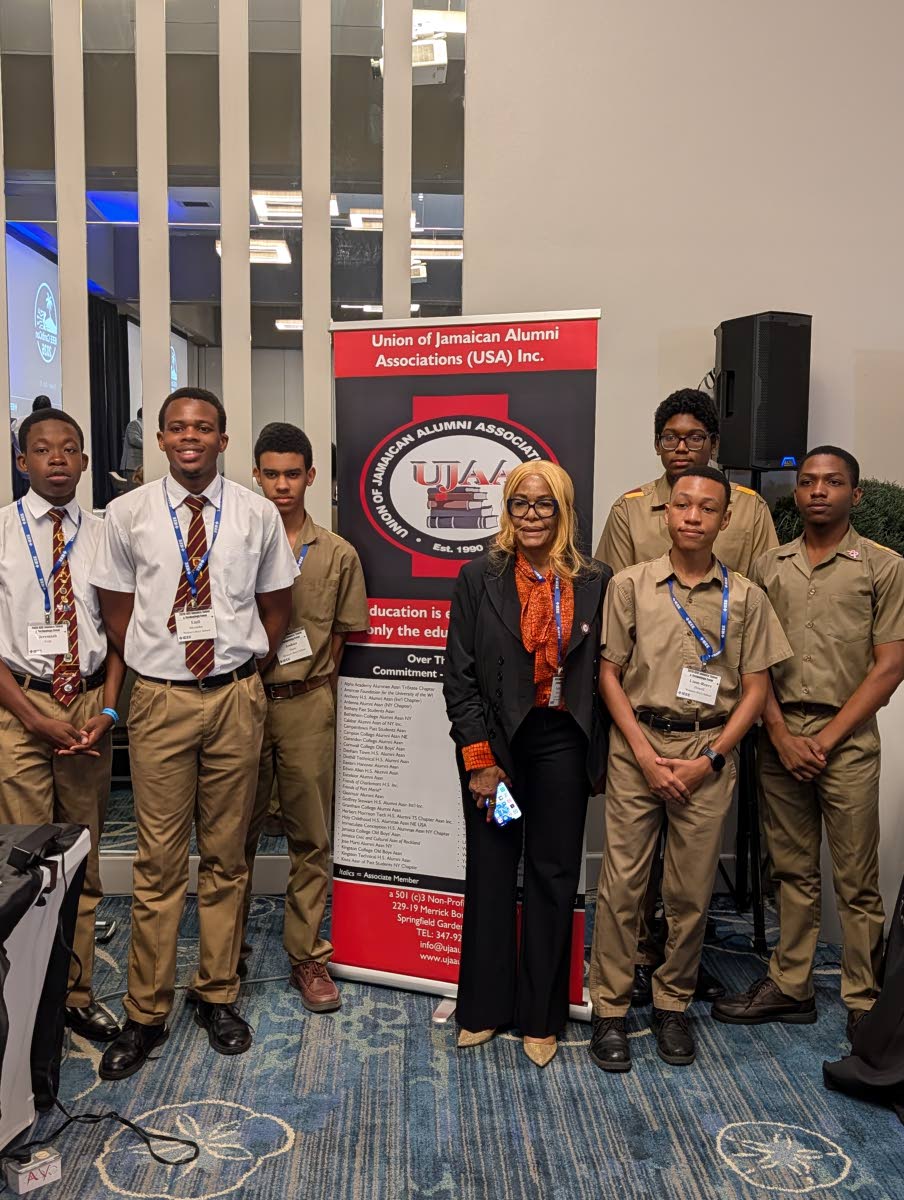 Wolmer’s Robotics Club members pose with UJAA representative at IEEE Talent & Tech Expo. Photo - Contributed
-
Wolmer’s Robotics Club members pose with UJAA representative at IEEE Talent & Tech Expo. Photo - Contributed
-
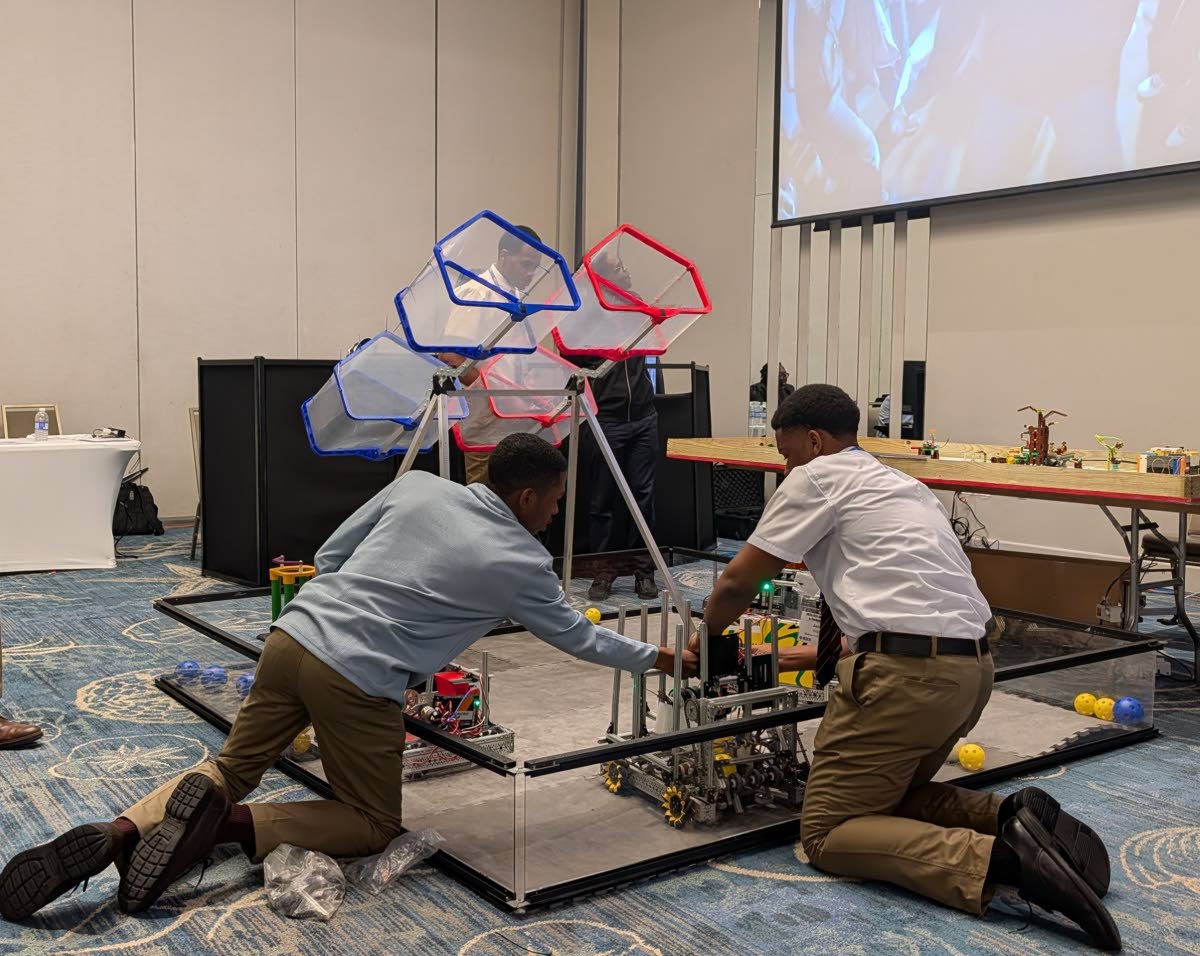 Cumberland (left) with a robotics teammate. Photo - Contributed
-
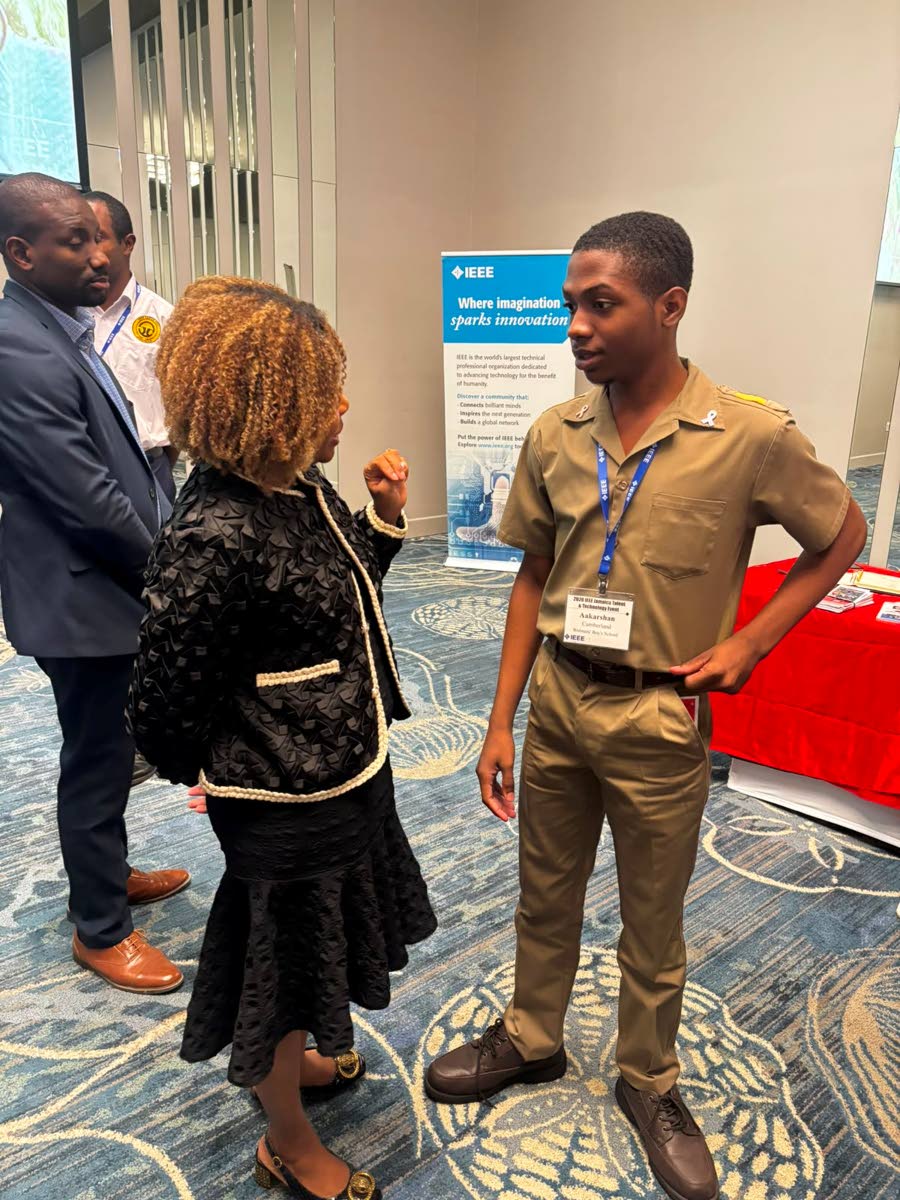 Senator Dana Morris Dixon, Jamaica’s minister of education, skills, youth and Information, in conversation with Aakarshan Cumberland. Photo - Contributed
At 16, Wolmer’s Boys’ School student Aakarshan Cumberland is already thinking beyond simply learning how to use technology. He wants to help create it, particularly in ways that could transform healthcare and improve lives in Jamaica.
A fifth-form student and member of the Kingston-based school’s Robotics Society, Cumberland has developed a keen interest in programming, robotics and emerging technologies, an enthusiasm that has already taken him to the World Championship for Robotics in April this year.
Now, he is setting his sights on further developing his skills, becoming captain of the school’s robotics team and eventually pursuing higher education in software or biomedical engineering.
His particular interest lies at the intersection of robotics, biomedical engineering and biofabrication, where he sees opportunities to combine programming, engineering, biology and medicine to develop solutions to practical healthcare challenges.
“My biggest dream is to create something that genuinely makes a difference. I’d love to be involved in developing technology that pushes boundaries, particularly in biomedical engineering and robotics. To also represent Jamaica on a larger stage in the technology industry and show what young innovators are capable of,” he said.
Cumberland, who was among the young innovators participating in the recent IEEE Talent and Technology Expo in Kingston, said his fascination with technology began in childhood, when he enjoyed dismantling electronic devices to understand how they worked.
His interest developed further after discovering programming languages such as Python and HTML, but it was his introduction to Wolmer’s robotics programme in third form that proved pivotal.
“I attended a club meeting and was fascinated by the robots they showcased and how the members explained their creations. That experience really sparked my interest in robotics and programming,” he recalled.
Since then, he has expanded his programming skills to include Java, CSS and JavaScript, largely through independent learning, online tutorials, research and experimentation.
He particularly enjoys learning through practical projects, which allow him to apply concepts, identify gaps in his understanding and develop his problem-solving abilities.
Among his personal projects is a website he is developing for the FIRST Tech Challenge (FTC) robotics community. The platform is intended to help competing teams collect, access and analyse information about other teams and their robots, allowing them to make better-informed decisions when developing competition strategies.
“What makes this project especially meaningful to me is its potential impact beyond just my own team. I’d like to create something that other FTC teams can benefit from as well, helping them make more informed decisions and get the most out of their competitions,” he said.
Cumberland acknowledged that programming involves considerably more than writing lines of code, with research, troubleshooting and testing often demanding as much time as the actual development process.
He has learnt to break projects into smaller tasks, consult technical documentation and experiment with different approaches to overcome challenges.
His participation in the IEEE Talent and Technology Expo further broadened his appreciation of the possibilities within the technology industry.
One of his major takeaways was the pace at which technology is advancing, particularly artificial intelligence (AI), which he believes young people must learn to understand and embrace.
He singled out a presentation by Amber Group founder Ambassador Dushyant Savadia on AI and its growing influence, saying it prompted him to consider how the technology could reshape everyday life and create new opportunities.
“His talk really got me thinking about how important it is for us, especially as young people, to understand and embrace these advancements rather than fall behind,” Cumberland said.
The expo also provided an opportunity for Wolmer’s Robotics Society members to showcase their robot and exchange ideas with other technology enthusiasts.
His experience at the World Championship for Robotics in April similarly reinforced his belief that Jamaican students can compete internationally when given the opportunity to develop their interests and abilities.
Beyond his personal ambitions, Cumberland believes technology could play a significant role in addressing Jamaica’s development challenges, particularly in healthcare, education, agriculture and public transportation.
He sees opportunities for digital systems to improve access to healthcare, technological applications to help farmers monitor crops and use resources more efficiently, and better information-sharing systems across public institutions.
“I think the important thing is to recognise that technology isn’t just about creating impressive products; it’s about finding practical ways to make people’s lives better,” he said.
In healthcare, he is particularly interested in developing robotic technologies and medical devices that could assist professionals, improve patient care and make certain medical procedures more accessible, especially in settings where specialised equipment and resources are limited.
He believes Jamaica has the talent and creativity to contribute meaningfully to the global technology industry but needs to continue investing in skills development and opportunities for young innovators.
He would also like to see more schools strengthen practical instruction in science, technology, engineering and mathematics (STEM), particularly through coding, robotics and artificial intelligence programmes supported by equipment, mentorship and extracurricular activities.
“Technology is becoming such an important part of everyday life that students should have more opportunities to engage with it practically, rather than only learning about it in theory,” he said.
Cumberland, who has also participated in swimming and hopes to take up lacrosse, said balancing academics with robotics and his personal programming projects has taught him discipline, prioritisation and time management.
He credits Wolmer’s with helping to shape his character and ambitions, particularly by instilling resilience and a strong work ethic.
For other young Jamaicans interested in technology, his advice is to start exploring rather than be intimidated by the perceived complexity of programming or the cost of equipment.
“There are plenty of free resources, tutorials and learning platforms available online. What’s important is having an interest in the subject and being willing to put in the time to learn,” he said.
He believes young Jamaicans should not underestimate their ability to innovate and compete internationally.
“Investing in young people means investing in the future of Jamaica. With the right guidance, resources and opportunities, we can move beyond simply adopting technologies developed elsewhere and become people who are actively creating them.”