Yaakov Raskin | Are we raising a generation of well diggers?
Loading article...
-
 Photo - pexels.com
-
Photo - pexels.com
-
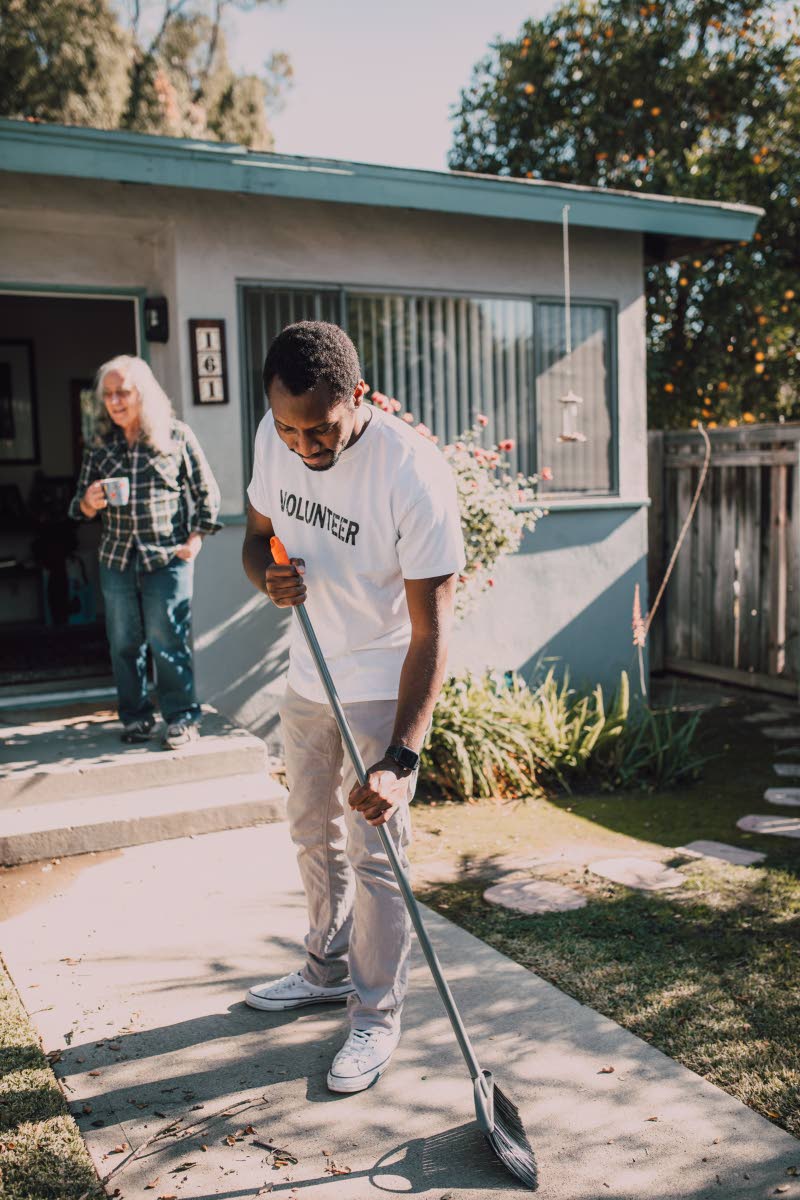 Photo - pexels.com
-
 Yaakov Raskin. Photo - File
We spend a great deal of time teaching our children what not to do.
Don’t fight. Don’t bully. Don’t steal. Don’t hurt others. Stay away from gangs. Stay out of trouble.
These are important lessons, particularly in a society where violence, bullying and negative influences threaten the future of our young people.
But perhaps we are missing an even more important question.
Are we teaching our children what they should be doing?
There is a tremendous difference between raising a child who does not cause harm and raising a child who actively makes the world a better place.
An ancient biblical story offers a powerful lesson.
In the Book of Genesis (26:15–22), we read about Isaac, the son of Abraham, who devoted himself to digging wells.
His father had dug wells to provide water, an essential source of life in the desert. But, after Abraham’s passing, the Philistines filled those wells with earth.
Isaac could have become angry. He could have spent his life fighting the people who destroyed his father’s work.
Instead, he picked up his tools and began digging again.
When people fought over the first well, he moved on and dug another. When they fought over the second, he continued digging.
Eventually, he reached a place where there was no conflict. He called the well Rehoboth, declaring, “For now the Lord has made room for us, and we shall be fruitful in the land.”
source of goodness
What made Isaac remarkable was not simply that he refused to fight.
It was that he refused to stop building.
He understood that darkness is not defeated merely by condemning it. Darkness is defeated by bringing light.
And the same is true of the problems facing our communities today.
We can tell our children a thousand times not to bully another student. But, are we teaching them to notice the child sitting alone and invite that child to join them?
We can teach our teenagers not to steal. But, are we inspiring them to share what they have with someone who has less?
We can tell young people not to join gangs. But, are we giving them a sense of purpose, belonging and responsibility through positive action?
The goal of education should not simply be to produce children who stay out of trouble. It should be to raise young people who become a source of goodness in their communities.
This is a lesson that applies far beyond the classroom.
Every Jamaican has an opportunity to dig a well.
A teacher who stays a few extra minutes to encourage a struggling student is digging a well.
A neighbour who checks on an elderly person living alone is digging a well.
A business owner who gives a young person a chance to succeed is digging a well.
A parent who teaches a child to share, volunteer and care about others is digging a well.
These actions may seem small, but their impact can continue long after the person who performed them has moved on.
impact
A well is different from a bottle of water. A bottle helps someone once. A well can provide life-giving water for generations.
That is the kind of impact we should aspire to create.
The Lubavitcher Rebbe, Rabbi Menachem M. Schneerson, taught that every person has the ability and responsibility to bring goodness into the world. No act of kindness is too small, and no individual is too insignificant to make a difference.
Imagine what Jamaica could look like if every school encouraged children not only to avoid wrongdoing but to perform one deliberate act of kindness each day.
Imagine if every family asked its children at dinner, not only “What did you learn today?” but also “Who did you help today?”
Imagine if success were measured not only by examinations passed, money earned or positions achieved, but also by the lives we improved along the way.
We cannot control every challenge our children will face. We cannot remove every obstacle from their path.
But we can give them something more powerful: the understanding that they were placed in this world not merely to take from it, but to contribute to it.
Isaac did not spend his life complaining about the wells that had been filled. He kept digging until fresh water flowed again.
Perhaps that is the lesson Jamaica needs today.
Instead of raising a generation that simply avoids doing wrong, let us raise a generation that cannot walk past an opportunity to do good.
And, perhaps, at the end of every day, we should ask ourselves one simple question:
Whose life will be better because you were here?
Rabbi Yaakov Raskin is the director of Chabad Jamaica.